

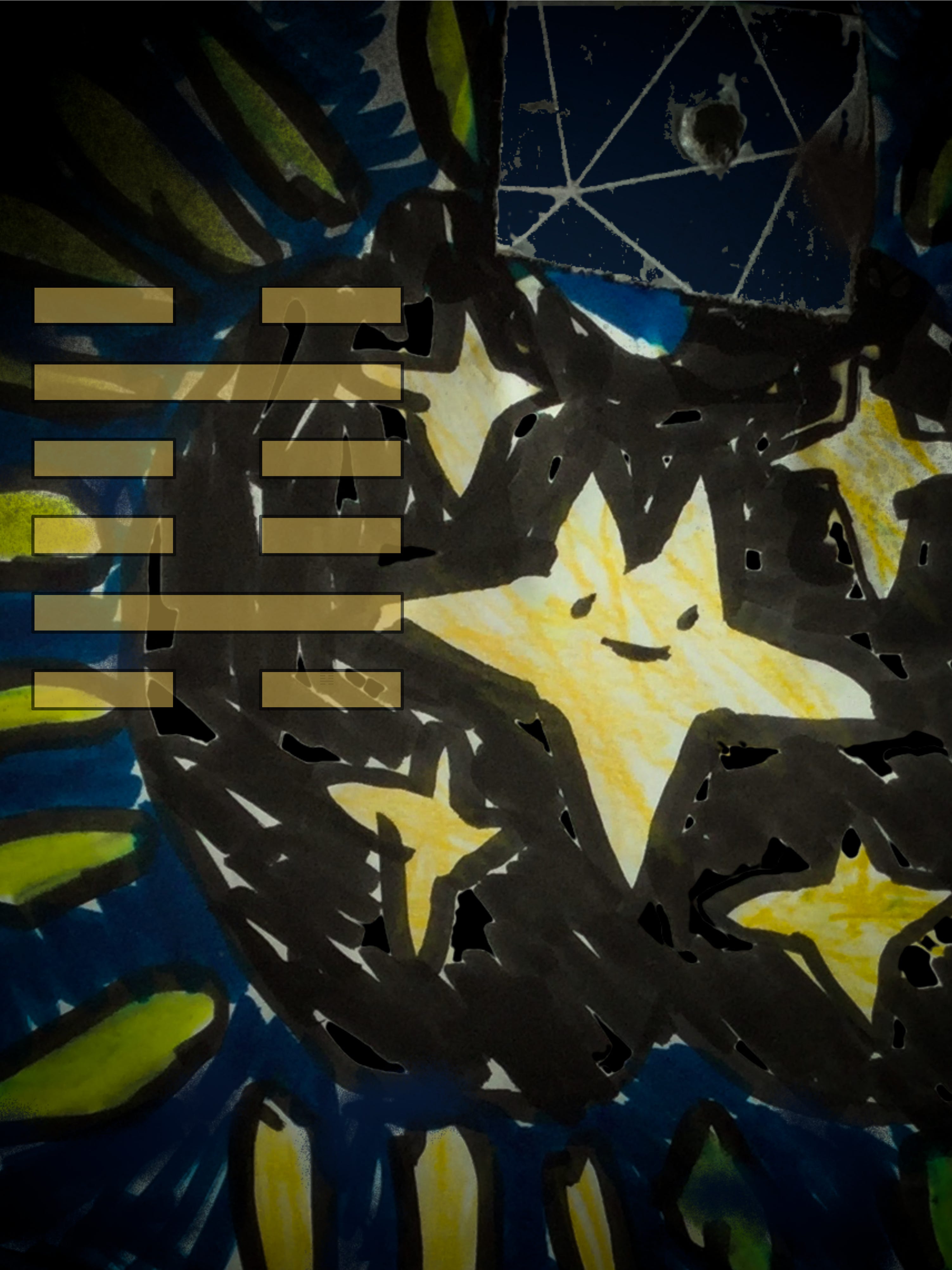
THE IMAGE: twice the Water trigram. Water occupies a special place in Taoist thought. Nothing is as soft and yielding as water, wrote Lao Zi, yet it overcomes everything that is strong and solid. It always seeks out the lowest places, places that are despised and avoided by others. Without any preconceived plan, it unites with itself. Drops, a puddle, a river, a lake, the sea.
Its transparency is an exceptional characteristic, but deep water is dark and mysterious. In Richard Wilhelm’s I Ching, water is called The Abysmal, The Unfathomable.

The middle line of the trigram testifies to the power of water. It is enclosed by the two broken outer lines, which represent its compliance and outward gentleness.
Water is associated with danger, and therefore also with courage. With winter and the retreat of life force into a seed. With the blackness and darkness of the night. My intention is to post a short contribution about ‘the night’ every day in the coming period.
Due to my physical condition, my nights are often broken these days. When, exceptionally, I wake up in the morning from an undisturbed sleep, I realise how special this process actually is. Crawling into bed. Surrendering to gravity and time. Letting your daytime consciousness dissolve. Entering a dream world where the laws and rules are completely flexible in every direction. And all this in the confidence that, as soon as you open your eyes after hours, your mind will apparently have found your body again, your memory will be completely in order and you can continue your life. Right where you left it the night before.
Anyone who has ever had trouble falling asleep knows that what is more disturbing than lying awake is the irritation it causes. Falling asleep is not a skill. You cannot actively control it; you can only surrender to it. The annoyance of not being able to let go only makes it more difficult to sink into the mattress and drift off into dreams.
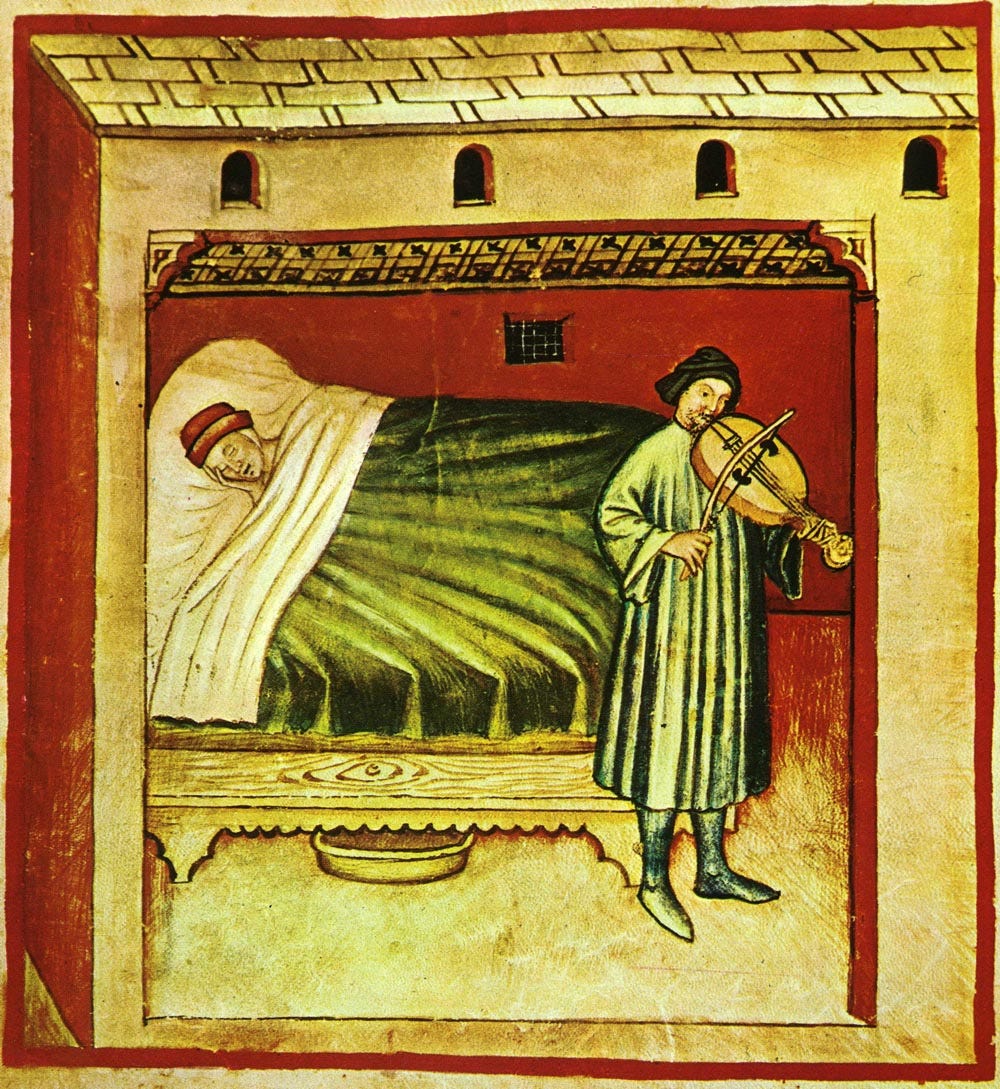
In my search for what could help to bring back deep sleep, I found an abundance of ideas on the subject. By far the most liberating discovery so far was the knowledge that, in the not-too-distant past, biphasic sleep was quite normal. Medieval literature mentions a first sleep and a second sleep. In the period between, there was time for reading, reflection, good conversation, intimate togetherness, bathing, a short walk and more.
With these possibilities open, and the realisation that night-time sleep does not necessarily have to be one continuous block, my sleeping pattern has not fundamentally improved. But the annoyance of lying awake has virtually disappeared. The hour – sometimes two or three hours – between the first and second sleep is now clear. Clear as the middle line, embedded between two soft lines.
to be continued …