

It is still early in the morning. In the distance, the sound of a locomotive building up steam. After the oppressive heat of late summer, it has suddenly cooled down. The smell of mist, coal and musty jute sacks.
I don’t have to go looking for my black Fei He Flying Pigeon bike – I used to park it every afternoon or evening in the spot I’d agreed on with myself. Finding this bike, carelessly parked amongst masses of other identical black Fei He bikes, is impossible. That’s what I discovered a few months ago, when I’d just arrived in Hangzhou.
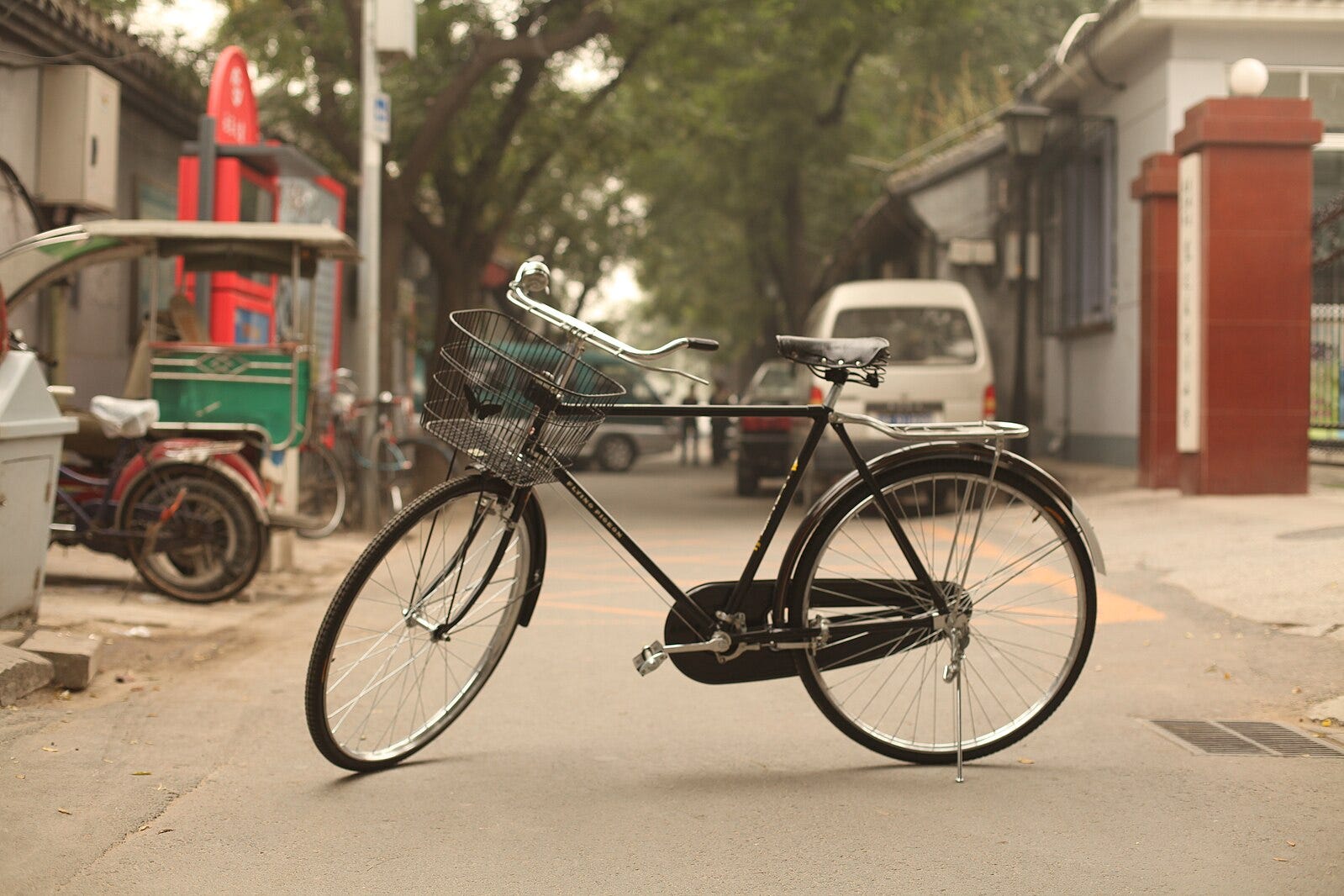
My bag in the front basket, bike unlocked, and off I go. There aren’t too many cars about; all the more reason for people to be honking their horns. Later, back in the Netherlands, the sound of even a solitary horn will instantly transport me back here. To the blast of a locomotive, the smell of mist, a whiff of musty jute sacks, the acrid smell of coal fumes, and cycling.
I join the stream of silent cyclists. First, a stretch along the wide Huang Cheng Xi Lu, 黃城西路, the ring road. Like in many old towns, this was built on the site of the former city walls. Then I turn right, onto the street that runs alongside the lake.
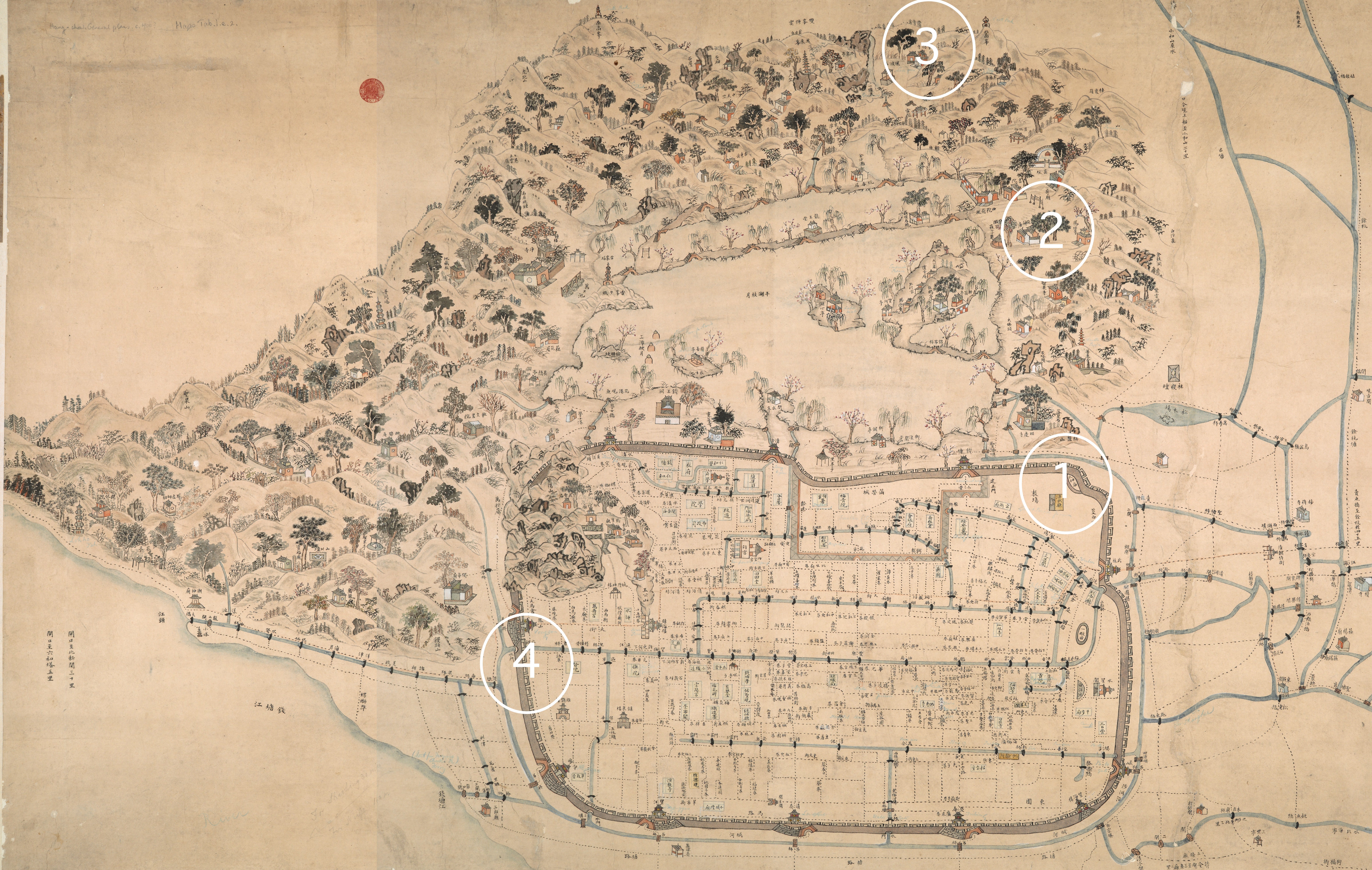
1. Mijn onderkomen aan de Huan Cheng Xi Lu, de straat waar eens de stadsmuur moet hebben gestaan.
2. De herdenkingstempel voor generaal Yu Fei.
3. De Ling Yin tempel.
4. Hier eet je de beste ‘guo xia mi xia’, ‘over de bridge noodles’ in Hangzhou. In de eerste de beste herberg van de stad, meteen over de brug, door de poort, kon de verkleumde reiziger zich warmen aan een reusachtige kom noodles in dampend hete bouillon.
There are a few small restaurants and modest shops where the staff set out their wares on the pavement early in the morning. Right by the roadside, on the pavement, a number of bicycle repairmen are already sitting, waiting for customers. A box of tools and a few spare parts, a standing bicycle pump. That’s all there is to it, but it’s enough to fix the common bicycle mishaps. The fog here is breaking up into patches, through which a watery sun peeks out.
The road follows the northern shore of Xi Hu, the famous West Lake. I cycle along this road every working day of the week to get to a small training centre on the grounds of the old Ling Yin Temple. Luo Zhen is in charge there, and I’ve been training under him for the past few months. I stop for a break halfway through the ride.
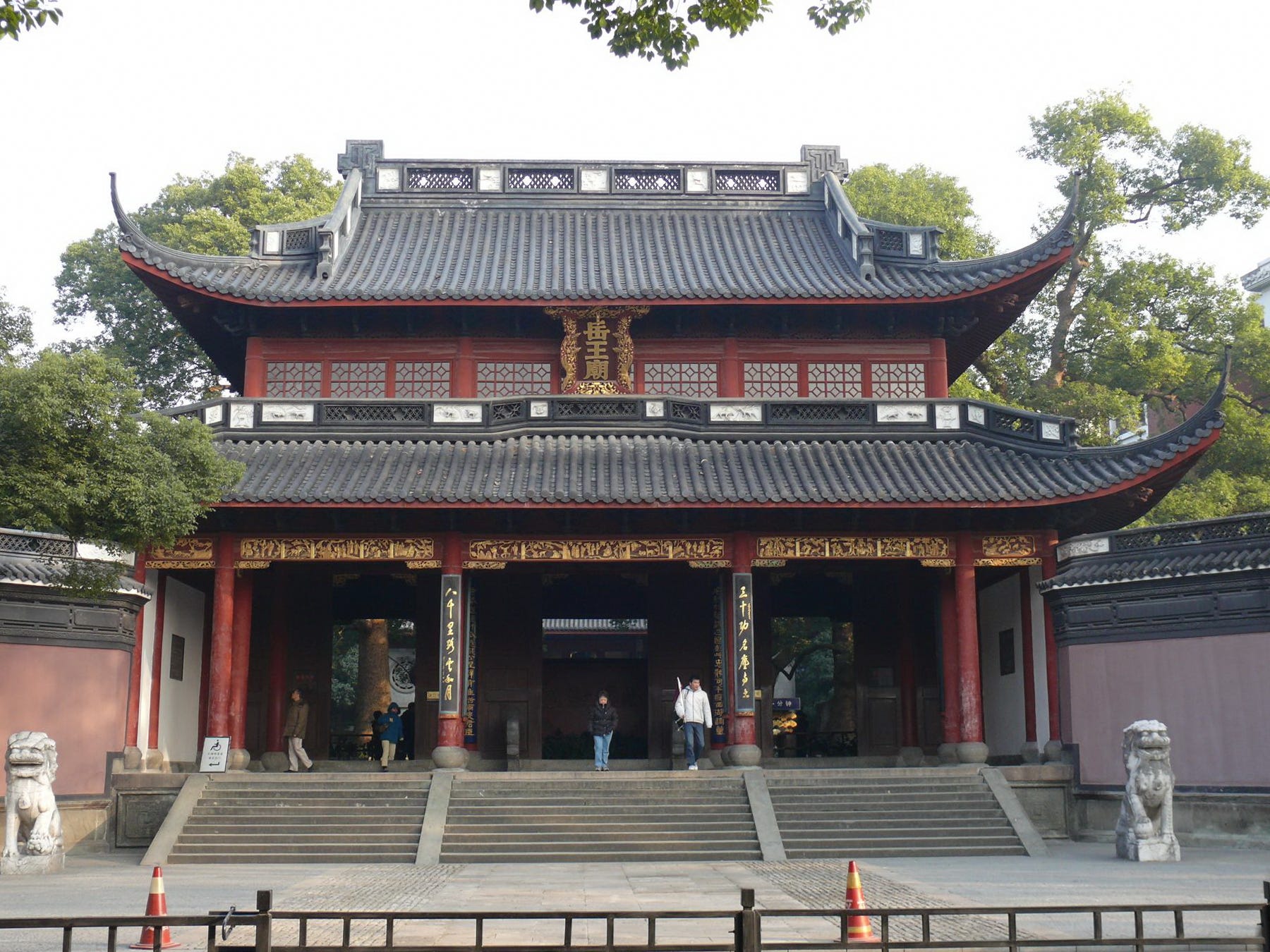
An entrance gate, a ticket office, and a small bus park. Every day I pass by here, there are groups of Chinese visitors. They come to see the tomb and memorial of one of the country’s historic national heroes, General Yu Fei. Could you compare him to Michiel de Ruyter or Horatio Nelson? Throughout the centuries, Yu Fei has been a model of integrity for all Chinese people. He is patriotism personified.
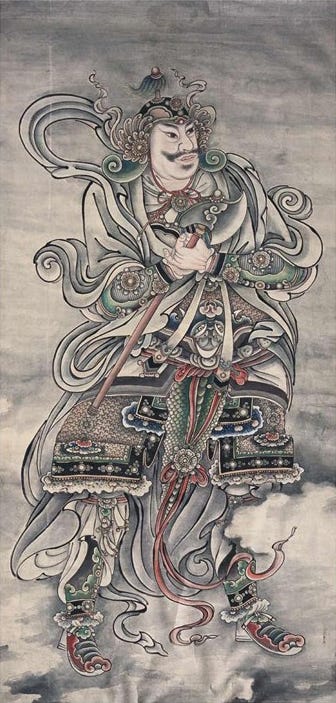
Yu Fei was born in 1103, during the Northern Song dynasty. It was a time of political unrest. From the north, the fierce Jurchen horsemen were invading the country. Eventually, the imperial court was forced to retreat to the south of the empire. Hangzhou became their capital, and the dynasty was henceforth known as the ‘Southern Song’.
A young Yu Fei enlists in the army and quickly rises through the ranks. As a commander, he leads campaigns against the Jurchen, who have established their Jin dynasty in the north.
Yu Fei is successful in defending the fatherland, but not everyone at the court in Hangzhou is pleased about this. There is envy, and a conspiracy is hatched against him. Once recalled to Hangzhou, he is accused of high treason, imprisoned and ultimately put to death.
His rehabilitation was not long in coming. A temple was erected in his memory on the northern shore of Xi Hu.

After the north, the south eventually fell too. The Southern Song dynasty was overrun by yet another nomadic people, the Mongols. Under the leadership of Kublai Khan, a grandson of Genghis Khan, China was reunited, albeit under foreign rule.
Hangzhou is no longer the capital. That honour now falls to Khanbaliq, which we now know as Beijing. Hangzhou remains an important cultural centre, and during the reign of Kublai Khan, the city is visited by a remarkable guest.
The second journey again began in Khanbaliq (Beijing) and followed the east coast southwards to Hangzhou (Quinsai), Fuzhou and Canton (Zaiton), the main port of southern China (Mangi). Marco Polo probably made the northern part of the journey – crossing the Yellow River and following the Grand Canal to the Yangtze – on several occasions. He reported that he had visited Hangzhou on various occasions. Hangzhou was the former capital of the Southern Song dynasty, conquered by Kublai in 1276. With a population of around 300,000, it was the largest city in the world in the thirteenth century. No other place receives as much attention in the book as Hangzhou and the adjacent West Lake. According to Marco Polo, the city was said to have a circumference of one hundred miles and to contain twelve thousand stone bridges. Wikipedia

Yu Fei is not only remembered as one of the most capable generals in Chinese history. He is also regarded as the founder of Hsing I Chuan or Xing Yi Quan. This is considered one of the three Chinese internal martial traditions, alongside Tai Chi Chuan and Ba Gua Zhang. Yu Fei is said to have developed Hsing I Chuan from various sources. As is often the case in history, all manner of things are not always rightly attributed to prominent historical figures and heroes. It is therefore a matter of debate whether the Hsing I Chuan tradition actually began with Yu Fei.
Martial traditions were generally passed down without being recorded in writing. Knowledge and experience were transmitted only within the clan or family or, in exceptional cases, to a trusted confidant who had, over a long period, proven themselves worthy of receiving that knowledge. Recording techniques and insights on paper would inevitably have led to the leakage of vital information. The transmission took place in a practical and physical manner and was based on ingraining movement patterns through repetition. A theoretical foundation was, in fact, not an issue – or perhaps better put – the theory was interwoven with physical practice.
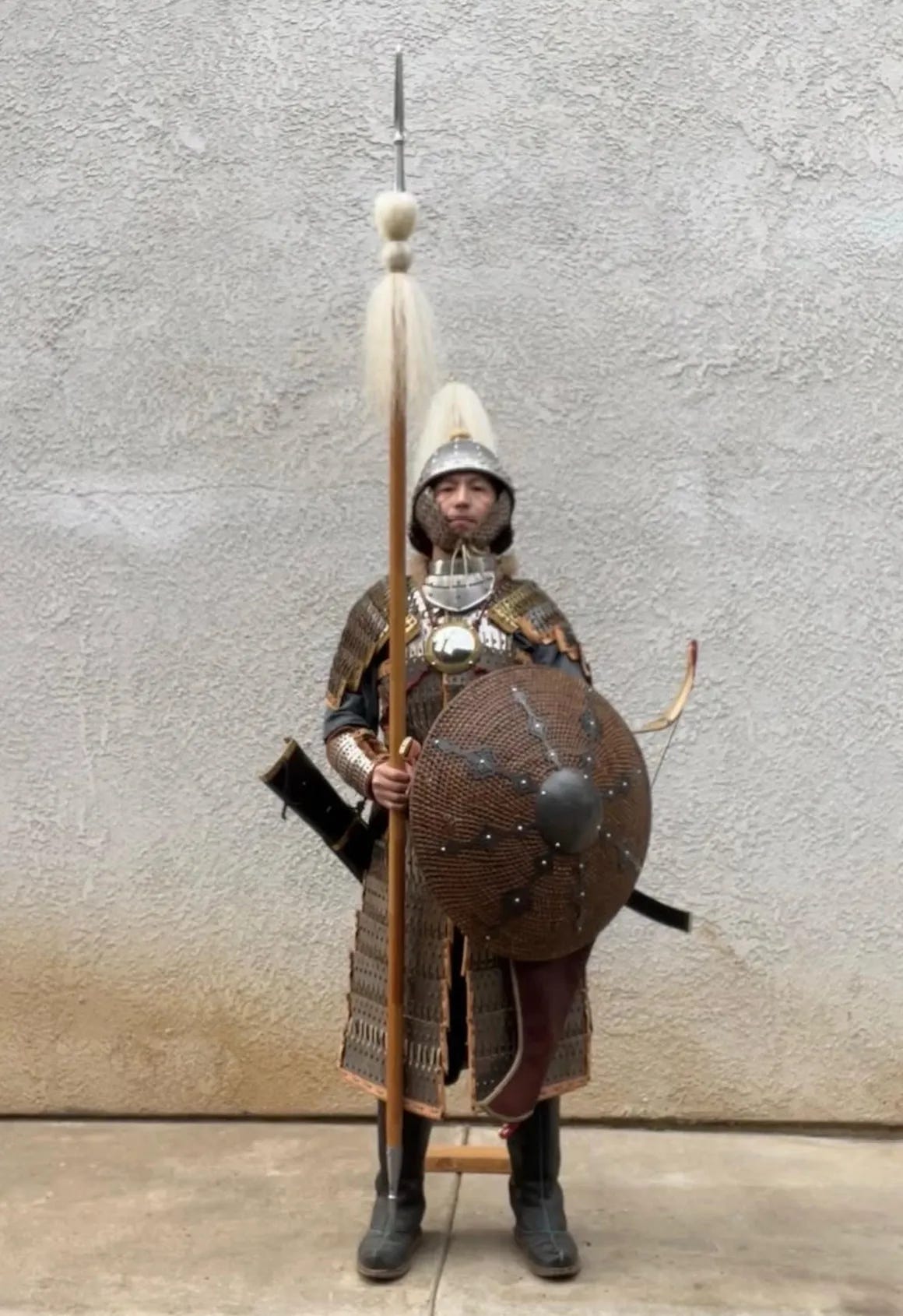
We must also realise that the circles in which the various martial arts were practised were, as a rule, illiterate. Only a small elite within Chinese society was literate, and the majority of the military profession did not belong to this group.
During the 19th century, there was a growing recognition in China that martial disciplines constituted an essential part of the country’s cultural heritage. Doctors recognised that, in an adapted form, these disciplines could play a role in preventive medicine. Political philosophers and activists saw their potential for education, for fostering discipline and for strengthening national consciousness. The techniques and history of a number of martial disciplines were now viewed, researched and described in a new light. Despite this, many gaps remained in our understanding of their origins and the lines of transmission. Legend and reality are often difficult to distinguish from one another.
A central training posture in Hsing I Chuan, the san ti shi — the triangular stance — may well have originated in the use of the lance in Yu Fei’s infantry. Over the centuries, the ‘open’ san ti-stance evolved into the more ‘closed’ chen bao zhuang.


So let us assume that General Yu Fei was indeed the founder of Hsing I Chuan. For several centuries, there is no mention of it, and it appears to have been lost. It was not until around the transition from the Ming to the Qing dynasty that a certain Master Ji Ji-Ke, also known as Ji Long-Feng, discovered a training manual by General Yu Fei and gave Hsing I Chuan its current form. The style spread, and one of the custodians of the tradition in the 19th century was Guo Yun-Shen. His pupil was Wang Xiang-Zhai, and it was with him that the I Chuan tradition began, with its range of standing training postures. According to this lineage, there is therefore a direct connection between Yu Fei and the practice of standing chi kung today.

Another tradition associated with Yu Fei is the Ba Duan Jin, the Eight Brocade Exercises. He is said to have devised this series of exercises and used them to enhance the physical and mental resilience of his soldiers. The exact form in which the Ba Duan Jin was practised in Yu Fei’s time has been lost in the mists of time. Between the Song-Dynasty at the beginning of the 12th century and the present day, the Ba Duan Jin has been widely emulated and has evolved into countless variations.
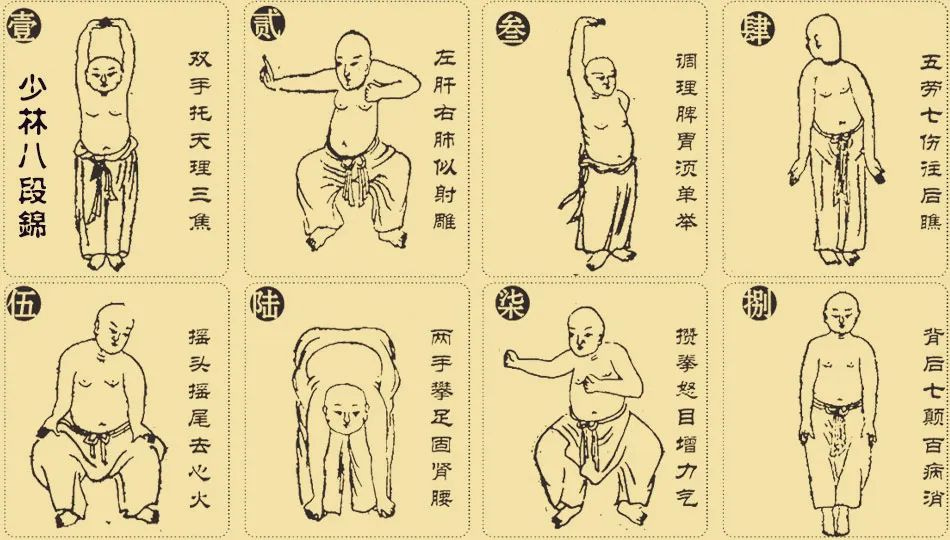


of
