

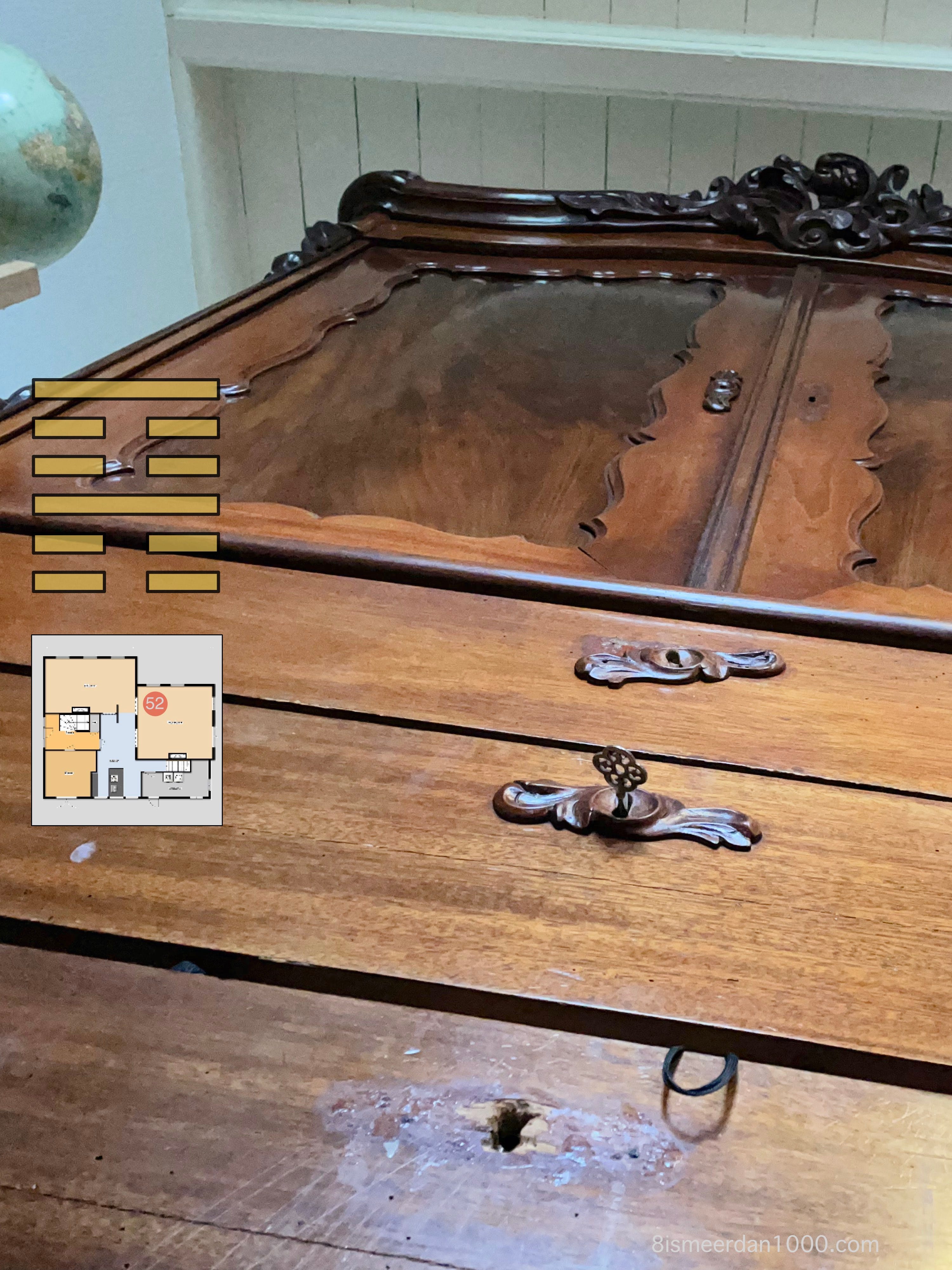
The I Ching as we know it today opens with a treatise on initiating. Represented by six unbroken lines—the pinnacle of creative power—this seems the most obvious choice as the subject for the opening chapter.
In ancient China, in addition to the Zhouyi – the original name of the I Ching – there were two other similar works: the Lianshan and the Guicang. Neither of these books has survived the test of time.
The Lianshan is thought to have been written during the Xia Dynasty (2100–1766 BC), the oldest of the three archaic Chinese dynasties. The Guicang is believed to date from the Shang (1766–1047 BC), which succeeded the Xia. And the Zhouyi was compiled, as you might expect, during the Zhou (1047–256 BC), chronologically the third in the succession of Chinese dynasties.


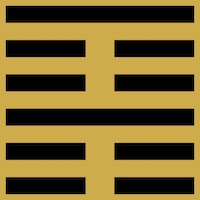
Whilst the Zhou I begins with the chapter Initiation (followed by Chapter 2: Response), the compilation of the other two books took a different approach. The Lianshan, translated as ‘Connected Mountains’, opens with the equivalent of Chapter 52. Gen, Keeping Still. And the Guicang with the equivalent of Chapter 2. Kun, Response (or Earth).
Lianshan was supposed to have begun with the present Hexagram 52. Since Hexagram 52 is made up of the Mountain trigram repeated above itself, this was probably an attempt to explain the name Lianshan (‘linked mountains’). Guicang (‘return and keep’) was similarly said to have belonged to Shang and to have begun with the present Hexagram 2. This also looks like an explanation of the book’s name, because Hexagram 2 consists of the Earth trigram doubled and the earth is where everything from seed to corpses returns and is kept. If these explanations are correct, both books must have been named after the hexagrams began to be analysed into constituent trigrams, late in Zhou times.
The Book of Changes, A Bronze Age Document - Richard Rutt
A very first beginning of events, an essential starting point, in the form of a mountain. How am I to understand this? A pile of earth and stone? A collection? A savings account? An accumulation of ideas indeed precedes all undertakings. Full grain silos. A bulging haystack, enough to see the livestock through the winter. And a well-stocked war chest, or rather, a library full of knowledge and wisdom. A crowdfunding campaign. A reserve of friendships and mutual trust. All of that is true, and certainly a water reservoir can be added to the list too. As well as a well-stocked larder. Not to mention a daily moment of meditation and introspection. And what to think of a high-pressure area as the cradle of the wind. The high mountains, as the source of a river. Thus, a mountain range, liangshan, 連山.
Following the prelude of Chapters 1 and 2 – the descriptions of the archetypal Heaven and Earth, Initiation and Response, Space and Time, or however else one might choose to interpret them – the Zhouyi, and with it the current I Ching translations, only really gets into its stride in the third chapter. The image of Chapter 3. Beginning consists of the combination of a mountain and flowing water: a wild mountain stream. So here too, the image of a mountain appears as an indispensable ingredient for the dynamics of creation.

All right then, where am I supposed to find a mountain here, in the Salland countryside? The other seven trigrams appear in many forms, but here, around Zwolle and Dalfsen, a mountain? The days of haystacks are long gone, so must I then see the mountain in the form of round, plastic-wrapped bales of hay? Or is it the mass of bricks from the local church? A mountain in the form of a full trailer during the potato harvest? Or the mountain in the guise of the village library? As a container for used glass or paper? Or represented by the unique historical accumulation of so much food in every local supermarket? Or the moraines of the Vecht? Not much higher than a few metres. But in this flat country, that too can pass for a mountain. And named after those river dunes, a stone’s throw from here lies the manor house Den Berg, residence of the Barons of Van Dedum.


At the start of Papenalle, on the grounds of Den Berg, lies a small hill. Modest in size, yet composed of solid stone. If you were to join me on my morning walk – a habit I’ve recently been able to resume – you’d spot it straight away. Like a fish out of water, like a solitary boulder in a flat landscape. Sandstones like this were transported down the River Vecht on ships in centuries past, from the quarries around Bentheim in Münsterland to the cities of the Republic. Stately houses were built from them, in Zwolle and also in Amsterdam. The town hall on the Dam – which, since the first Dutch king, was transformed into the ‘Paleis op de Dam’ – and this solitary stone are, therefore, close relatives.


But why go all the way to Amsterdam or Bentheim to find the ultimate mountain? It can be found much closer to home. How about a house – your house, my house, a Keeping Still, a sturdy structure built from a mass of stones? A place where one’s inner, intimate life can be lived.
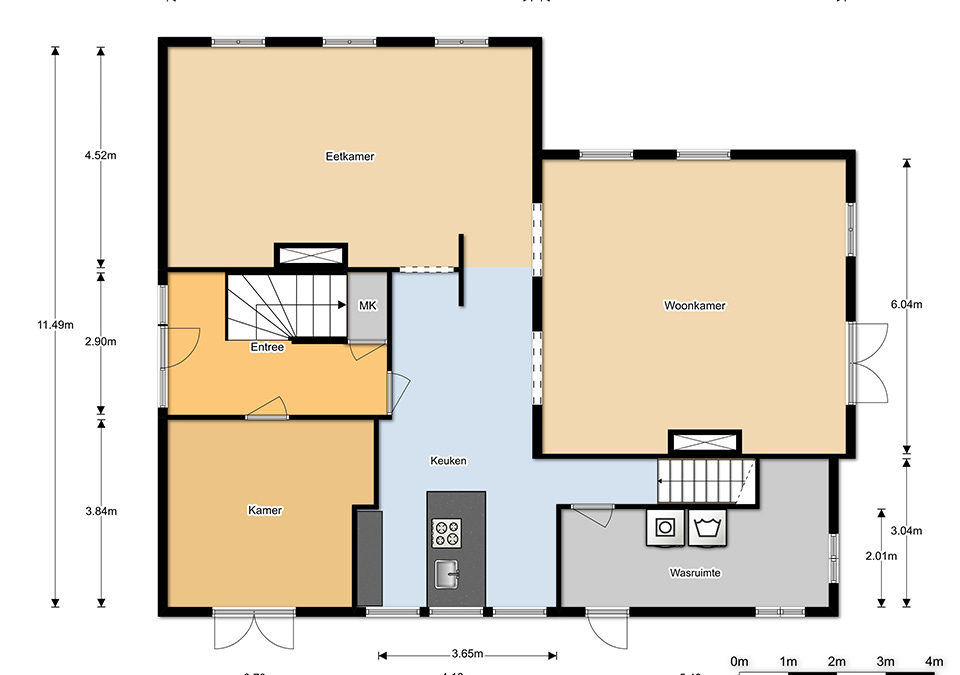
The colder winter weather and my reduced mobility have prevented me from going for a daily stroll or bike ride (what is the equivalent of a stroll when it comes to cycling?) over the last few months. And what would you do when you can no longer explore the imagery of the Book of Changes in the outside world? Exactly. I continued my journey indoors. And straight away stumbled across thevold antique farmhouse cupboard. A curious, domestic representative of the Mountain-family.
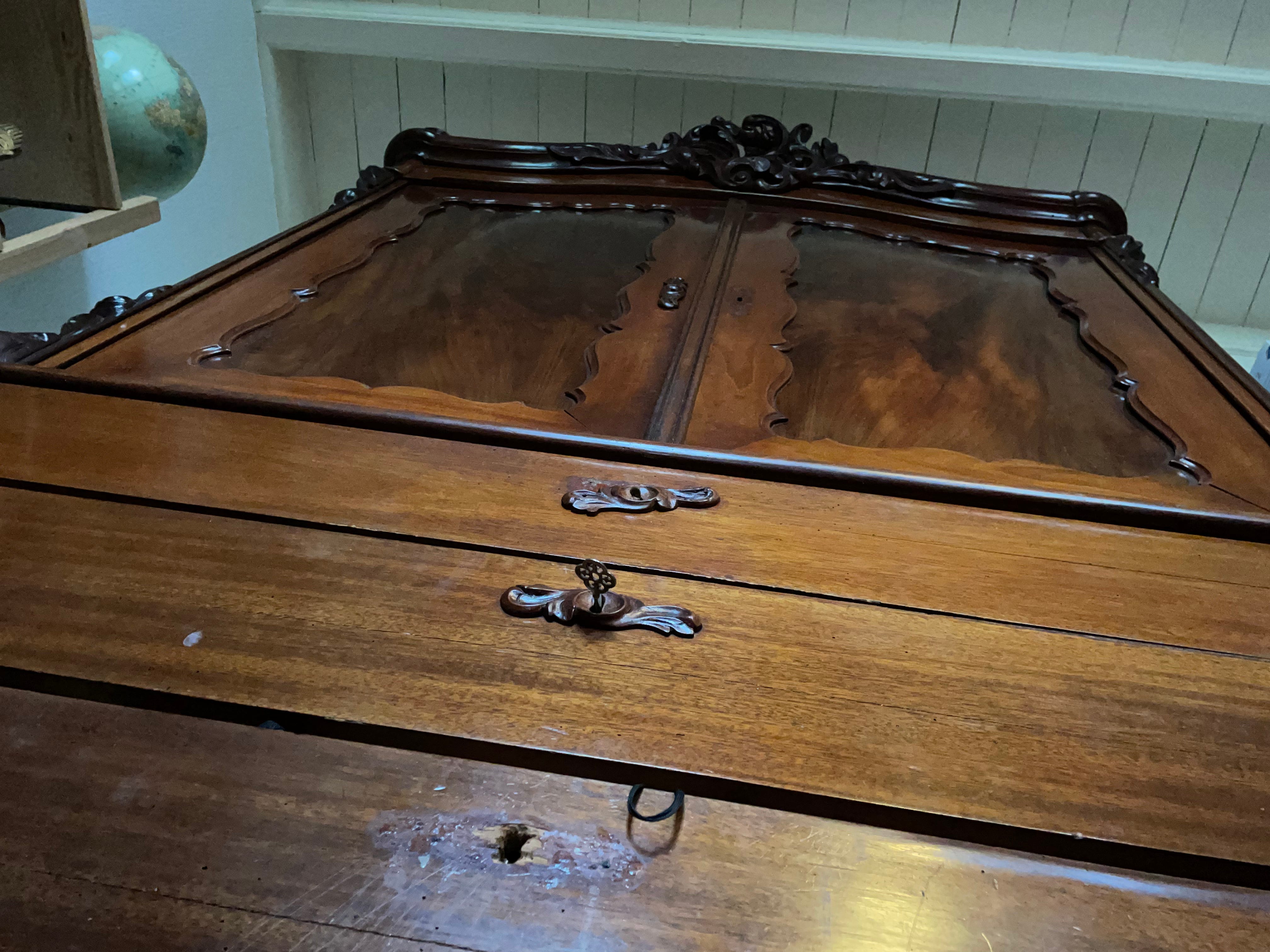
Between a mountain, an manor, a family house and a cupboard are numerous family ties.


A cupboard you could practically live in. A cupboard that was originally made to store all your belongings. I’ll spare you the trouble of opening the doors and drawers, but rest assured that this cupboard can hold an enormous amount of stuff. It was already in the house when we rented it and there was absolutely no way it would fit through the door. To store it somewhere temporarily. Somewhere out of sight. So even in the pre-Ikea era, they were capable of making incredibly ugly furniture. Anyway, it just stayed where it was, and I’ve actually grown quite fond of this oversized storage unit. It’s still not exactly beautiful, but it stands as solid as a rock. Like a mountain.
At the Palthehof Museum in Nieuw-Leussen, where traditional Salland farm interiors are on display, I recently came across an exact replica. It was uplifting to realise that every single day I look at a museum piece.
or
