
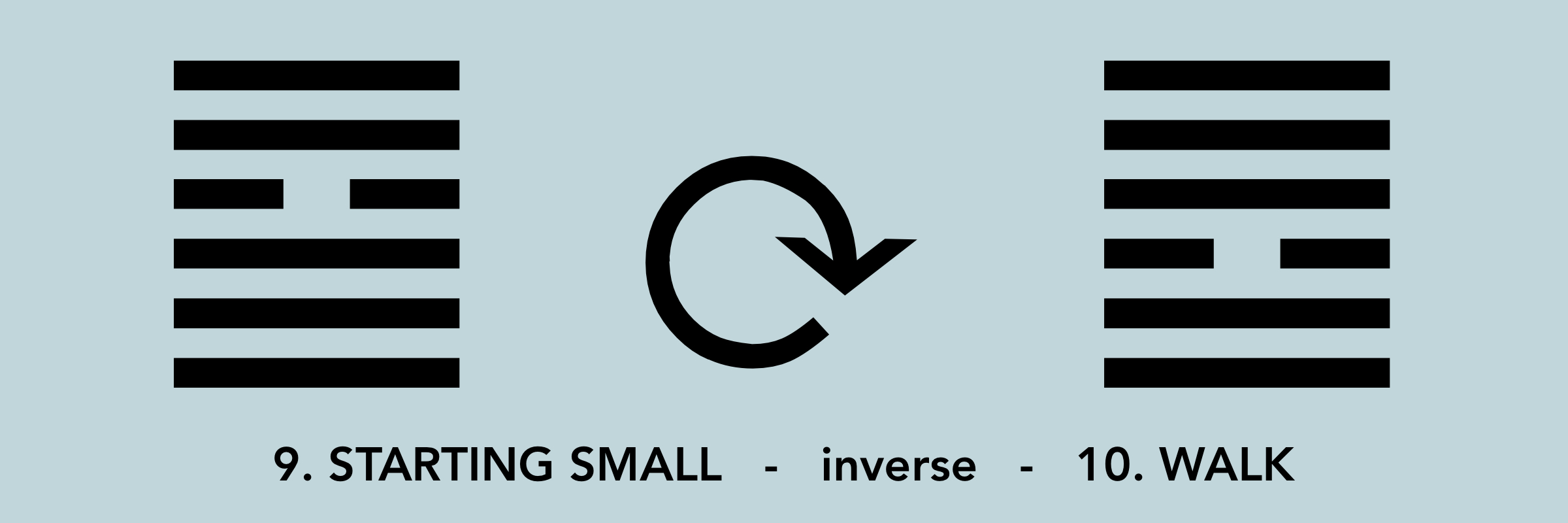
THE IMAGE of two trigrams: Heaven above, a Lake below. Within a family context, Heaven is represented by the father and the Lake by the youngest daughter. The image of an old and a young soul walking together. Their lives coincide for a period of time. Someday they will diverge again, but for now a precious exchange takes place. The father's long heavy stride and, alongside it, the little girl's cheerful frolic.
The first 10 chapters of the Book of Changes follow the story of the early years of a human life. In chapters 1 and 2 the genesis. The next two chapters describe birth, the very beginning and play. Chapters 5 and 6 outline the need, the necessity of waiting and the possible conflict. Then follows the discovery of the multitude, which life offers, with within it the hidden – and to be discovered – unity of things. A child, a young adult, learns quickly and thoroughly. Arriving at chapter 9, the balance is taken. The learning process is far from complete, but enough to embark on a first adventure: Starting Small
How life then unfolds is highly personal. A stride, a pace, a walk, a course.
The Chinese name of this hexagram, Lü, is variously translated: Treading, Conduct (Richard Wilhelm); Fulfillment (Alfred Huang), Walking (Deng Ming Dao), Stepping (Richard Rutt), Caution (Julie Tallard Johnson). Let's see what Alfred Huang has to say about the etymology of the Lü pictogram.
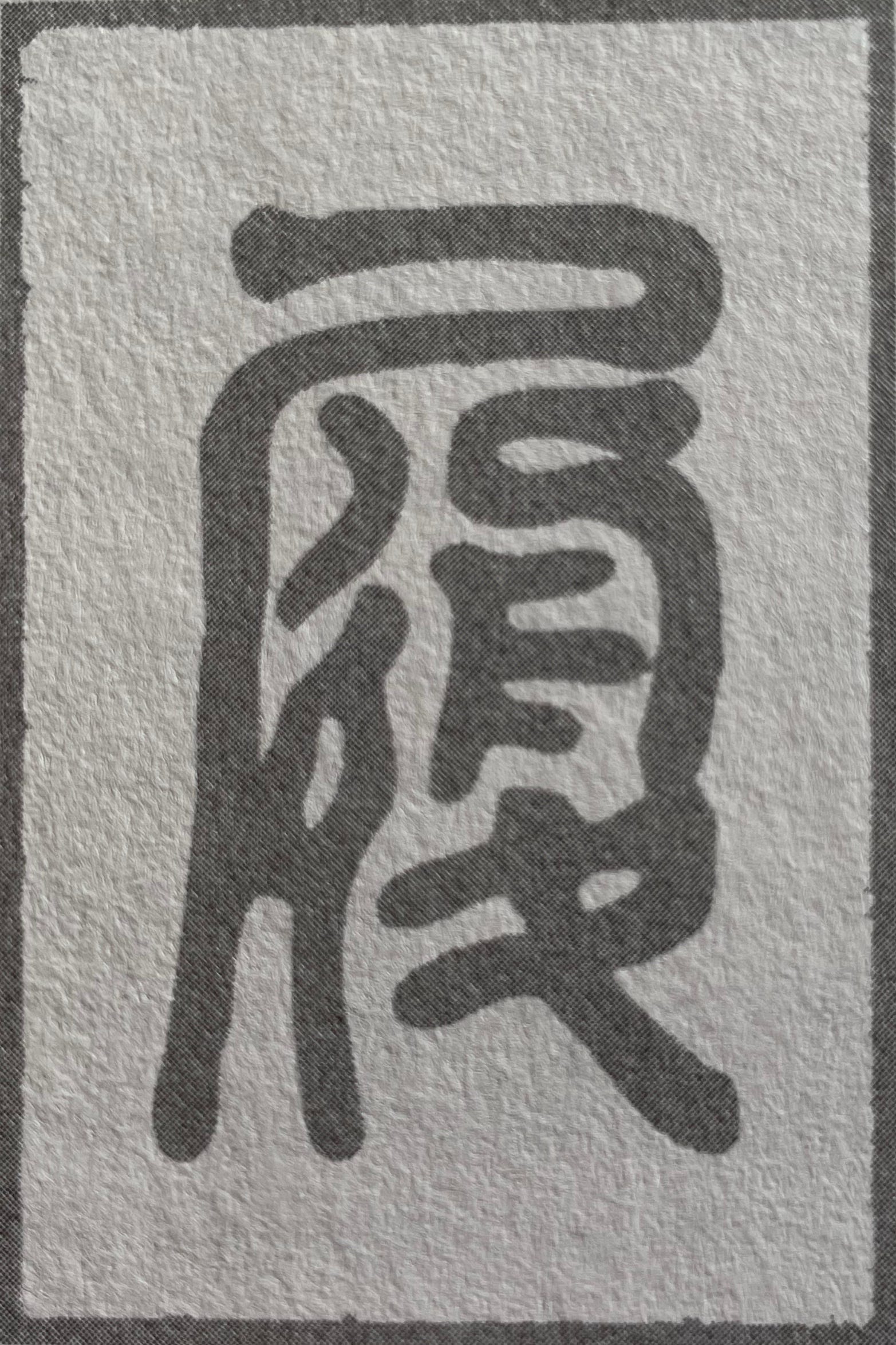
The ideograph of Lü is a complicated, four-part picture of a person walking in shoes. At the top of the ideograph, there is one horizontal line that extends from left to right and then from right to left and all the way down to the bottom of the left side. The curved horizontal line represents the head of a person, while the long vertical stroke represents a human body standing upright. The rest of the ideograph is divided into two parts. On the left there are three curved strokes, symbolizing the footprints of three small steps. At the top right, there is a picture of a shoe. Underneath the shoe, theshoweringre is another ideograph symbolizing the action of walking. The original meaning of Lü is a pair of shoes. From shoes, the meaning was extended to include treading upon something and then carrying out one’s duty or fulfilling one’s agreement. In Chinese, fulfillment is made of two characters: lü xing. Literally, lü means shoes, and xing means walking. To the Chinese, walking with shoes symbolizes moving forward with firm steps, advancing to fulfillment.
The Complete I Ching - Alfred Huang
In Old and Young, the relationship between a grandchild and one of his grandparents was outlined. The hexagram of Walk, the tenth chapter of the Book of Changes, seems to depict something similar. The father knows the route well, having walked it countless times, and knows where to pay close attention. The road is winding and unpredictable. Instead of the father forcing his experience on the small child, shower her with well-meaning advice and warnings, he gives her the opportunity to figure things out for herself. He will not disturb the child's curious playfulness, because the most valuable lessons always come through direct experience. Of course, if necessary, he will intervene. The father's contribution during the shared journey is in clear attendance. That of the girl is wonder and discovery.
Unlike what we may be used to, the process of teaching and learning is not a one-way street. The girl learns from the father, that's for sure, but perhaps we learn even more from the small child. He mirrors life for her like a starry night sky. She mirrors for him like the still surface of a small lake.
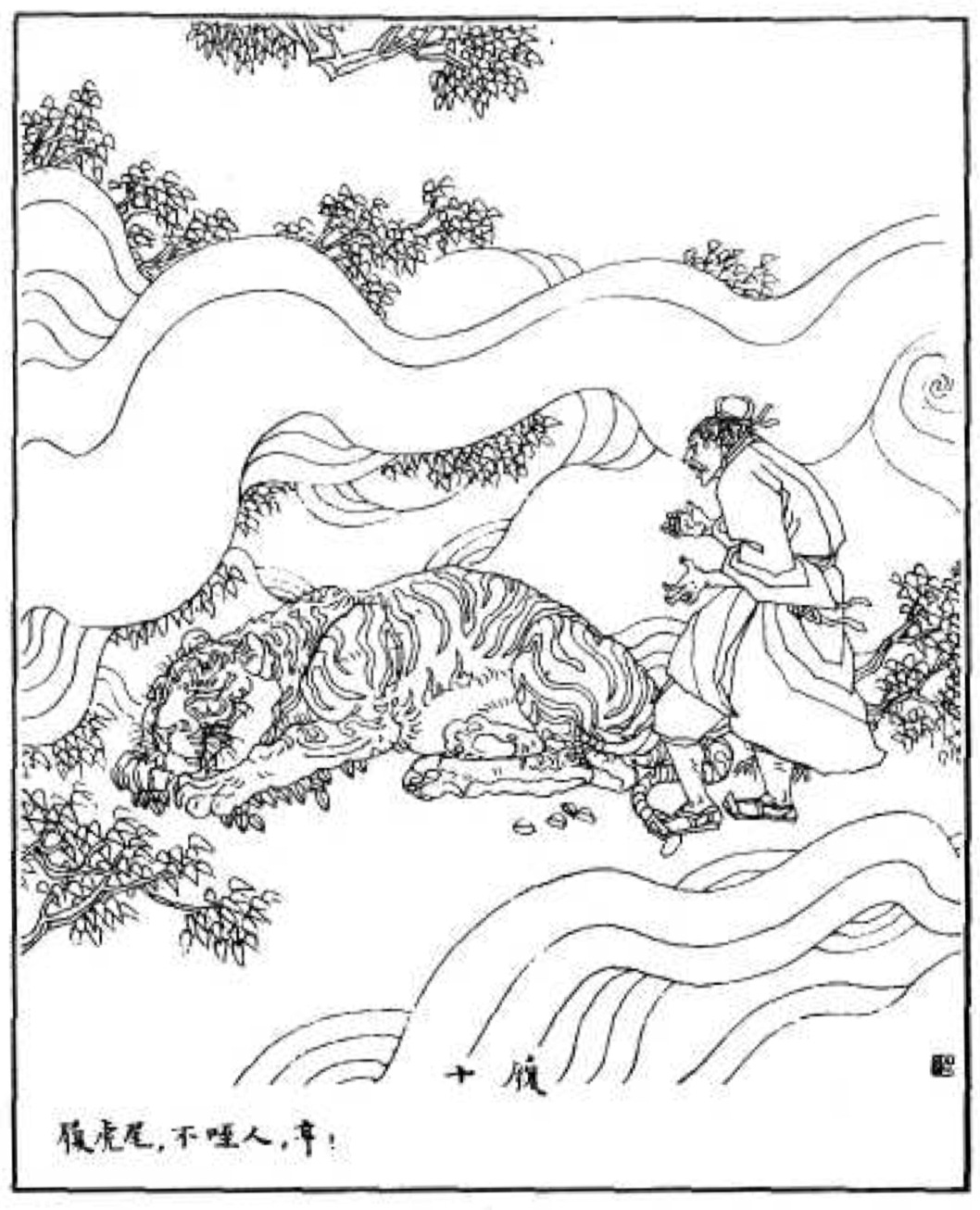
The girl is the apple of her father's eye. He knows that countless difficulties and dangers await her in life. You can burn your fingers, fall off your bike, and be bullied at school, and what about the first heartbreak? Ideally, he would like to protect her from all that, but he is aware that that is an illusion. The potential dangers are poetically symbolised by a tiger's tail. Best not to step on that. The road ahead is full of challenges and dangers. In the classical text, the verdict of this hexagram reads:
Treading upon a tiger’s tail,
Does not bite.
Prosperous and smooth.
Still, the best protection against dangers grows by avoiding them precisely (also read Dangerous Play and Playing not Allowed). Step-by-step discovery, little-by-little experience. And how nice to have someone beside you, watching you from a distance.
Deng Ming-Dao, the author of The Living I Ching poetically articulates the commentary on the hexagram:
ng Ming-Dao - The Living I Ching
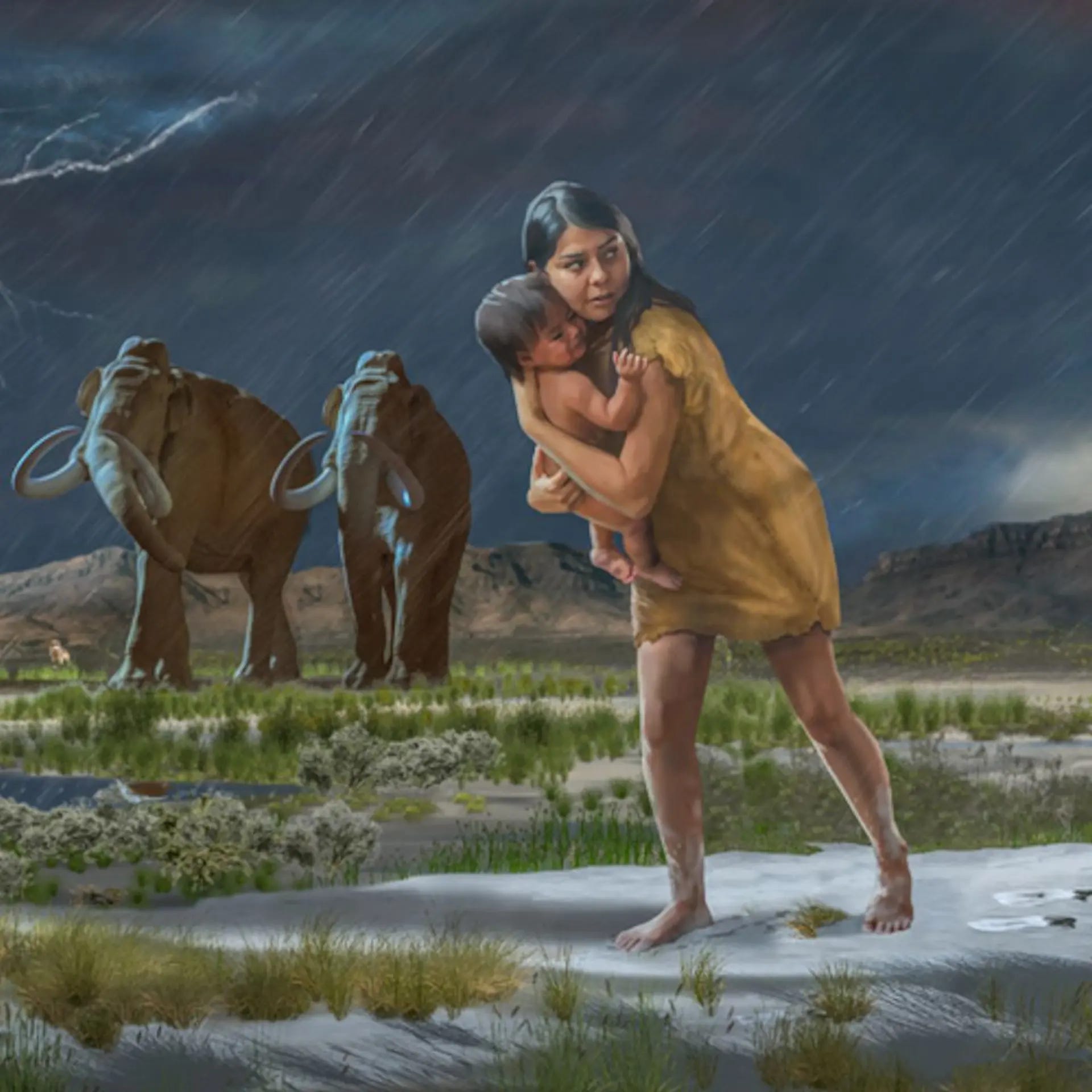
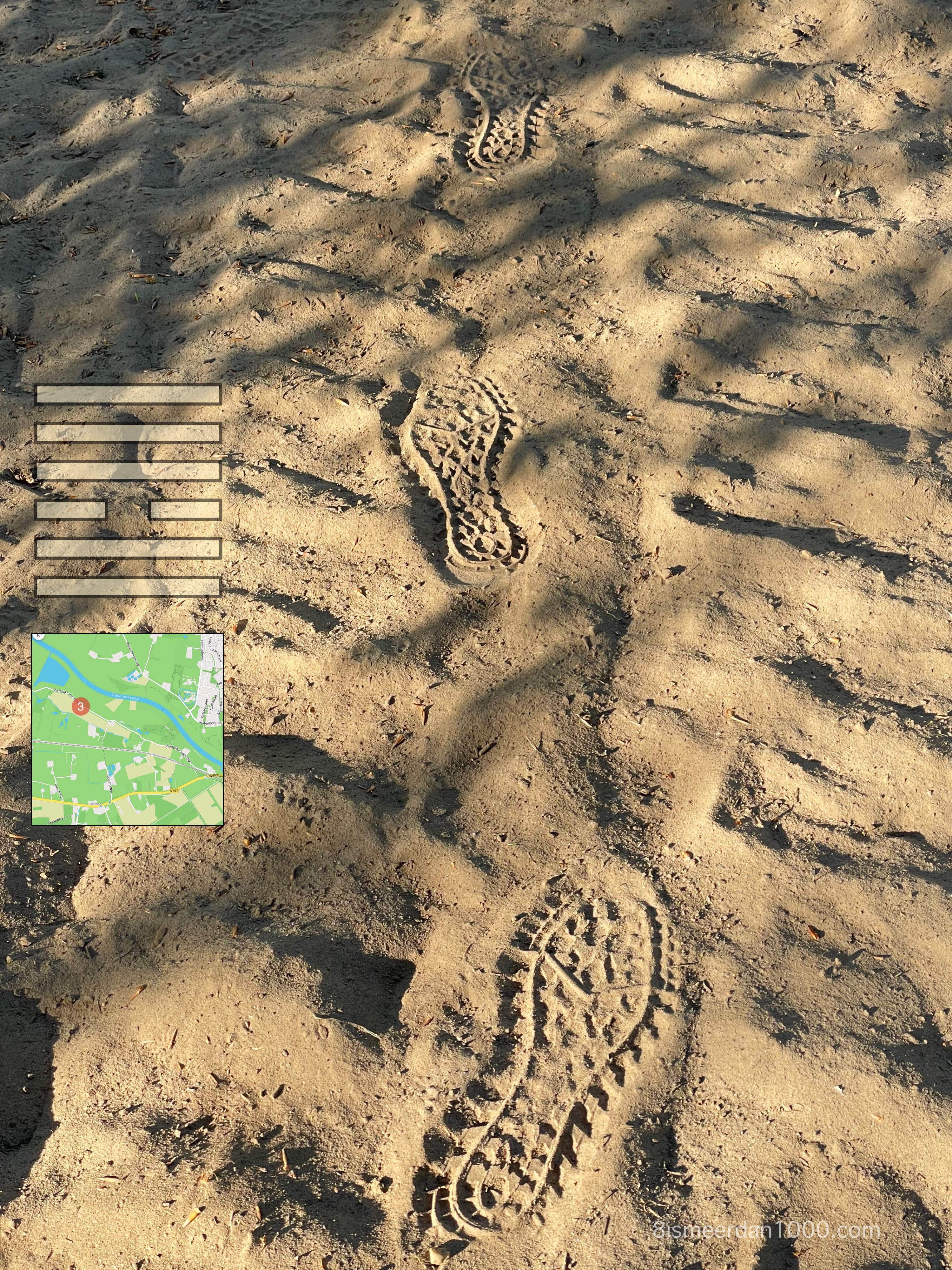
Recently, archaeologists in the White Sands National Park in New Mexico found a kilometre-and-a-half-long trail of footprints. They date from 10000 years ago. Despite their age, the scientists involved could reconstruct a remarkable story.
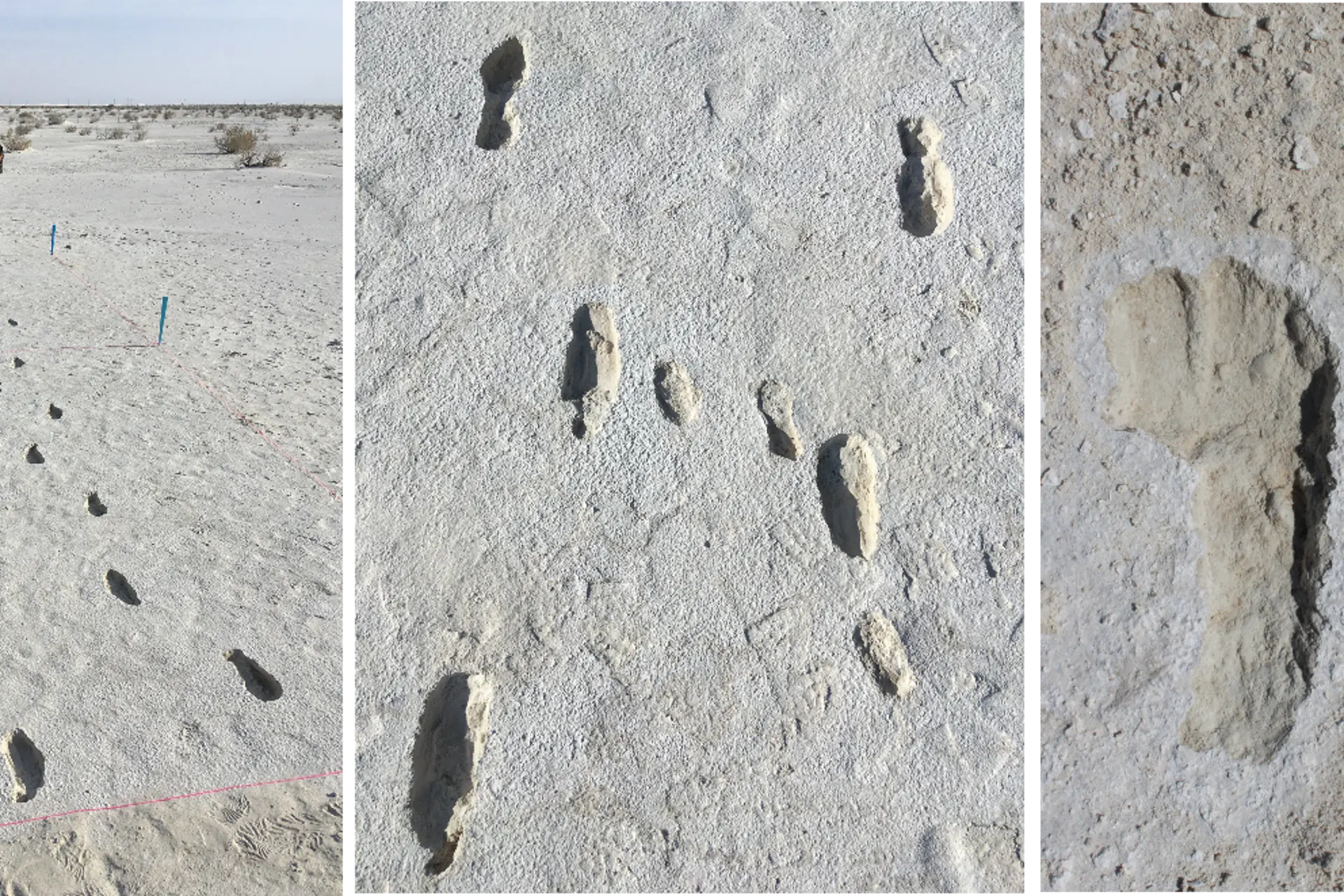
The trail shows footprints of an adult and a child. In parts where the child disappeared, the adult carried it. It can even be deduced from the depth of the prints on which hip the child was carried and how fast they walked. In one place, the track is crossed by that of a mammoth and in another by that of a giant sloth. There is no mention that a tiger was nearby, so there was no danger of stepping on its tail. But you shouldn't annoy a mammoth or prank a giant sloth either.
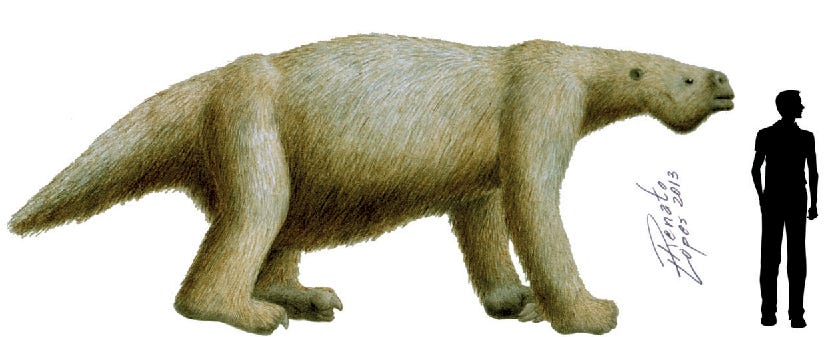
There is also a trail running in the opposite direction. The adult walked back after a short time, but without the child. Did something terrible happen? Or was the child just delivered to a friend's house or to its grandparents?