

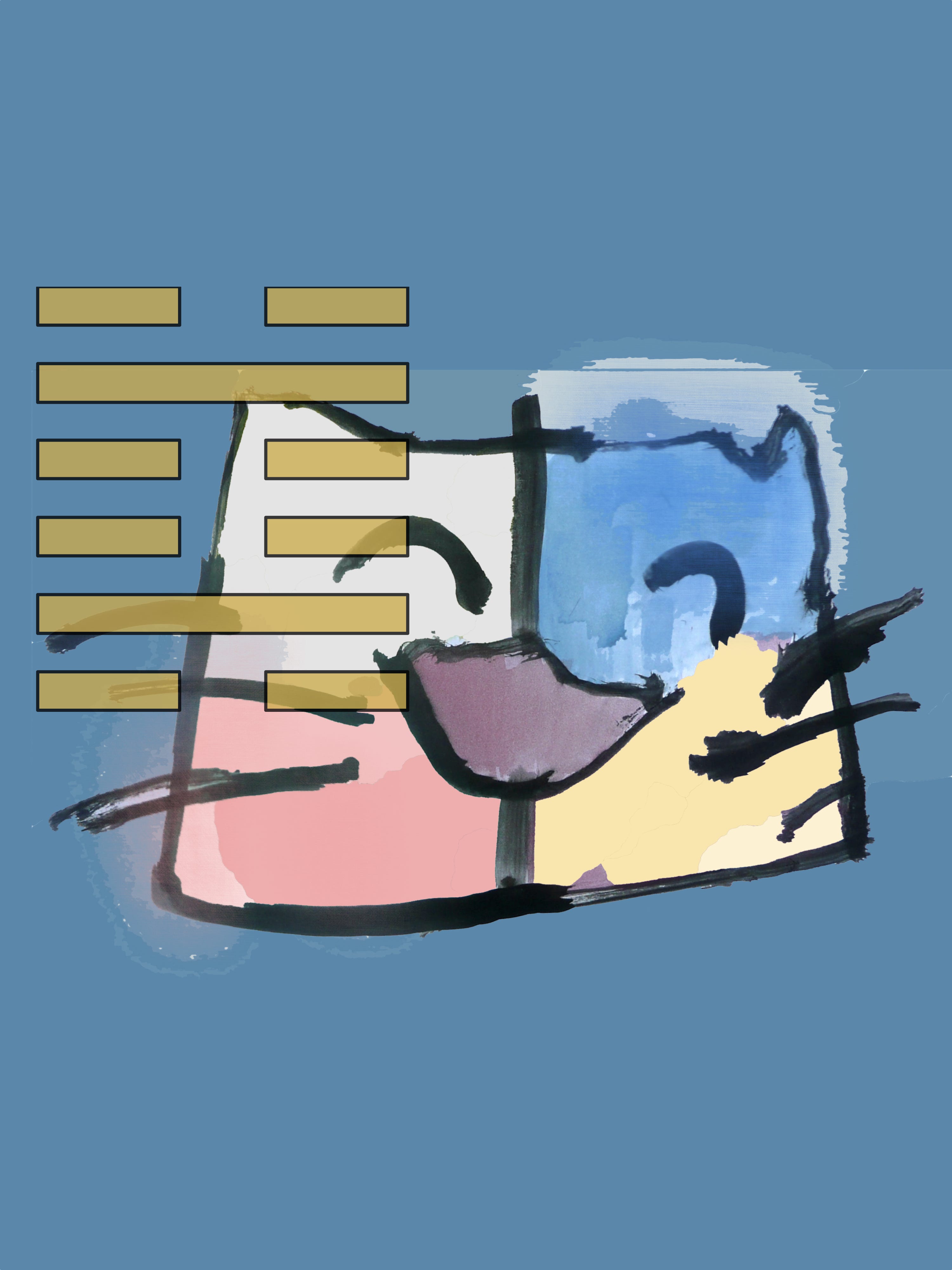

A question from a reader in response to last week's 'rain at night' post:
‘… I don't understand how twice water produces “darkness”…’
That is indeed a strange association, a curious train of thought. The title of chapter 29 is 'Dark', while his image consists of a doubling of the water trigram. How does that work?
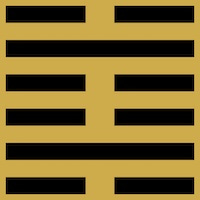
The Book of Changes consists of two parts. Chapters 1 to 30 form the first part and describe the transformations in the natural world. The second part, chapters 31 to 64, deals with all developments and changes in human society.
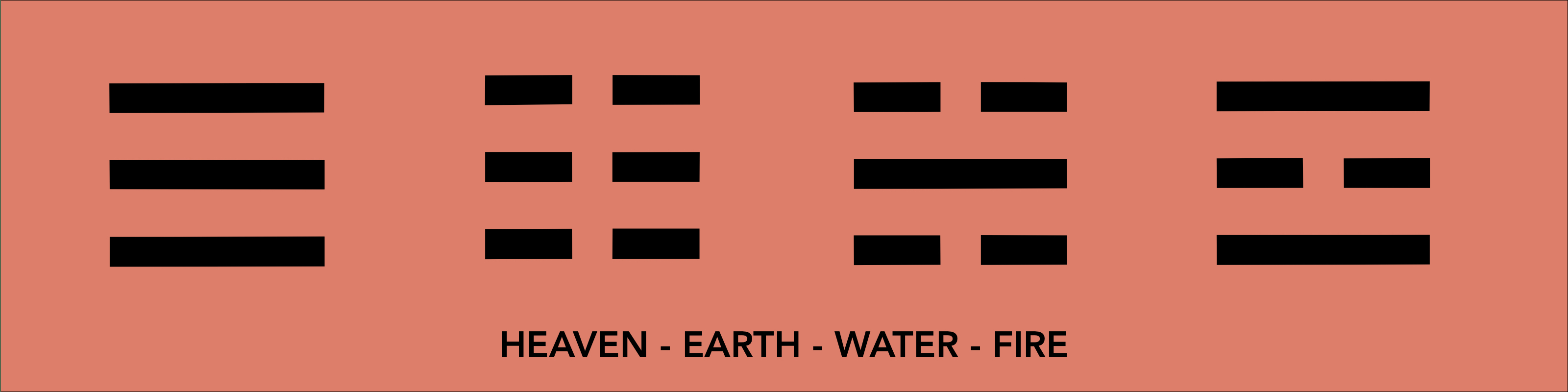
The beginning and end of the first part are marked by four archetypal natural phenomena: initiating, response, dark and light. What these have in common is an image that is a doubling of a trigram. Chapter 1. Initiating consists of two Heaven trigrams. Chapter 2: Response consists of two Earth trigrams. Chapter 3. Light consists of a doubling of the Fire trigram and Chapter 4. Dark consists of two times the water trigram.

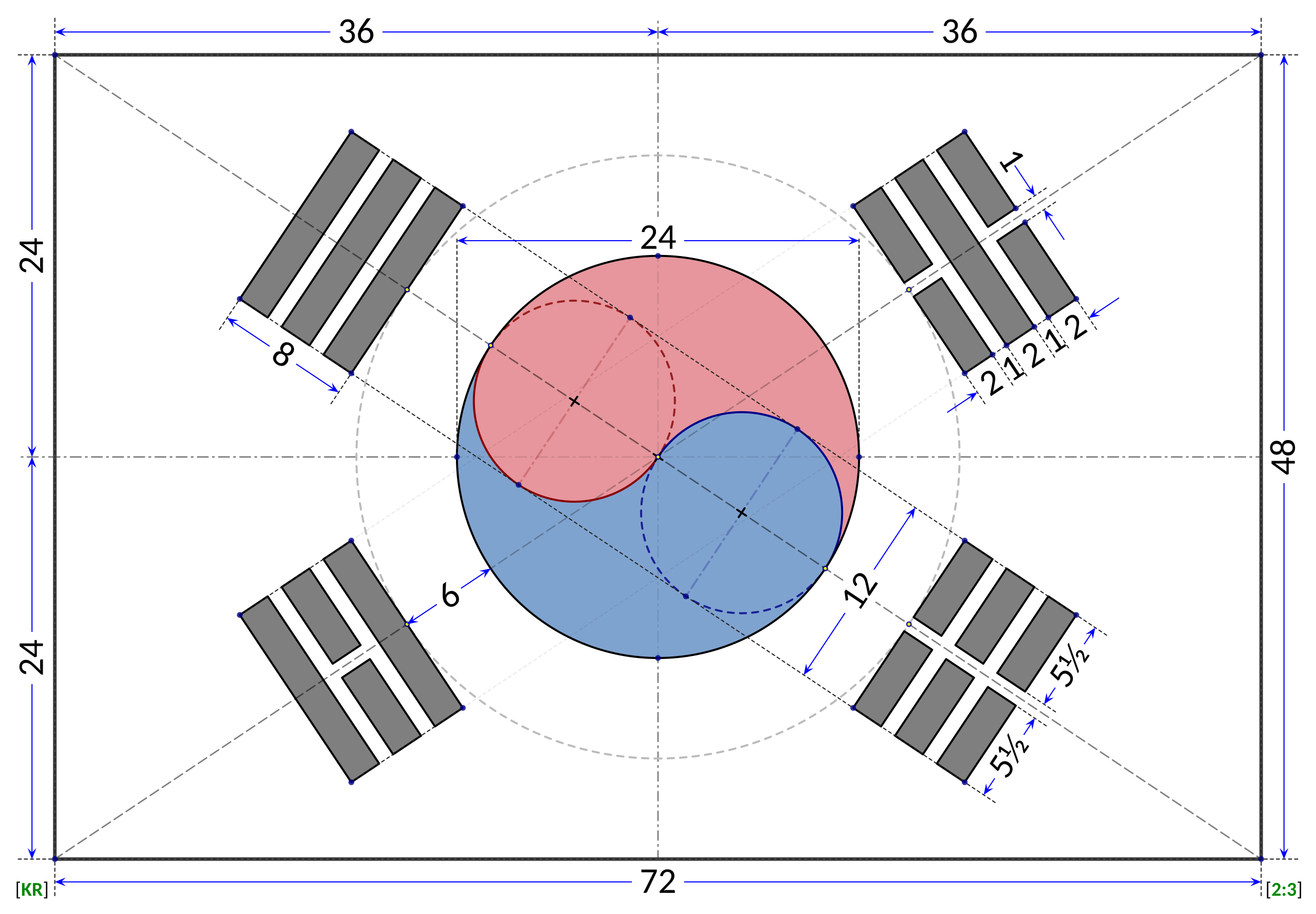
The national flag of South Korea depicts these four trigrams. Around the taegeuk, 태극, 'the great ultimate'. In Mandarin: taichi, 太極. This symbol, here in red and blue, represents the ever-continuing interplay of separation and attraction, the essential dynamic of creation. The three yang lines opposite three yin lines represent summer and winter. A yang line hidden between two yin lines represents autumn. Two yang lines with a yin line in the middle represent spring. Together, these are four faces of change.
This arrangement of four trigrams is a simplification of the arrangement in which all eight trigrams occupy a place, the bagua, 八卦. There are two versions of this, and below is the oldest, The Arrangement of the Former Heaven, 先天八卦. At the top is the character ‘qian’, 乾, and at the bottom that of ‘kun’, 坤: Heaven and Earth. On the left side is li, 離, and on the right is kan, 坎: Fire and Water.
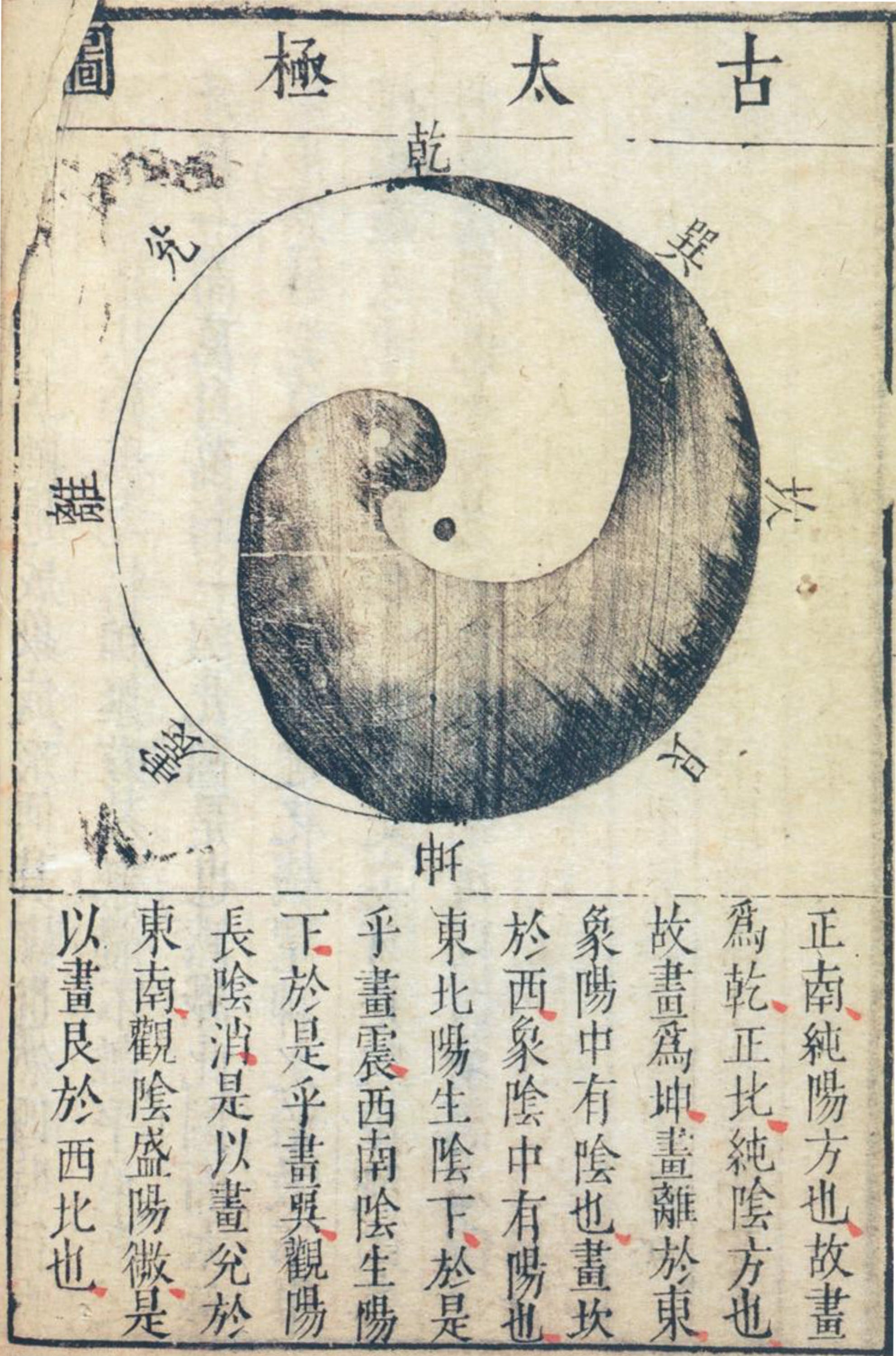
The trigrams of Heaven and Earth represent the state of absolute purity. Only unbroken lines, or only broken lines, kind with kind, with no mixing whatsoever. Deep in the earth and high in the atmosphere, it is sterile. But complete purity does not last long. Where Heaven and Earth meet and merge, multiplicity arises – the amalgam. Recorded in the 62 chapters that follow.
Everything has rhythm, and rhythm comes from imbalance. Two dark yin lines with a hidden yang line are like a moonlit night. One yin line hidden between two yang lines is like the shadow that inevitably accompanies the light of the sun.
Chapter 29 is represented by not one, but two instances of the water trigram. Not a puddle or a lake, but a deep sea, hence the name The Unfathomable. That is the title Richard Wilhelm used for this chapter in his I Ching translation. The abysmal, without foundation, immeasurable. The Abyss, a chasm, a precipice, a dark depth. For the people of bygone times, the ocean was bottomless, dark, and full of unknown dangers and monsters. We are more rational and laugh at their naive awe. Yet, we know more about the surface of the moon than what goes on in the depths of the water. Twice-water is indeed very dark. Monstrously dark.
Alfred Huang, the author of The Complete I Ching, further clarifies the title of chapter 29.
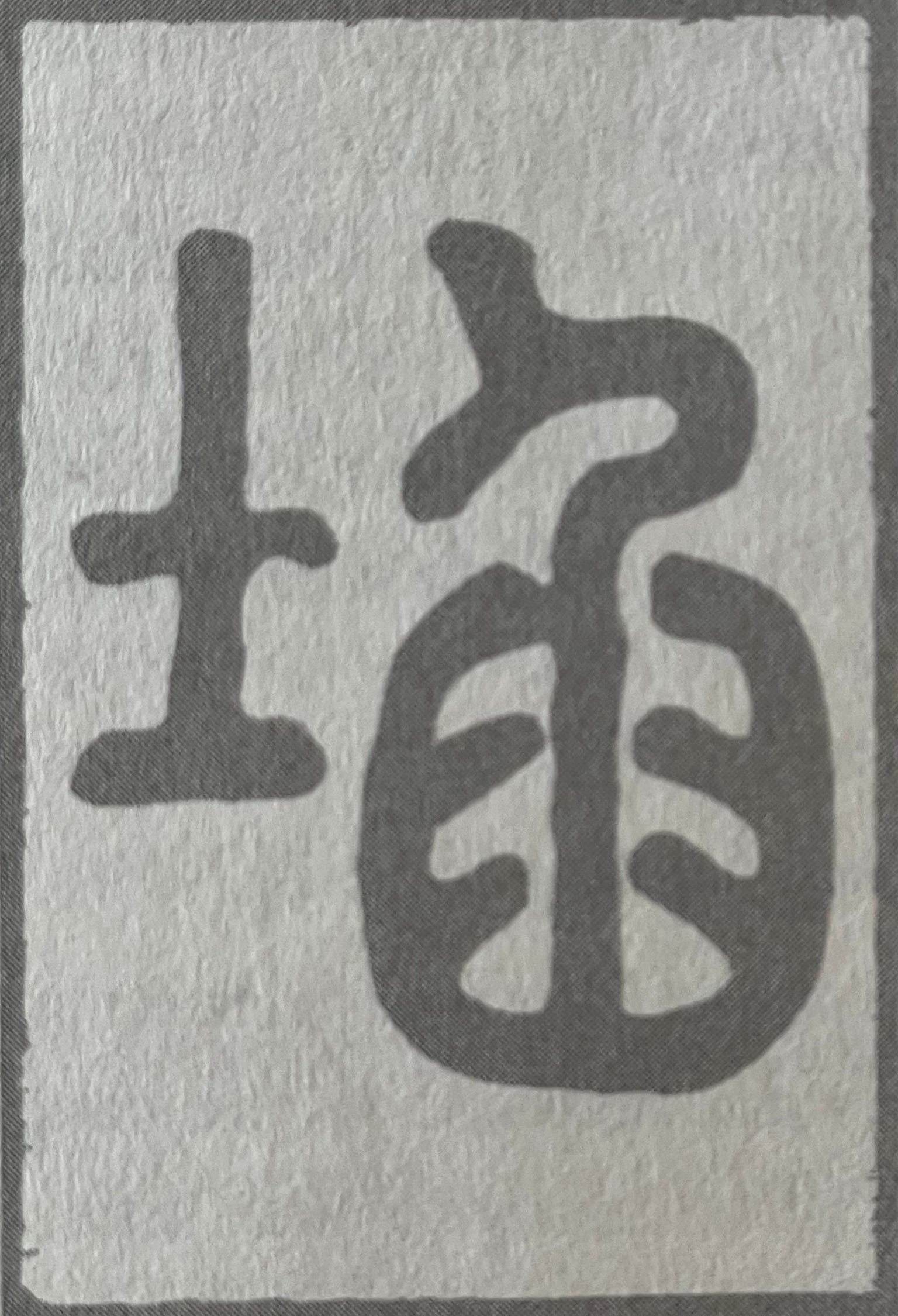
Kan is a pit. It can also be interpreted as falling. Wilhelm translates Kan as Abysmal and Blofeld as Abyss. In this book the word Darkness is used. The ancient ideograph selected for this gua is a very old and beautiful form. The left half of the ideograph is a symbol for Earth. The right half is made up of two parts. The upper portion depicts a person standing on one foot with the other foot off the ground, which indicates that the person is falling. Directly underneath one foot, there is a vertical line symbolizing a falling movement. The lower portion of the ideograph looks like a pit. We have here the image of someone falling into a pit. The meaning of Kan is twofold, either a pit or falling. In the later version of the ideograph, it should be noted, the picture of the pit was left out.
The Complete I Ching - Alfred Huang
Other translations of the I Ching use ‘A Pit’ as the title for chapter 29…
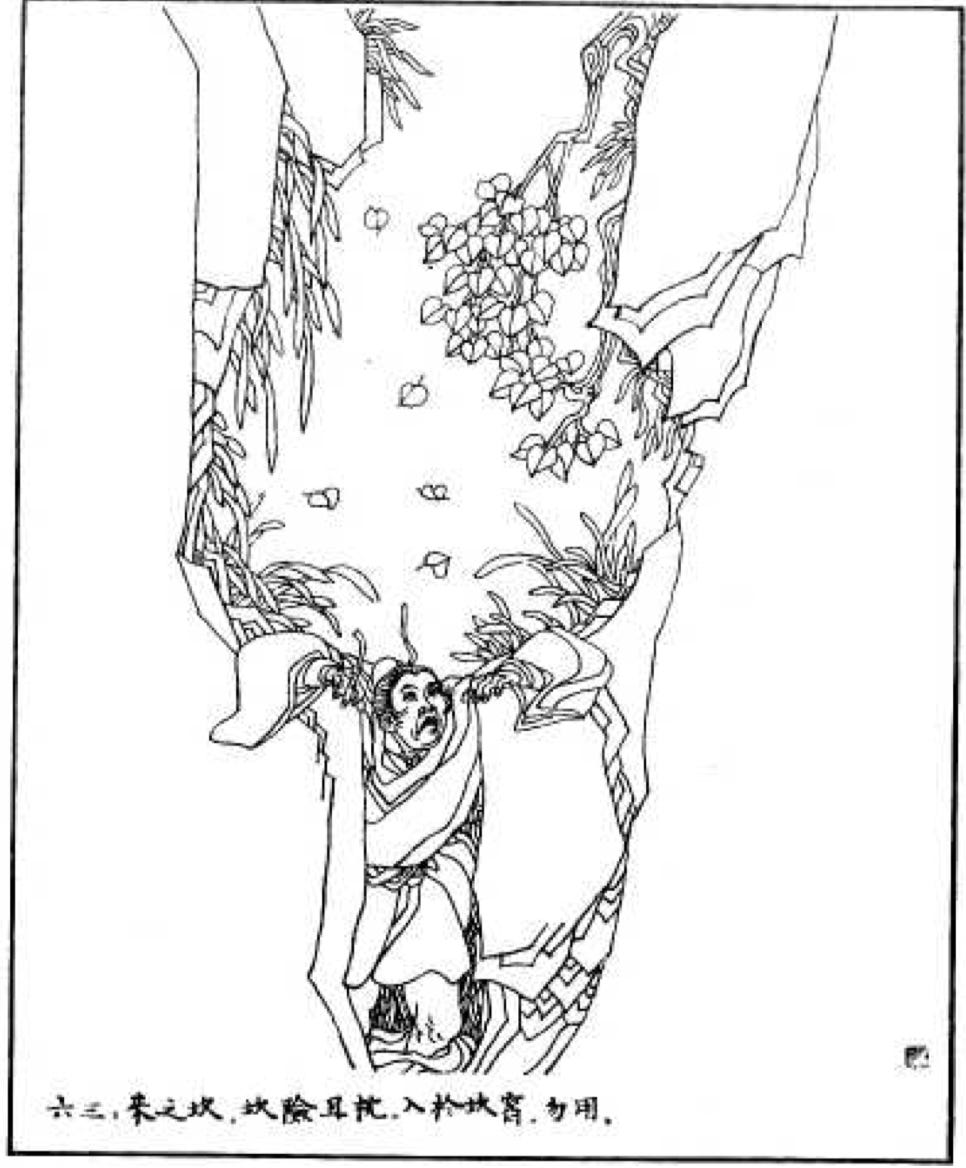
Dig a deep hole and soon there will be water at the bottom. If it rains later, the hole will fill up. Water always finds the lowest place. Dig a well and in the dark depths you can hear the bucket splashing on the water.


The English word 'pit' and the Dutch word 'put' (well, water well) are closely related etymologically. Both words are related to the Old English 'pytt', the Old Norse 'pyttr', the Middle Dutch 'putte' and the Old High German 'pfuzzi'.
A pit (and a ‘put’, a well) does indeed have a bottom, so describing Chapter 29 as 'bottomless' is too harsh. Are you in the pit? There is always hope. Once again, Alfred Huang:
The central theme of this gua is: falling but not drowned; in danger but not lost. Maintain your confidence: soothe your mind. With assurance and faith, caution and trust, you can pass through any difficult situation. Both Abysmal and Abyss carry the sense of being bottomless. Kan is a pit, but it is not bottomless. There is hope.
The Complete I Ching - Alfred Huang
If you accidentally land on square 31 of the Game of the Goose, you're in trouble. And you have to wait in the depth of the well until another player suffers the same fate. They're in; you're out.
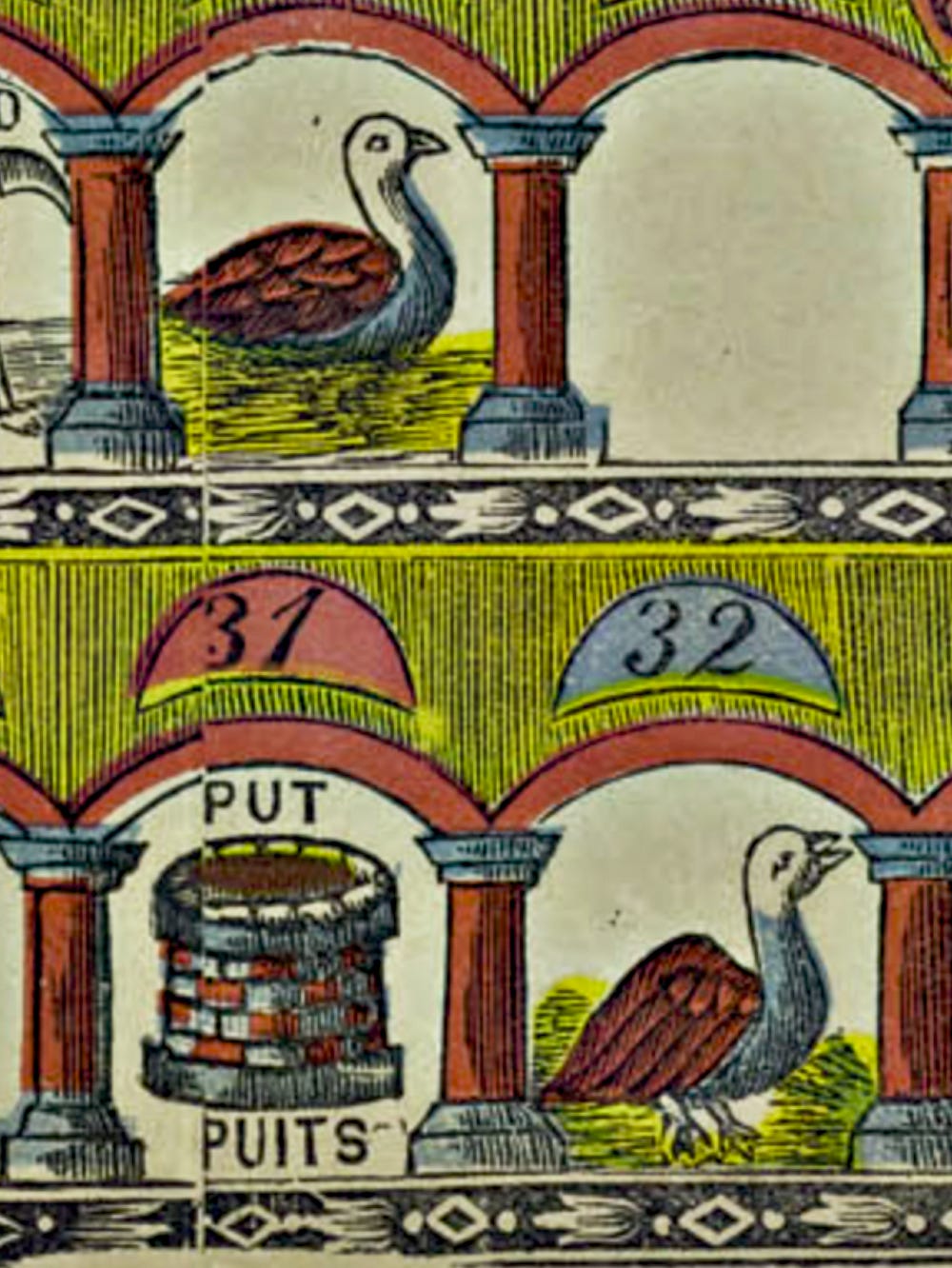
NB. From its genesis in Chapter 1 to Chapter 63. After completion, aka perfect, the I Ching has sixty-three chapters. Chapter 64 is entitled ‘Before Completion’, also called ‘Back to Square One’, and is therefore anything but an end point or a final destination. Rather, it is the beginning of a new cycle. Hmmm, sixty-three? That is exactly the number of squares on the goose board. That seems reason enough for a wild viral theory that the ancient Zhou may well have been influenced by this traditional Dutch/English board game.
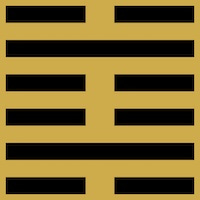
THE IMAGE: twice the water trigram.
Does that answer the question?