Plants are bound to the location where they first sprouted. Unable to dodge, run or flee, they have no choice but to resolve any difficulties that arise right where they stand. Plants have developed an endless array of self-defence mechanisms. Often without any outward signs of anything unusual, they use great creativity to fend off aggressive rodents and grazers: bark, spines, thorns, scent, poison and intoxication. Our science has investigated and documented only a fraction of plant warfare and seduction techniques. Who said that plants just stand there defenceless and know nothing of martial arts?
You might wonder why plants are so rarely found in martial heraldry. Razor-sharp glass daggers that shatter upon impact, releasing an irritating acid. How is that peaceful and green?
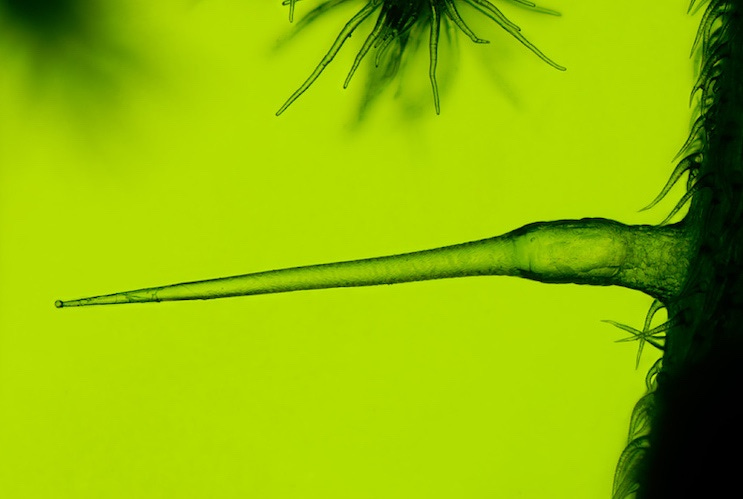
Perhaps it would be a good idea to adopt the stinging nettle as a martial totem?

Plants with sci-fi weaponry?
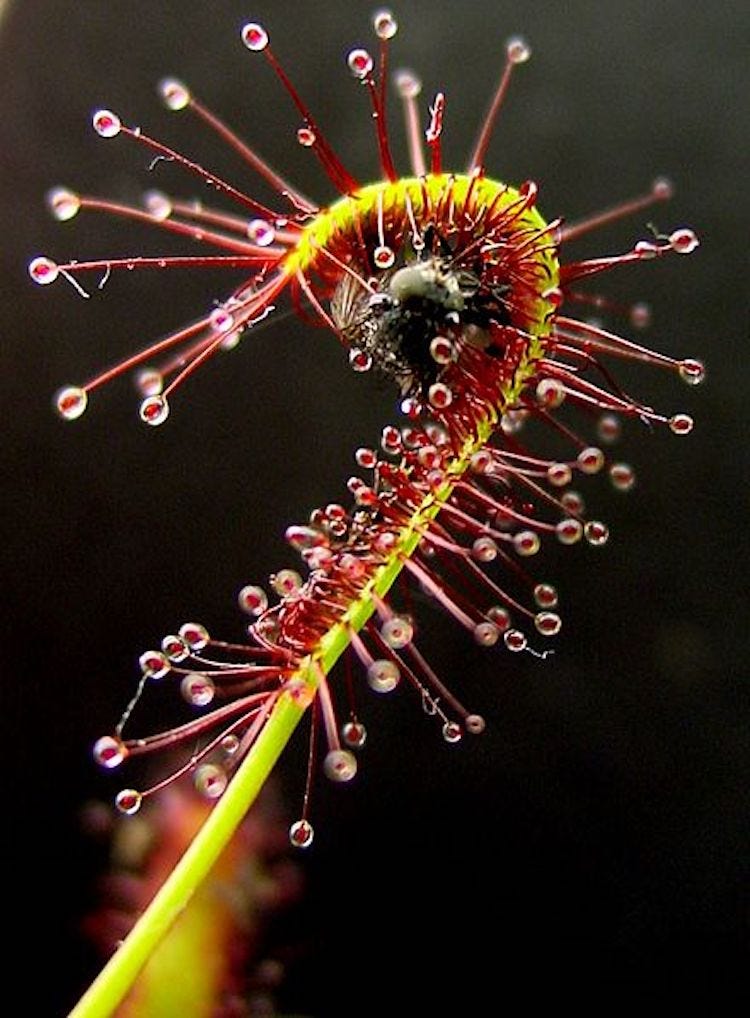
Plants with selective defences.


Treating plants with chemical pesticides


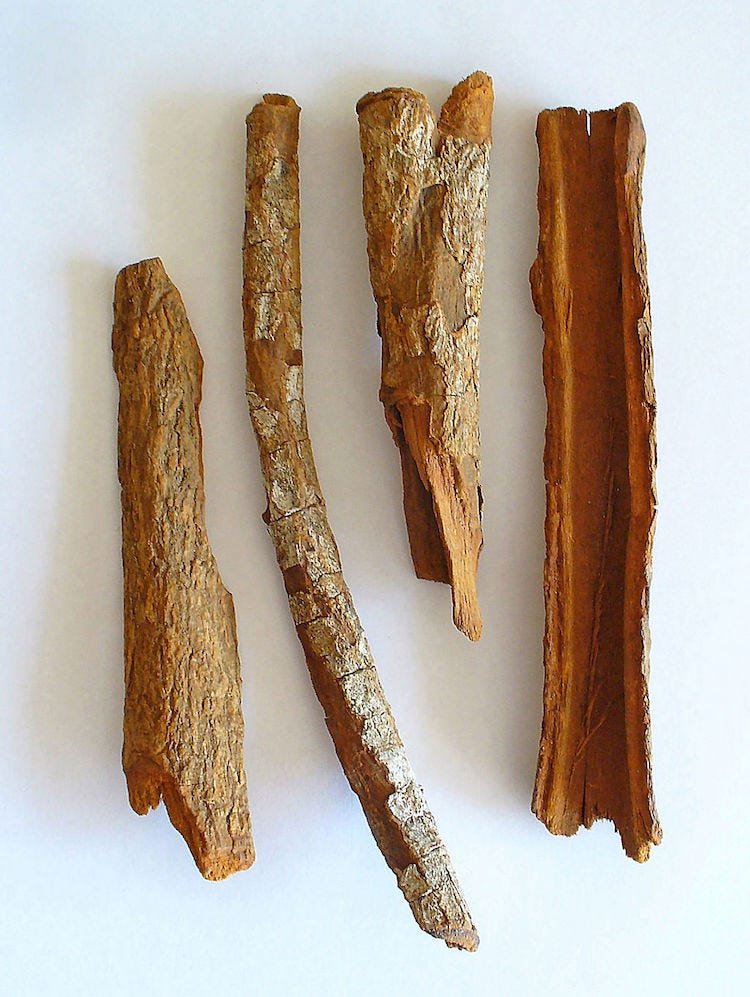
This intense bitterness is lethal to microorganisms and is therefore a vital medicine for us.
Stand in a natural setting. In a wood or park, or your back garden. Don’t close your eyes completely, but let them rest; stand with your eyes half-closed. Instead of standing, you can of course sit down. Focus your attention on the scents reaching your nose. At first, you may not smell much, perhaps only your own skin or sweat, or your clothes. But soon you will become aware of scents you hadn’t noticed before. Pick up on the scents carried by the air current or the wind, whether faint or strong.
When you look at an object, you perceive reflected light: a visual encounter with light waves acting as messengers. But the scent you breathe in through your nose is an essential part of that other thing, of what you are smelling. A fleeting part that has broken away from the whole. In French, the word ‘essence’ is used for the scent as the essential. Take ten minutes to immerse yourself in the world of scent. Breathe in your surroundings.
What can bring us close to the chemical world of plants is navigating and orienting ourselves through our sense of smell. Just like plants, we live in a world of scent, although for most of us this is a neglected – and washed-away – reality. Scents are immediate, instinctive, and relentless and awaken memories. A large part of the sea of scent in which we live is of plant origin. A dizzying palette. When a plant cannot bridge a distance because of its roots, there is always the wind. It carries the plant’s scents far away and brings the scents of others to it. The lack of a nose in no way prevents the plant from perceiving scent.
Alongside the development of martial skills, the practitioner explores the paths to health and the art of longevity. And who better to turn to for inspiration? By the time a healthy oak or beech tree reaches adolescence, the vast majority of animals are already elderly or have passed away. The lifespan of most animals pales in comparison to that of many plants.
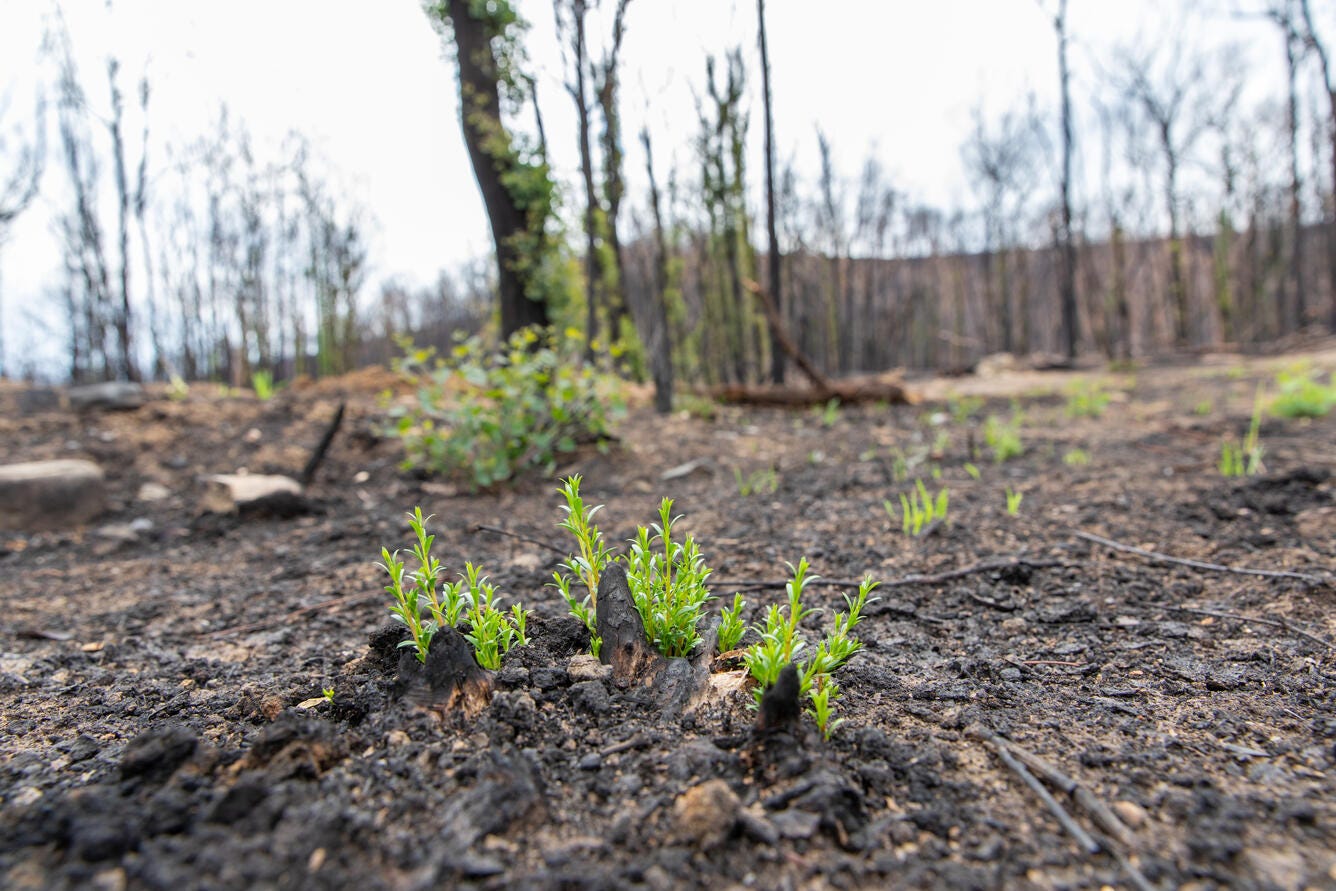
It is a true miracle that a starfish can grow a new arm after losing one. Doesn’t that seem rather handy? Yet any ordinary tree loses branches throughout its life, and within a short time they are all replaced by new ones. Whereas an animal’s vital functions are concentrated in specific organs, a plant is built in a modular way. All parts are replaceable and renewable. Even if a storm or a fire has destroyed the above-ground part of the tree, the hidden root system is often still very much alive. And look, so soon after the devastating fire, new greenery is already appearing again.
In Utah, USA, grows Pando. Pando is not a single tree but a forest of over 40 hectares of quaking aspen. All 40,000 trunks share the same root system, and whilst individual trunks are born and die, Pando as a whole is ancient, dating back 14,000 years. Isn’t that a fascinating example of regenerative power?

The practice is straightforward. Find a suitable setting: a quiet corner in a city park, a balcony with a view of a tree, the dunes, your living room with plants on the windowsill, or a wood. Stand upright, with your arms by your sides (wu chi zhuang). Placing your hands behind your back, on your hips, or with both palms on your stomach are other good options. Relax your knees, relax your gaze. Look freely at the greenery.
In our everyday interaction with our bodies, sensory perception – particularly the visual – demands a great deal of our attention. Our hands, too, take up a disproportionate share of it. Physical awareness naturally focuses on those areas where there is a great deal of activity and sensation. As a result, other parts of the body are left in the shadow of our consciousness.
Now take a look at a tree or plant in your immediate surroundings. Every plant or tree has a modular structure. All the branches and leaves, all parts of the trunk, share the burdens and benefits equally. Even underground, where we cannot directly observe the plant, the relationships between the plant’s various parts are egalitarian. All those countless root tips are simultaneously making their way through the earth. Of course, there are factors that disrupt the perfect radial development of the above- and below-ground parts of the plant: shade or bright sunlight, a lack or an excess of water, a boulder, a torn-off branch, or a swarm of gnawing caterpillars. It is precisely this that shows that the vital force of trees and plants lies hidden in the collectivity of the parts.
The practice of standing chi kung seeks to awaken a similar latent collectivity within the practitioner’s body. It is innate to us, but there are many reasons and circumstances that lead to a profound disruption of this inherent unity. The zhan zhuang practice opens up access to previously neglected and forgotten areas of the body, one’s personal terra incognita. Step by step, the whole body is brought back into the context of consciousness and breathing. In the I Chuan tradition, there is talk of awakening ‘hun yuan li’, the power of collectivity, or collective resilience.