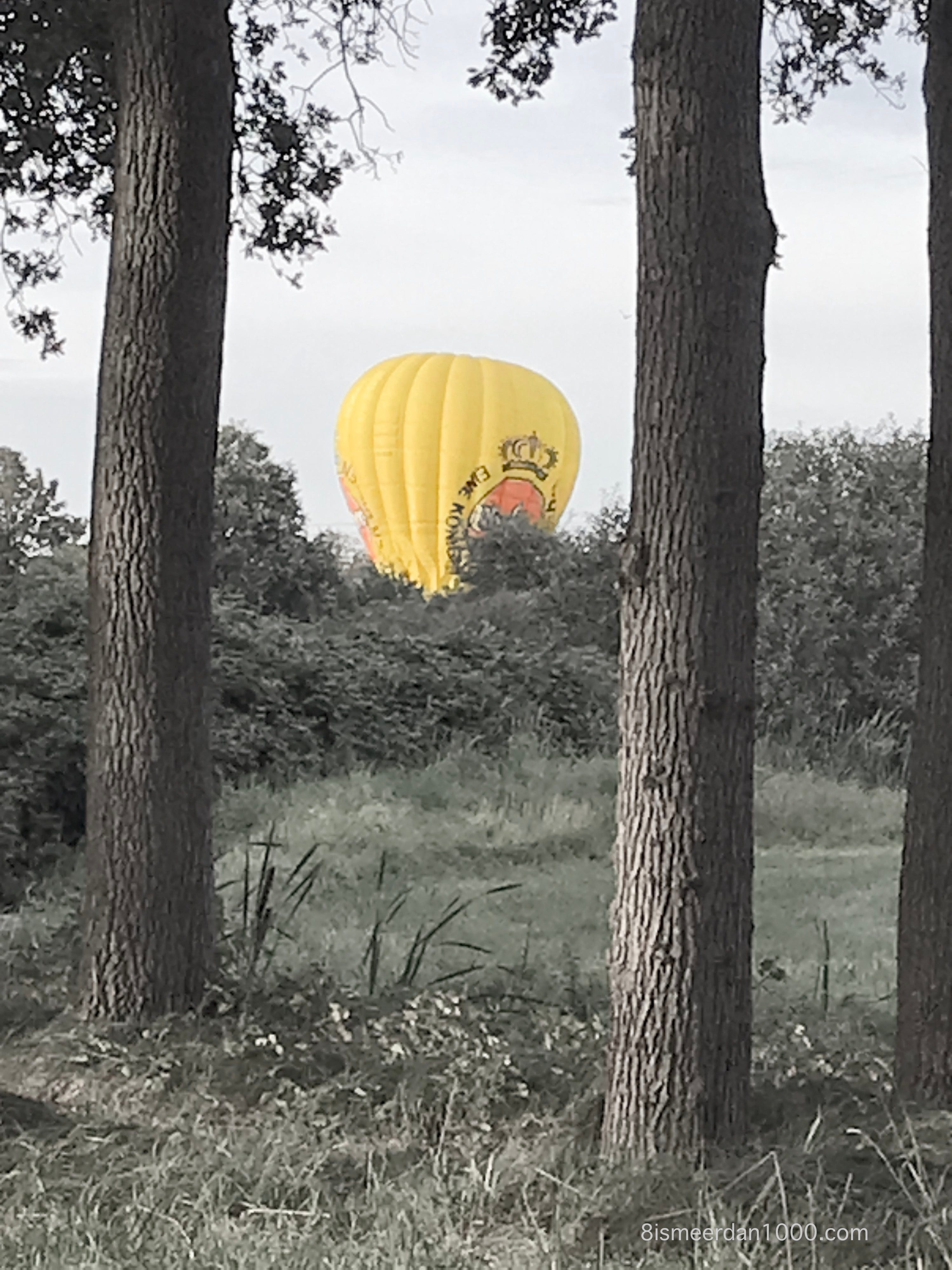
Halfway through your daily walk in the woods, you suddenly hear a strange whistling sound. Then it goes quiet, but you hear it again. You look around to see where the sound is coming from. The dense foliage blocks your view. There it is again. Where the woods give way to a single row of trees along the path, the view is clearer. And now you see it: the hissing sound is coming from the burner beneath a large yellow hot-air balloon. What a sight, as tall as a house! You take a photo; you can show it at home later this evening as evidence to back up a good story.
But what can you actually see in that photo? A yellow hot-air balloon? Or perhaps lots of green plants, bushes and trees? Yes, the latter is certainly true. There is far more green than yellow to be seen in the photo. A single balloon versus a large number of plants of a wide variety of species. Moreover, the balloon is in the background of the photo, and many of the plants – certainly the two oaks – are in the foreground. Yet, when you tell the story in the evening, it will undoubtedly be all about that yellow contraption. The greenery merely makes an appearance; it forms the backdrop, the wallpaper.
An hour after you took the photo, the balloon took off. Perhaps you saw it drifting off into the distance later on and heard the sound of the burner a few more times, each time from further away.
The trees and plants, on the other hand, remained where they were. An hour after take-off, and even now – you can safely assume – they are still there. If something doesn’t move, it apparently goes unnoticed and gives little cause for a story. Of all the walks you took in the woods, you can recall that one specific occasion when you saw the balloon. The memory of the trees and the forest, however – which you encountered on every walk – has faded into a gentle background melody. Pleasant, certainly – the proximity of the greenery is, after all, the main reason for your walks – but within the fabric of your memory, it is white noise.
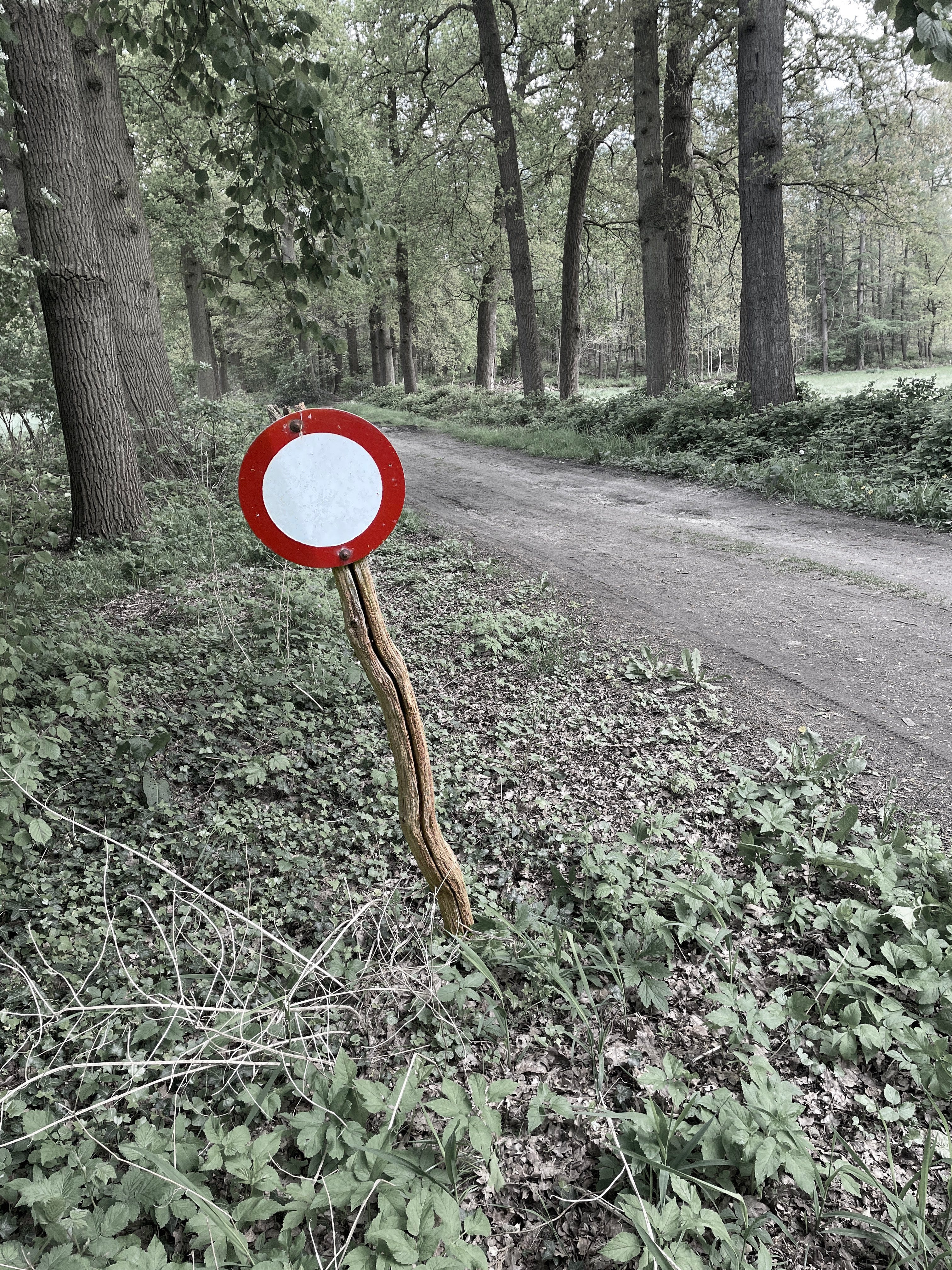
The ‘No Entry’ sign catches the eye. You show this photo to someone and ask, 'What do you see?’ Two rows of pedunculate oaks, blackberries and ground elder; overhanging branches, a home and food source for countless insects and birds; the contrast between the light in the open field and the shade beneath the trees? No, the answer undoubtedly relates solely to the traffic sign. Unlike the hot-air balloon in the previous photo, it doesn’t move; it is just as rooted to the spot as the greenery around it. So that doesn’t make the difference. Perhaps the person you asked will notice that the sign is screwed onto a post found on the spot. A twisted, broken-off branch from one of the oaks. But then again, there are so many of those lying about in the woods, and they don’t stand out at all. At least not until a red-bordered traffic sign is attached to it and stuck upright in the ground.
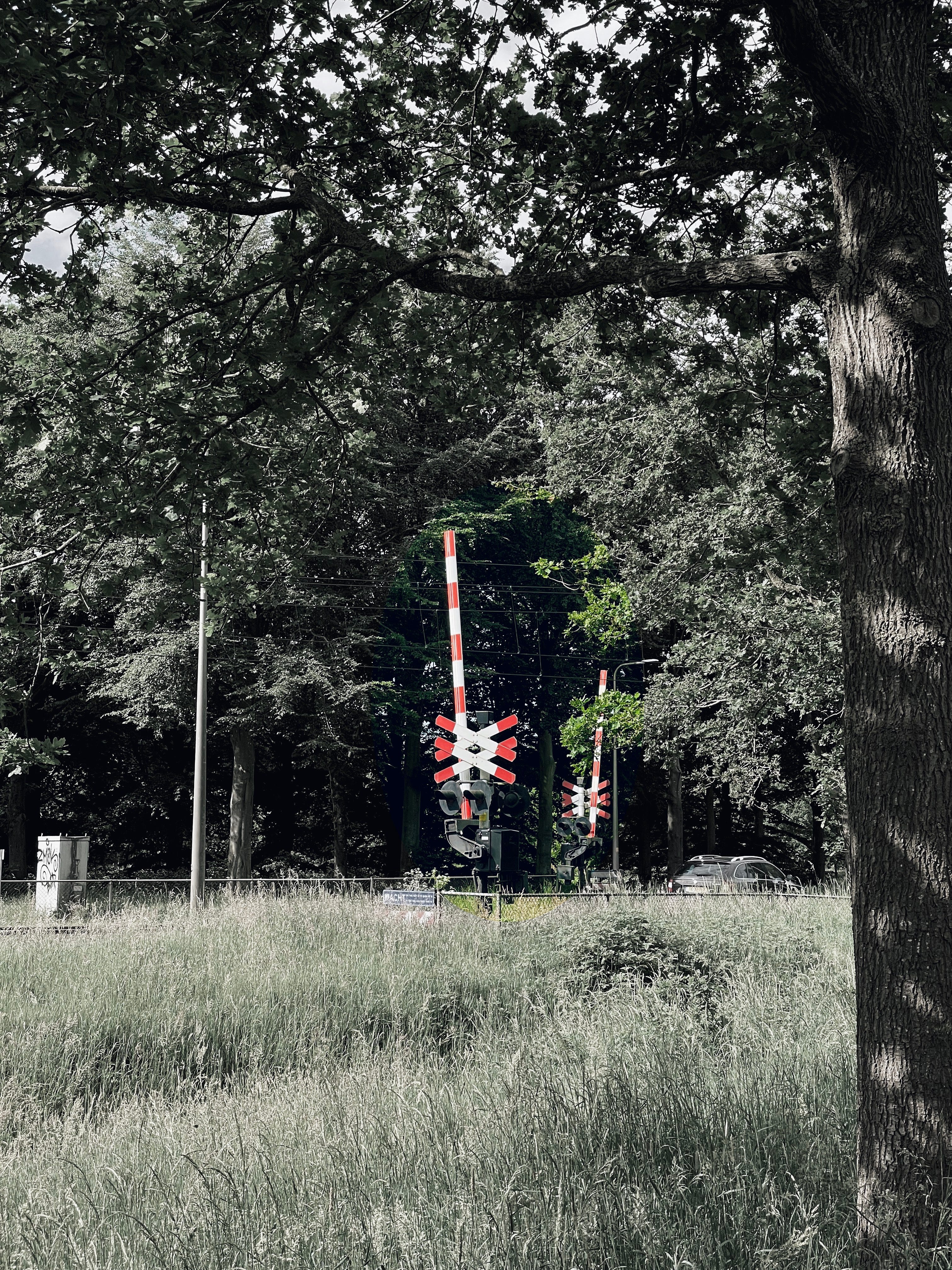
The phenomenon whereby the plant world does not seem to make much of an impression on our consciousness is known as ‘plant blindness’. For our distant ancestors, who lived in the wild, greenery was not a threat. At least not to the same extent as many of the animals they might encounter in the forest. Greenery does not bite, does not spring from ambush and does not chase. Greenery represented the neutrality of shelter, and it still does so for us. Greenery does not impose itself, as red tends to do. The red border around the ‘no entry’ sign and the red-chequered level crossing with red warning lights in the photo below stand out and occupy your mind.
Life requires the exchange of oxygen and carbon dioxide. This phenomenon is found in both animals and plants, and the two mechanisms complement one another. What one gives, the other takes. What one exhales, the other inhales deeply. Haemoglobin and chlorophyll, central to the oxygen-carbon dioxide cycle in animals and plants, respectively, although very different in function, have a similar chemical structure. The former is built around an iron core, the latter around a magnesium one. Animals derive their characteristic red colour from the former, whilst the latter makes plants green.
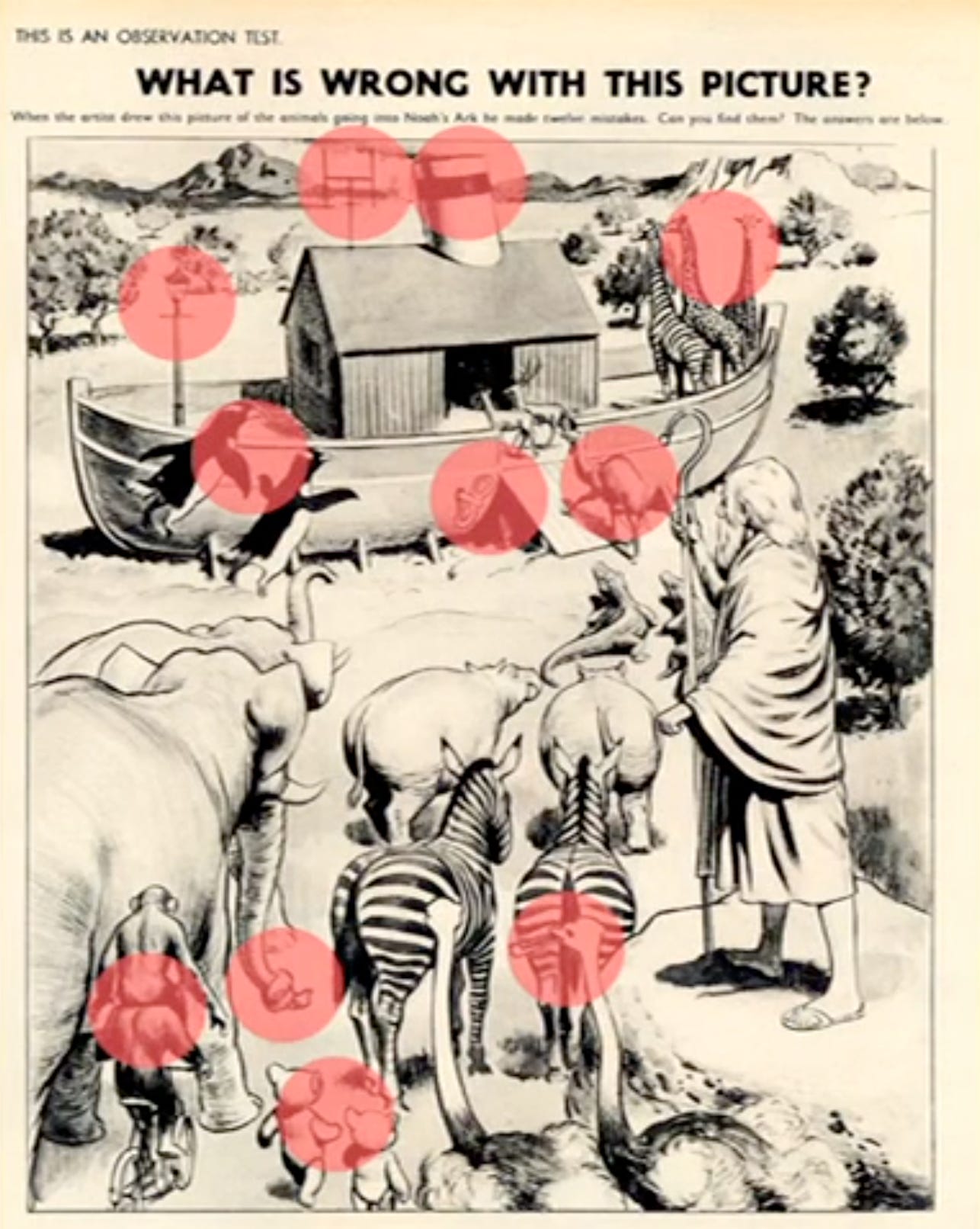
Sometimes I go browsing through a very old magazine. I found this observation test about the story of the ark. And the artist that drew this observation test did some errors, had some mistakes -- there are more or less 12 mistakes. Some of them are very easy. There is a funnel, an aerial part, a lamp and clockwork key on the ark. Some of them are about the animals, the number. But there is a much more fundamental mistake in the overall story of the ark that’s not reported here. And this problem is: where are the plants? So now we have God that is going to submerge Earth permanently or at least for a very long period, and no one is taking care of plants. Noah needed to take two of every kind of bird, of every kind of animal, of every kind of creature that moves, but no mention about plants. Why? In another part of the same story, all the living creatures are just the living creatures that came out from the ark, so birds, livestock and wild animals. Plants are not living creatures -- this is the point. That is a point that is not coming out from the Bible, but it’s something that really accompanied humanity.
The Roots of Plant Intelligence - Stefano Mancuso
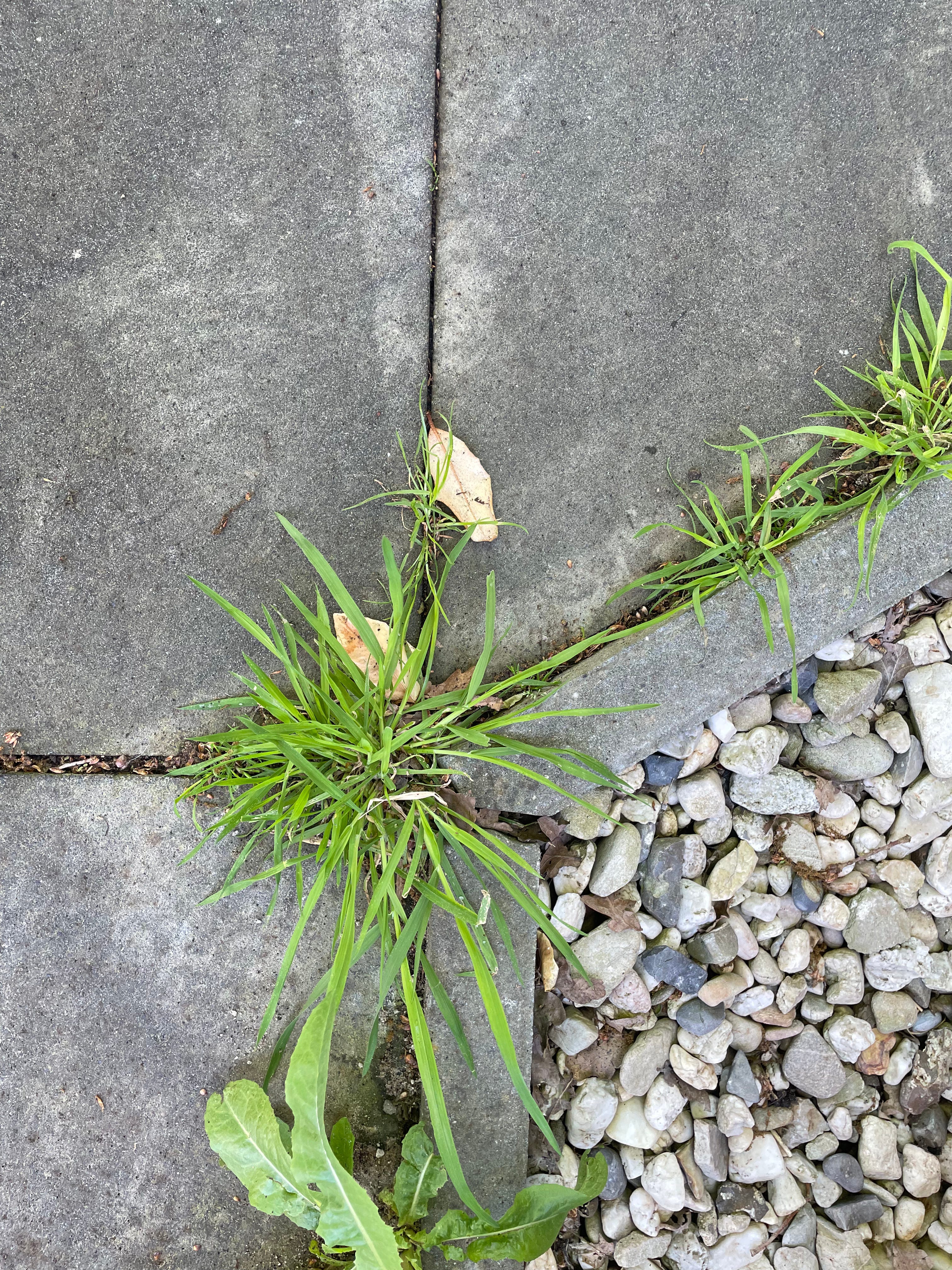
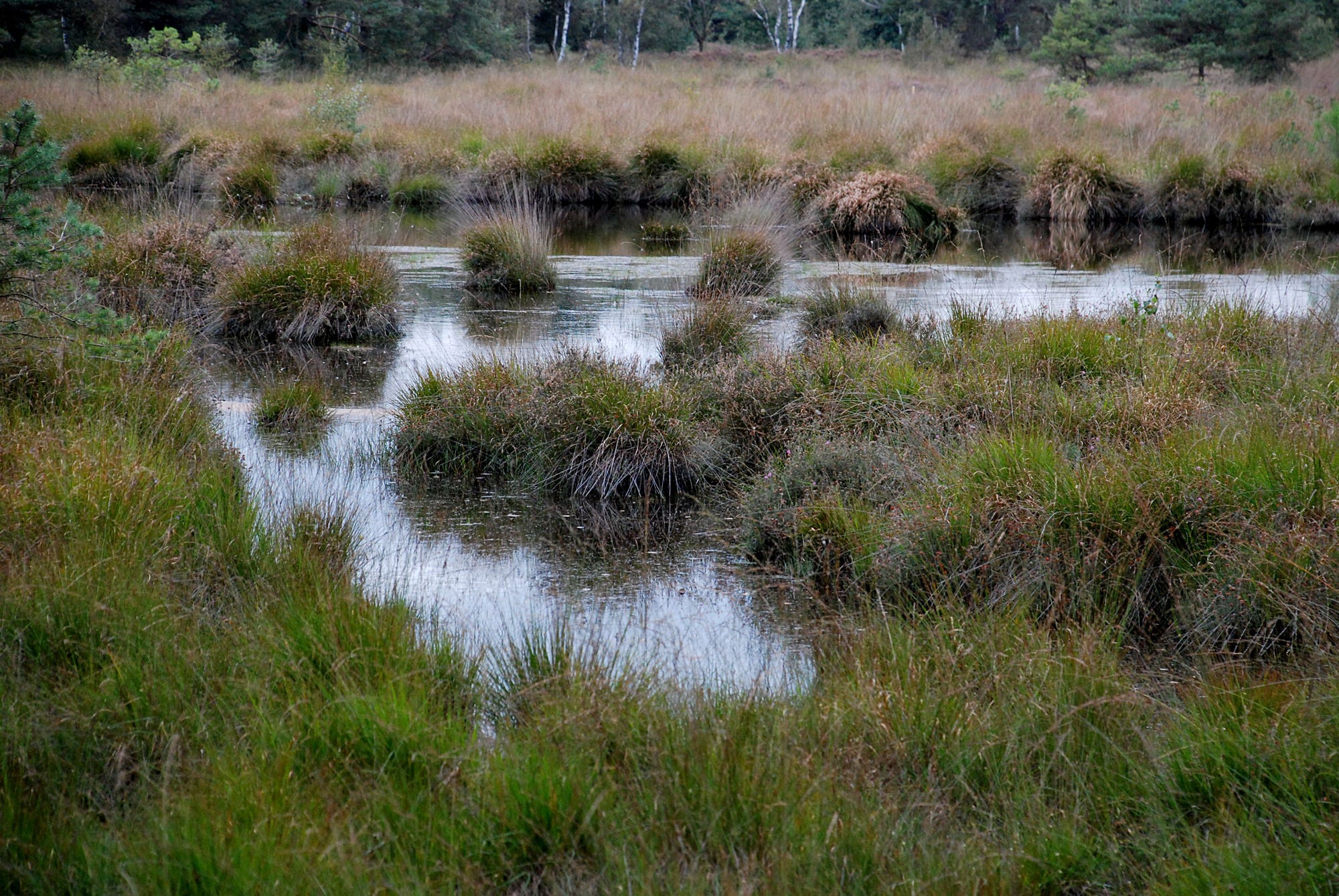
The grass is growing through the paving slabs. 1. There are simply paving slabs and gravel there. 2. The grass is growing annoyingly through them. Chronologically, however, the situation is different. 1. Originally, there was a great deal of grass and dandelions; there were meadows, large grassy plains, and, further back in time, peat bogs. 2. Then, a single tile was laid there for the first time, and gradually more and more, until the entire landscape was covered with tiles, gravel and asphalt. Now, only a tiny fragment of it remains visible. A small fragment of the original landscape. A single tuft of grass and a dandelion as its last remaining representatives. That is what you see in the photo above.