

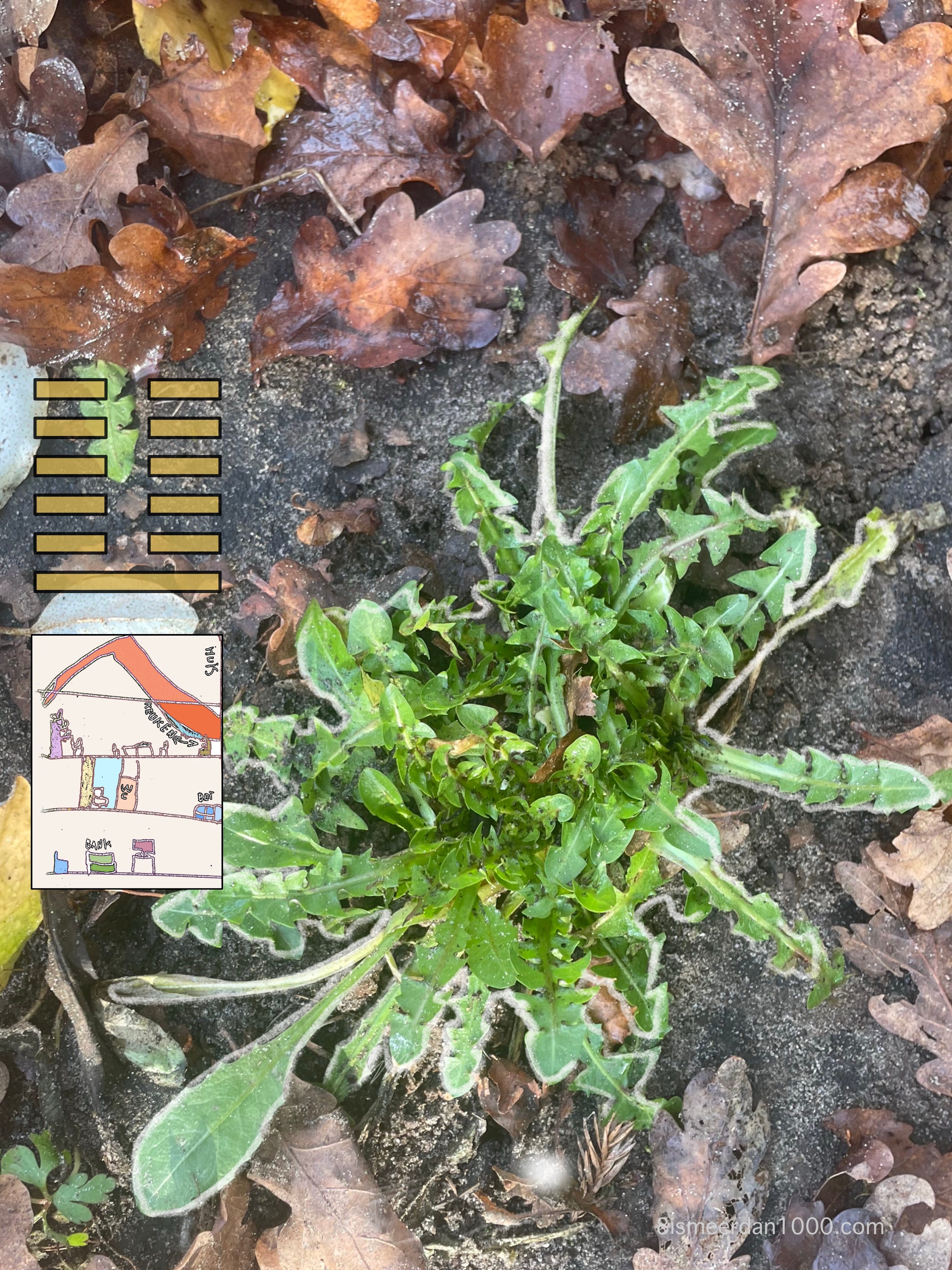
No spot behind the house has been left untiled. How small was the chance that the wind would blow a dandelion seed right onto a joint between two tiles? Last year, that's what happened. In the narrow space between the tiles: a modest dandelion rosette and later two flowers on thin stems, and even later white fluffy balls. In winter, the plant seemed to have disappeared. Fallen leaves, snow and frost. And now, in February, it has returned.
Continuation of day 5.
What was it that caused prosperity to decline and the light to fade almost imperceptibly?
Nothing lasts forever; even deep darkness does not remain. In which line does change now dawn? The dice answer: three.

The third line changes from yang to yin.

Thunder beneath Earth. From the earthly darkness – five yin lines – something irresistible pushes its way upwards. Read also:


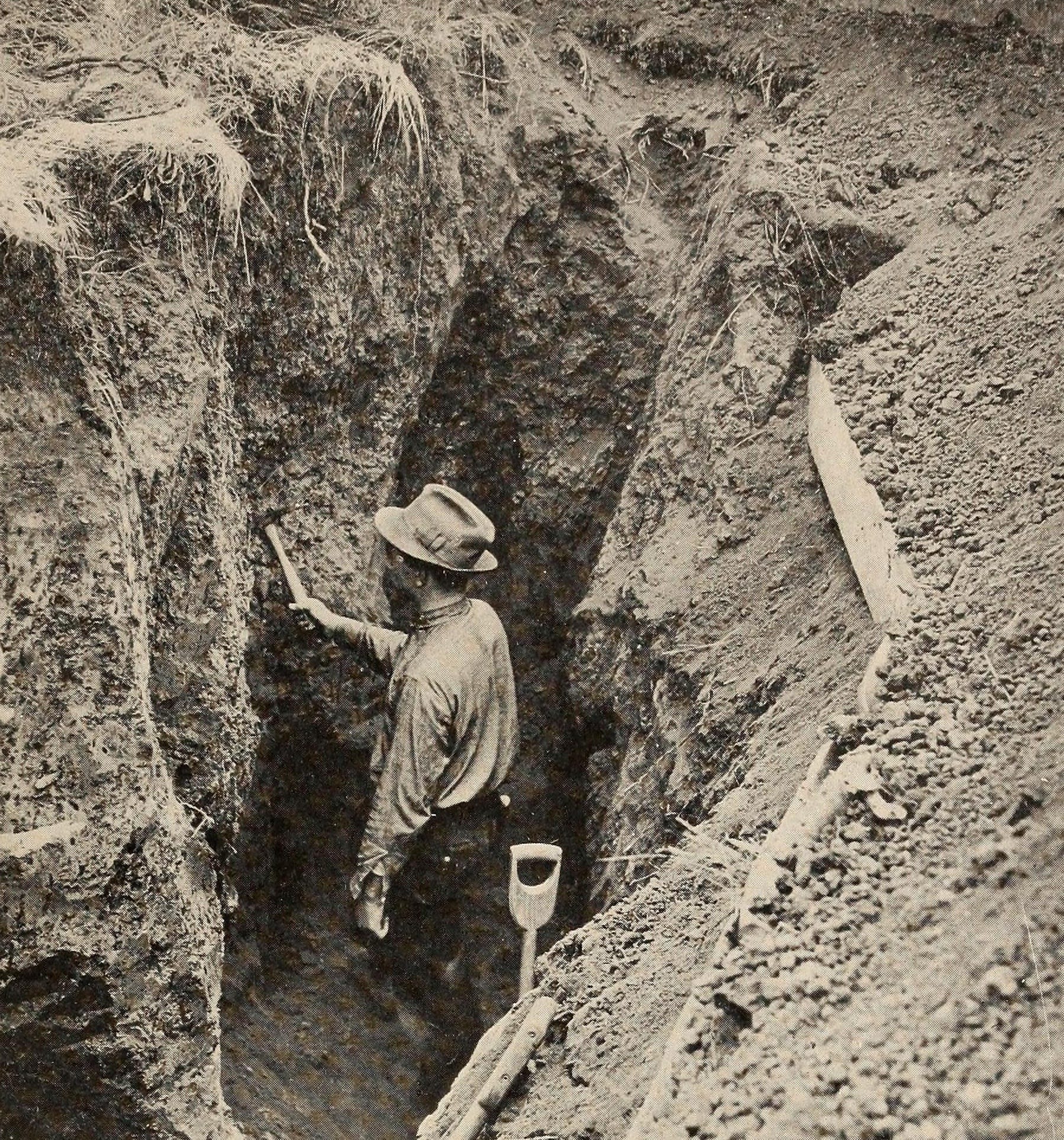
Of course, the dandelion did not disappear; it withdrew and gathered its strength deep in its roots. To long to rise again in the earliest spring. How deep do the roots go? When you dig up a dandelion, or any other plant, and then try to pull it out of the ground with force, it will always break. To get to know the entire root system, including all the hair roots, you will need to dig a deep trench next to the plant.
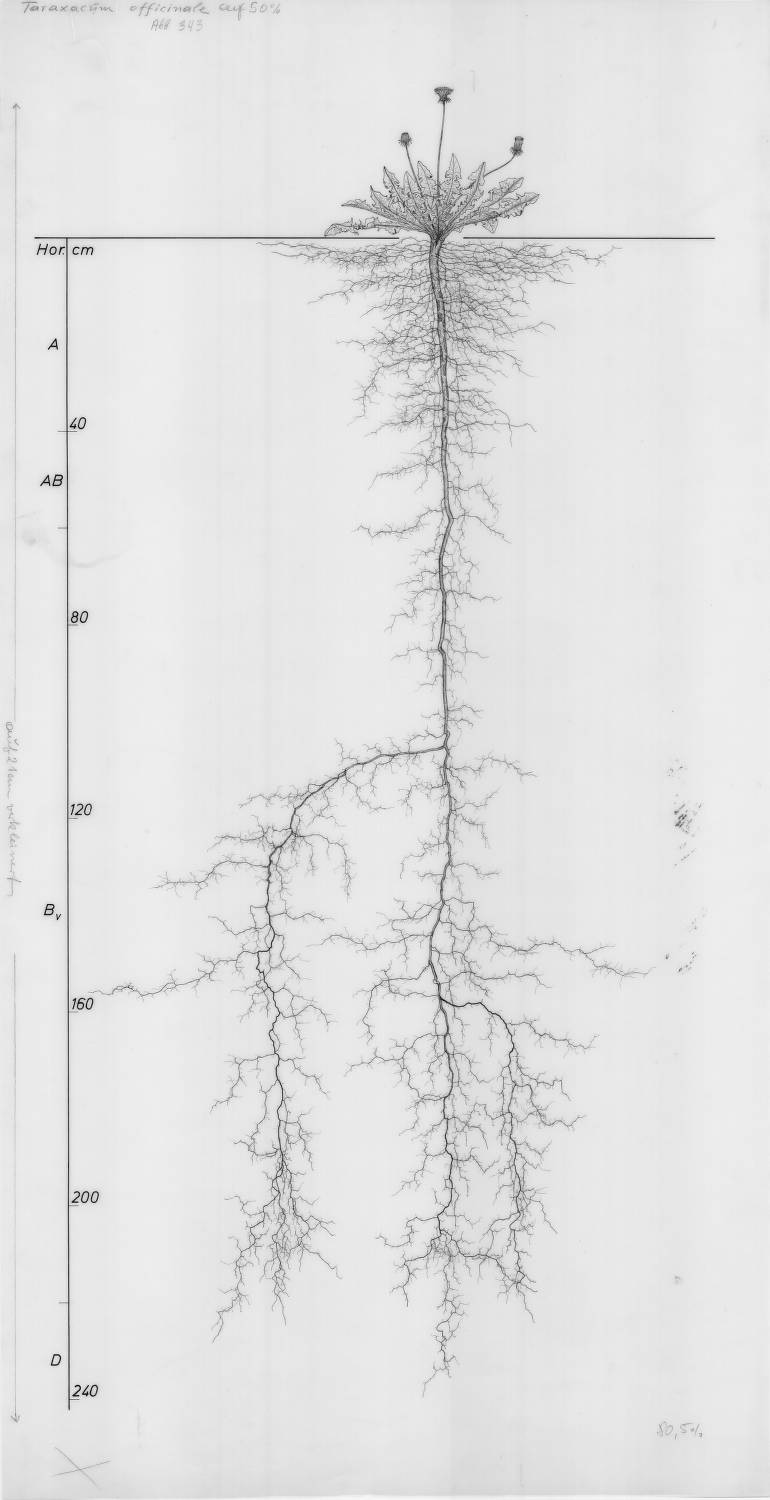
A trench two and a half metres deep?
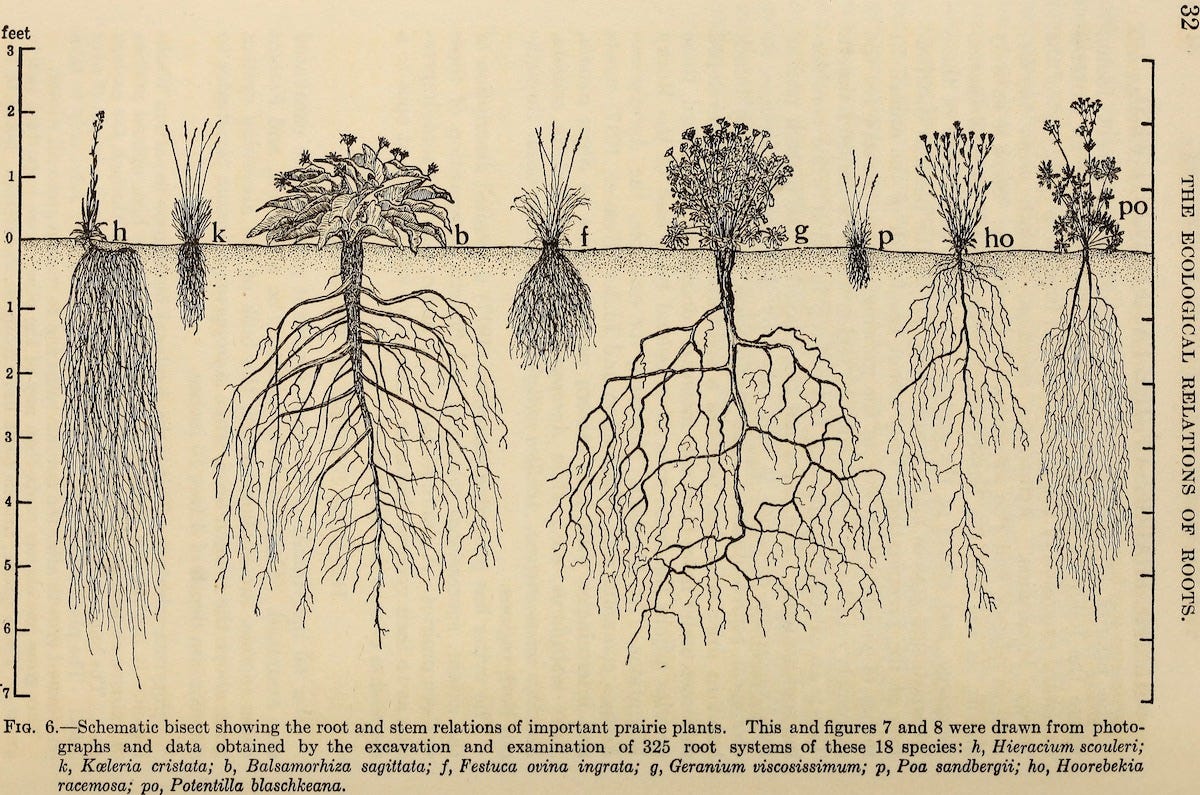
Botanist John Weaver (1884-1966) developed a laborious, painstaking technique for exposing and drawing a network of prairie roots in situ--a labor that must have suited his own precise personality for he conducted his field research wearing a three piece suit and a green eyeshade, like some accountant who had lost his way in the country. He drew the roots in great detail, documenting them at depths of up to fifteen feet from the ground surface.
To be continued in:
