
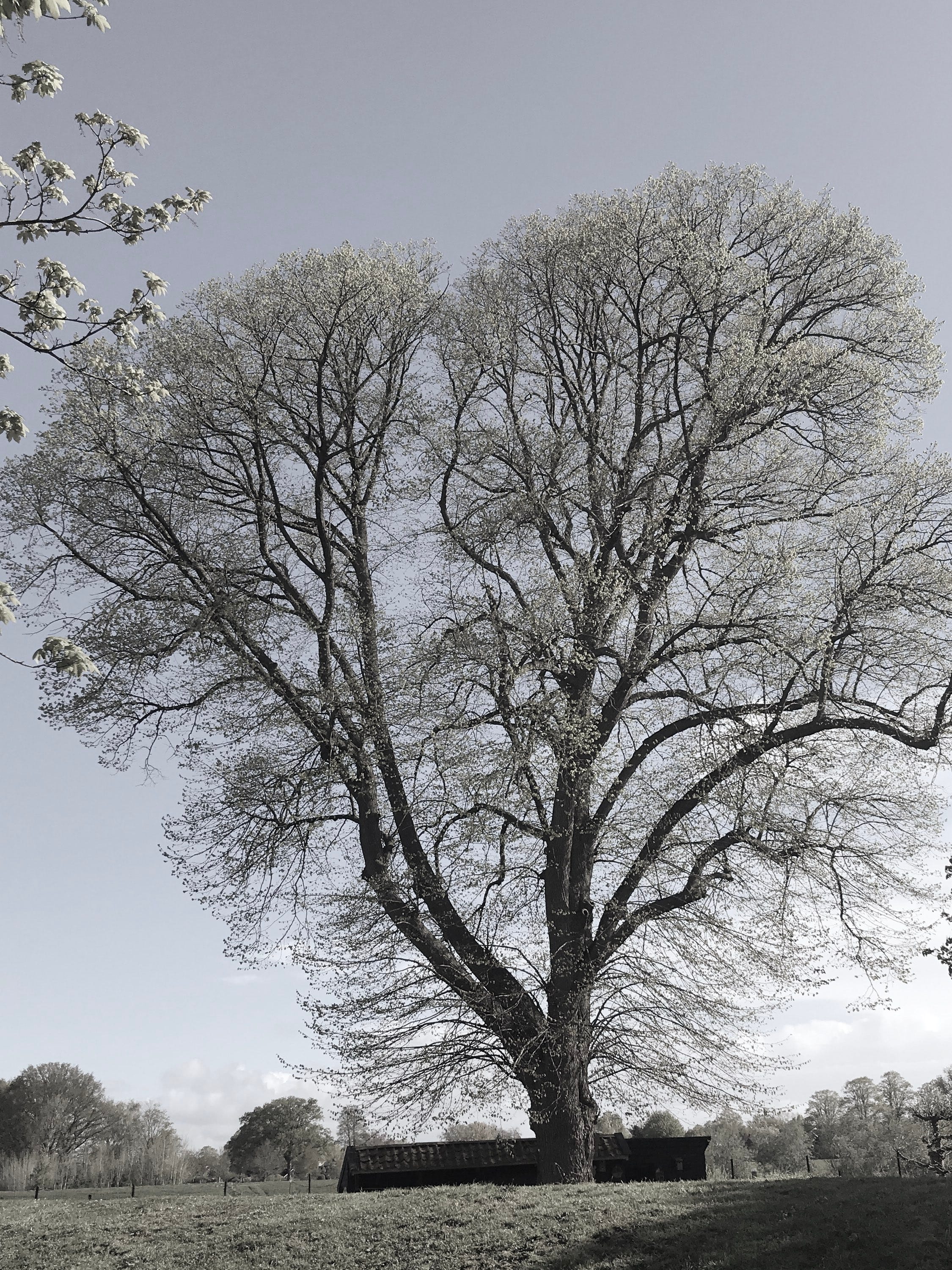
It doesn’t take much for us to recognise ourselves in an animal. Just like us: two eyes and two ears, and a mouth that wants to bite and chew. Arms and legs, paws, wings, fins: a continuous evolutionary kinship. And then there’s that remarkable shared animal restlessness. We, as animals, are always on the move. When danger approaches, we run away. If we smell a tasty morsel or a fragrant fellow creature, we sneak closer. The solution to both obtaining what is lacking and avoiding what is irritating, uncomfortable and threatening lies in our movements through space. If you cannot find what you are looking for here, you go there. And if you encounter something there that does not suit you, you move on again to somewhere else. This relentless restlessness marks the kinship between us humans and other animals.
How different plants are. Rooted in the spot where they once sprouted as seeds, they cannot escape or gain an advantage by moving. They must find a solution to every challenge they face – and do so right where they stand. An unthinkable task for any animal, a member of the restless family. Biologist Stefano Mancuso, author of ‘The Revolutionary Genius of Plants’, notes:
Whereas animals react to changes in their surroundings by moving to avoid those changes, plants respond to the constantly changing environment by adapting to meet it.
And the renowned French botanical illustrator Francis Hallé says in an interview: ...
When I entered the Sorbonne in Paris, I was not really interested in plants, but rather animals, indeed like 99 percent of students, by the way. Today. I like animals, but I can’t take them seriously because they move all the time. …. For me, trees are much more beautiful than animals. Animals are dirty, noisy, and when they die, they smell awful. When a tree dies, it doesn’t smell bad because its molecules contain less sulfur. I wonder if our initial relationship to trees is aesthetic rather the scientific. When we come across a beautiful tree, it is an extraordinary thing. ….
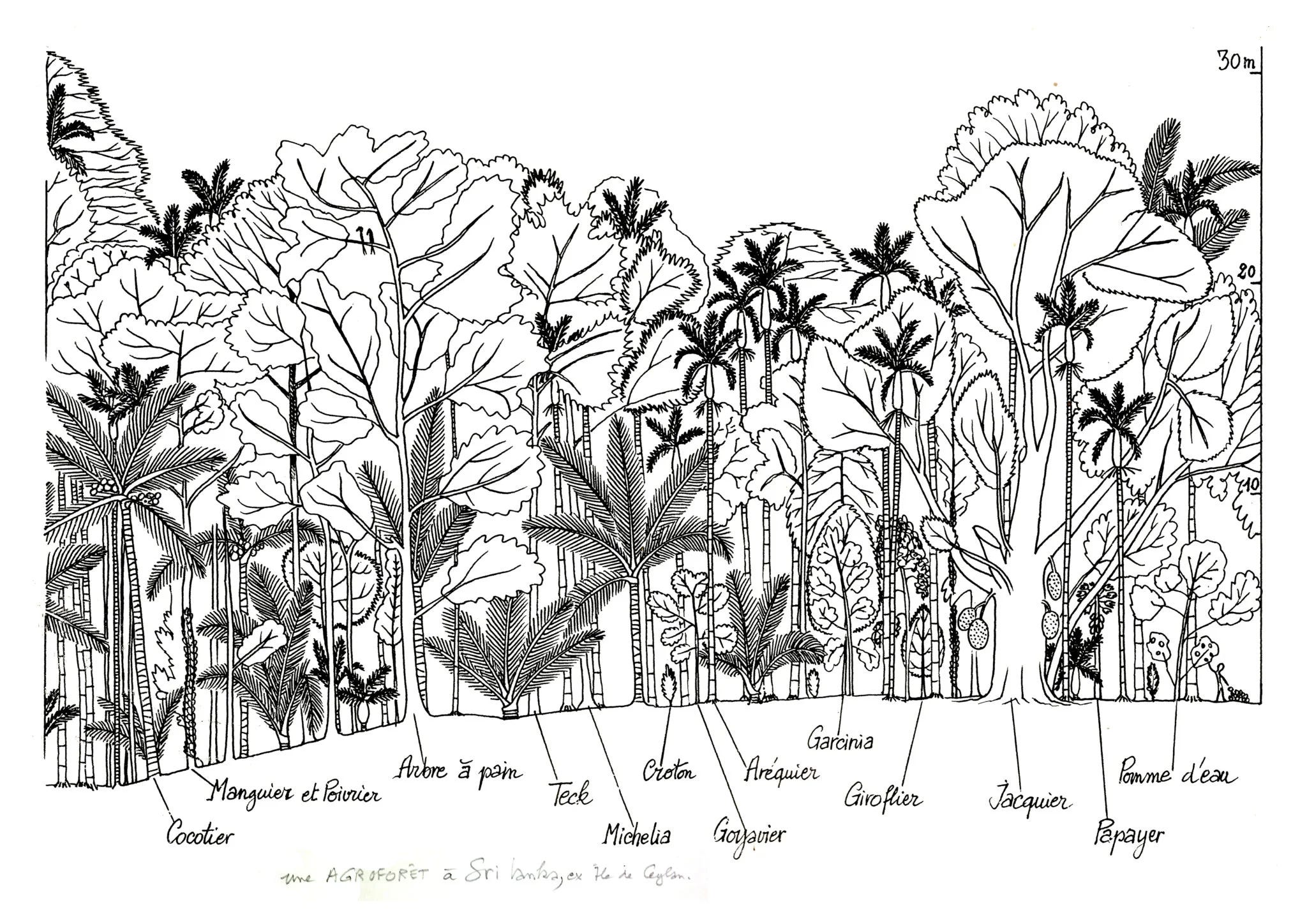
TOTEM
People who see themselves reflected in animals are easily tempted into anthropomorphism. A small, cuddly dog – yet a direct descendant of the feared wolf – is dressed in a fashionable jacket. And in the upturned corners of a greying Donald Duck’s beak, the artist draws white teeth. In other words, this game of mirrors leads to zoomorphism, whereby humans, out of envy, are only too eager to appropriate the characteristics of the animal. The animal possesses primal physical strength, lightning speed and fearsome teeth and jaws, without which civilised humans are nothing more than wimps.
The animal as an icon. The Hague, my hometown, has the stork as its city totem. Our neighbours in Scheveningen feature two herrings on their coat of arms. The Dutch national football team takes the lion as its symbol. Runners adopt an antelope as their totem, swimmers a sea lion, thieves a magpie, and weightlifters an Asian working elephant.


In martial arts, it is common to draw inspiration from the animal kingdom. Martial animal totems therefore take many forms. The grenadier’s bearskin cap, a dragon on a knight’s shield, Bruce Lee’s praying mantis and General Yu Fei’s Eagle Claw.


Tiger, crane, leopard, snake and dragon in the southern styles. The twelve Hsing I Chuan animals. The ‘bear step’ and the ‘snake step’ in I Chuan. But aren’t we missing something? For the martial artist, animals certainly possess enviable qualities. Qualities that you can imagine, imitate and perhaps one day call your own. But aren’t there plants that can serve as our teachers and sources of inspiration? Where are the plant and tree totems?