The search for the origins of Ba Duan Jin takes us back to the Southern Song dynasty and General Yu Fei. Nine hundred years have passed since then, and most traces linking the modern-day practice to that of Yu Fei’s troops have been lost. Similar to transference in an oral storytelling culture, the exercises were recounted and passed down from generation to generation. Written sources are scarce, and in the reconstruction of the history of Ba Duan Jin, fact and legend are undoubtedly intertwined.
General Yu Fei must also have had predecessors. It is inevitable that he based his Ba Duan Jin – and Hsing I Chuan – on older sources.
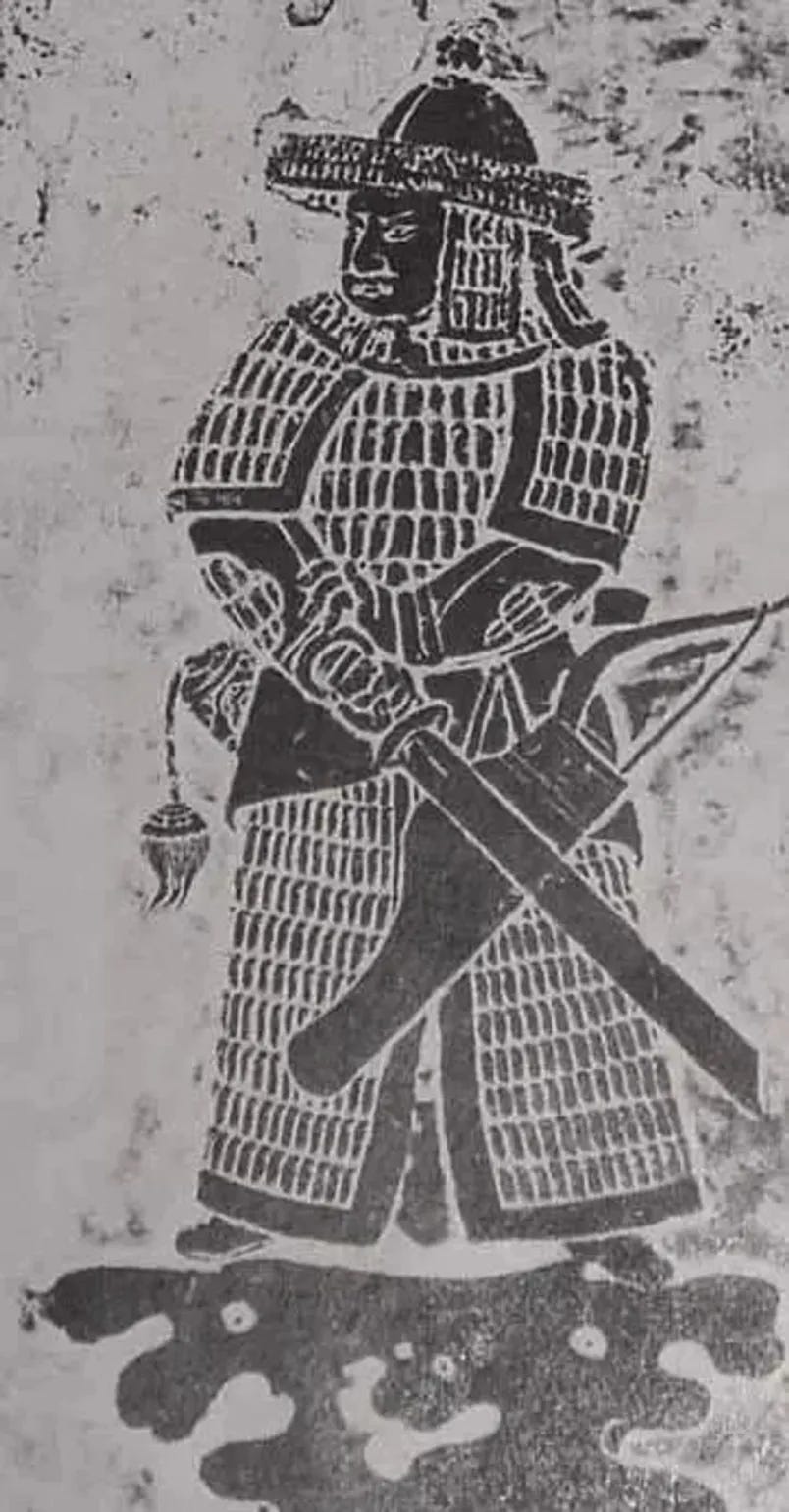
During the construction of a hospital in 1971 in a suburb of Changsha, the capital of Hunan province in China, workers stumbled upon what would later become one of the most significant archaeological discoveries ever. The site was known as Ma Wang Dui, the ‘Mount of the Horse King’ (馬 ma – horse, 王 wang – king, 堆 dui – mount). Did the name of the hill refer to its saddle-like shape? Or did it refer to King Ma Yin (馬殷) of the Kingdom of Chu (楚)? However, the Horse King was also a deity in the Chinese pantheon: was the hill perhaps dedicated to him?

In 1971, workers in Changsha were digging out a space for a hospital’s air raid shelter in a hilly area called Mawangdui (馬王堆). The work was tough and dangerous, and landslides sometimes interrupted it. The ground felt unstable in one area, so they took a cigarette break before dealing with it, only to find that the sparks from their matches lit up gas seeping from underground. Locals recognised the ghostly blue fireballs as a sign that there was an ancient tomb nearby (decomposing material releases flammable gas), so they contacted archaeologists. Under excavation team directors Hou Liang and Zhou Shirong, and with the help of students from local schools, the archaeologists began to carefully excavate the tombs.
The archaeologists claim that someone found a leaf deep under the in mud as they were digging. Despite being as old as the tomb itself, it was still green. It was a sign of what was to come. The workers had uncovered the three tombs of Mawangdui. The mistakenly named ‘King Ma’s Mound’ was in fact the Li family’s mound.
Xin Zhui, the marquise beneath the mound - Victor Max Smith
Three tombs dating from the Han dynasty were discovered. The first belonged to Marquis Li Cang (利蒼), who had died in 186 BC, but this tomb had been plundered at some point in history. A second tomb, however, had never been entered and contained a wealth of the most exquisite artefacts. It had belonged to Li Cang’s wife, Xin Zhui (辛追), the Marquise of Dai. Her body was completely intact and lay in four nested coffins.

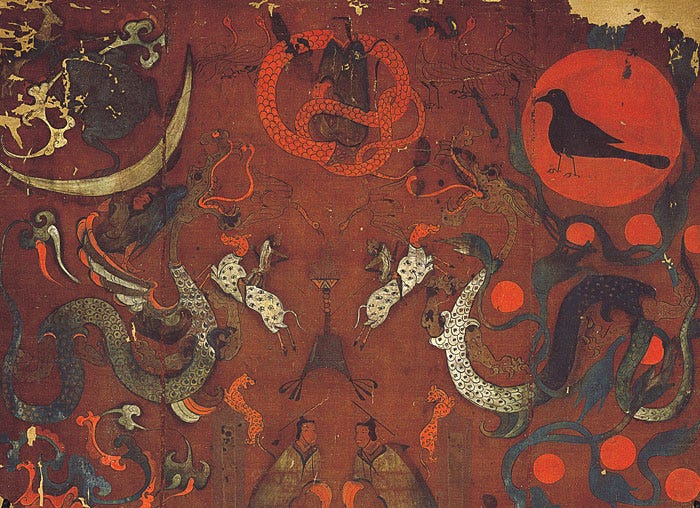
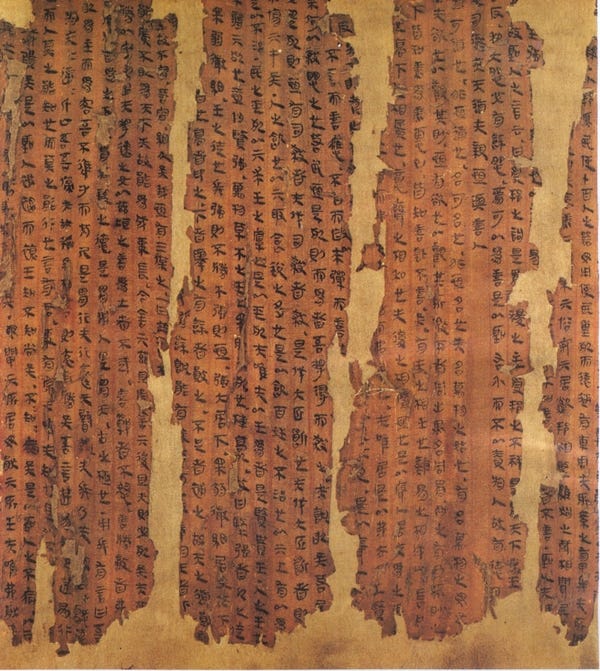
The third tomb had belonged to a man who had died at a young age. He was probably the son of the marquis and the marchioness. The most significant find in this tomb consisted of a variety of texts – written on silk, wood and bamboo – including the oldest known versions of the I Ching, the Book of Changes, and the Tao Te Ching. The discovery of these texts was to give a significant boost to our understanding of classical Chinese thought.

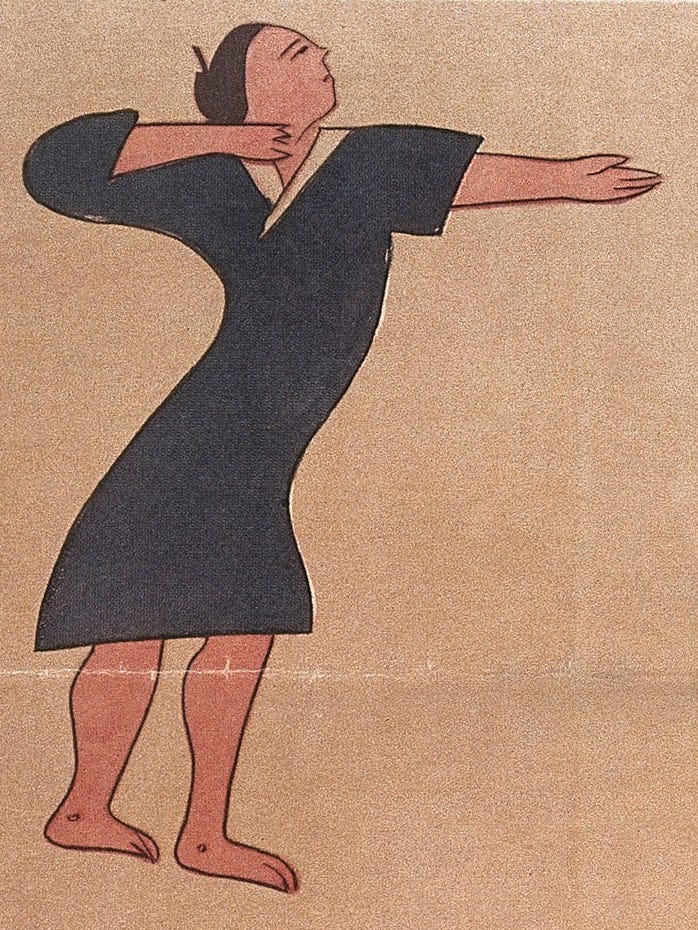
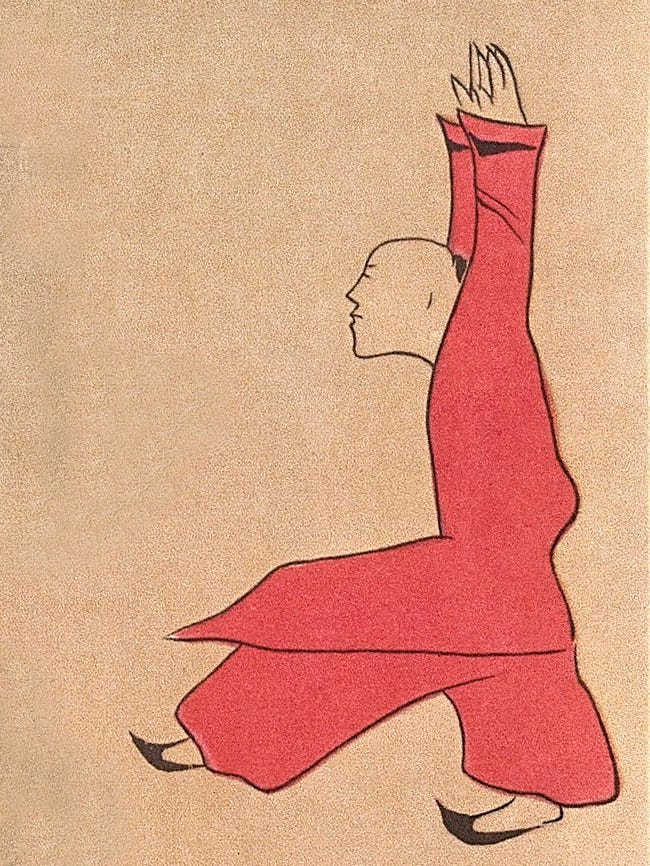
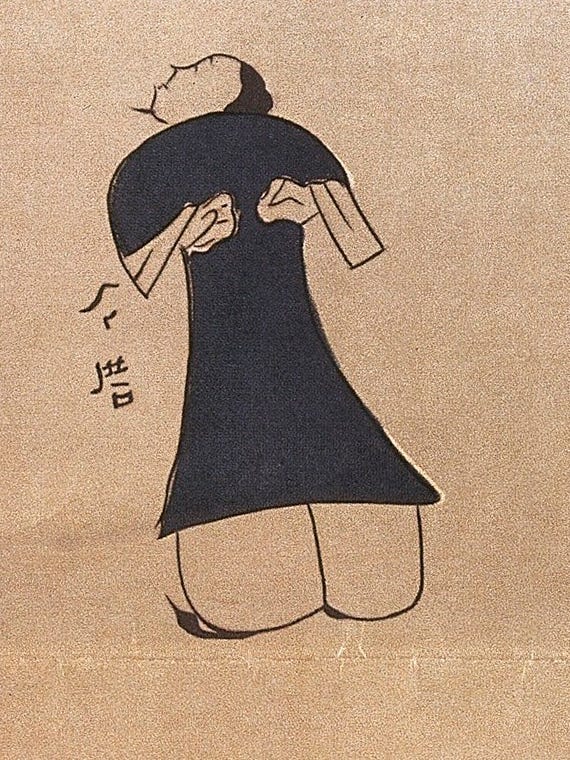
A painting on silk was also found in the younger man’s tomb, depicting some forty-four figures performing exercises. This painting later became known as Dao Yin Tu.
Dao Yin (導引) is a generic term for a wide variety of traditional exercises designed to improve and maintain health. The meaning of ‘dao’ (導) is ‘to guide’, and that of ‘yin’ (引) is ‘to stretch or pull’. Through a combination of techniques that stretch the meridians and guide the chi, the circulation of chi is stimulated, thereby promoting good health.
‘Tu’ means ‘image’ or ‘map’.
Indeed, the term dao essentially means ‘to guide’ or ‘to direct’, and appears originally in a political and cultural context in the sense of ‘leading’ the people in a certain direction. The character consists of two parts, the word dao 道 for ‘way’, which is often also used in the sense of ‘to guide’, and the word cun 寸 for ‘inch’, which indicates a small distance. Guiding the qi in a concrete, physical way means thus that one makes a conscious effort to establish harmony with the dao in the body, realizing the inherent polarity of yin and yang and aligning oneself with the cosmos.
The second word of the compound is yin. It originally means ‘to draw a bow’ and indicates the pulling and activating of strength and inner tension as well as the opening of a space between the bow and the string. Often short for daoyin, it can stand for breathing and exercises in general and be used as a generic term for ‘nourishing life’. Yin may mean to limber up muscles, release joints, or stretch limbs. The earliest manuscripts on healing exercises consistently use yin in a general sense for daoyin, meaning the practice of exercises.
Chinese Healing Exercises - Livia Kohn

Significant sections of the Dao Yin Tu had been lost, and a group of specialists from various disciplines spent a long time considering how the whole work might be reconstructed. The Dao Yin Tu contains hardly any text, so that provided little guidance. Furthermore, whilst each illustration is a snapshot of a moving sequence, it is equally possible that each figure depicts a static posture. The final reconstruction of the Dao Yin Tu is nonetheless beautiful.
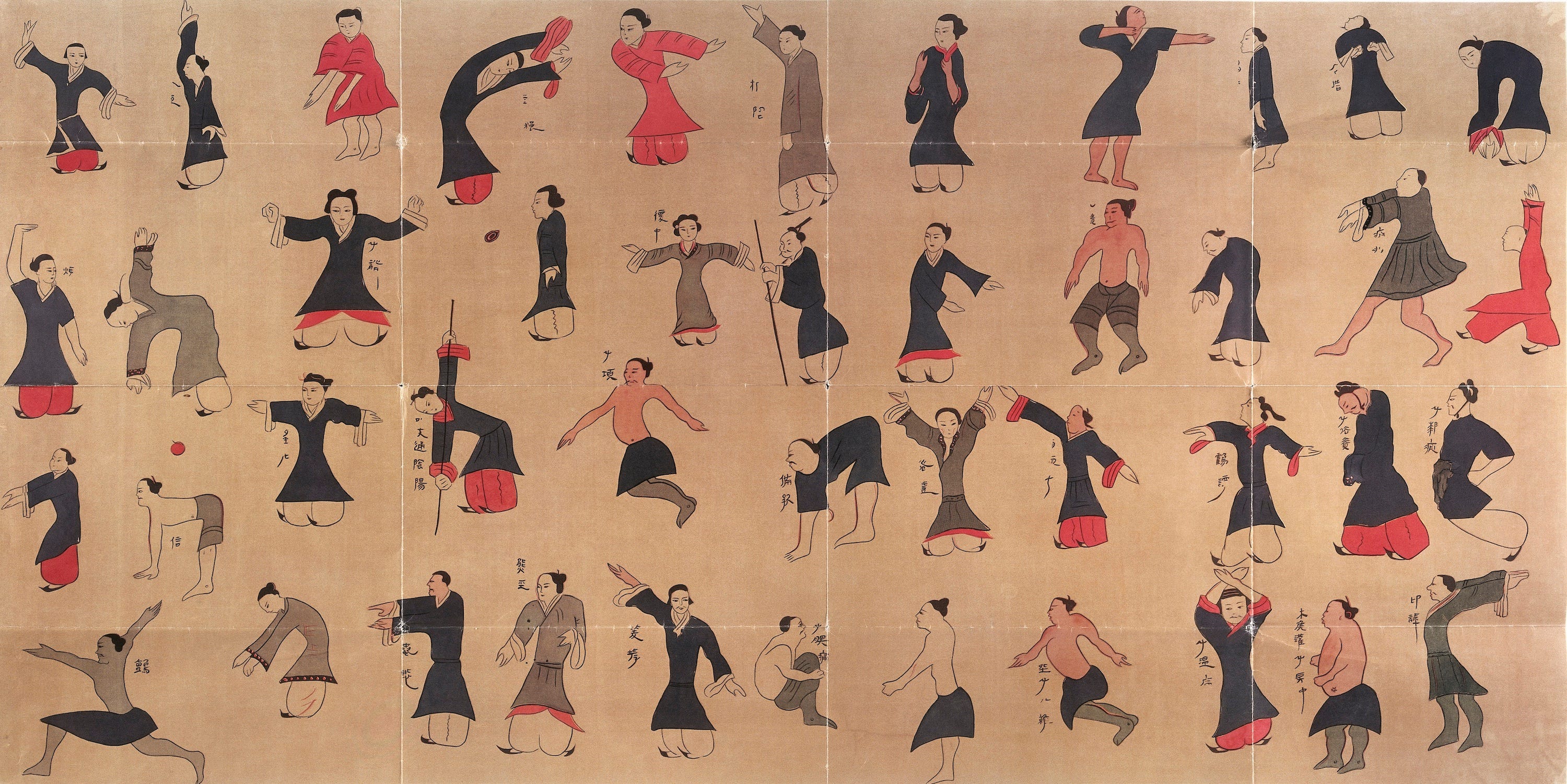
On closer inspection of the forty-four figures, a number of things immediately catch the eye.
The Dao Yin Tu depicts both men and women.
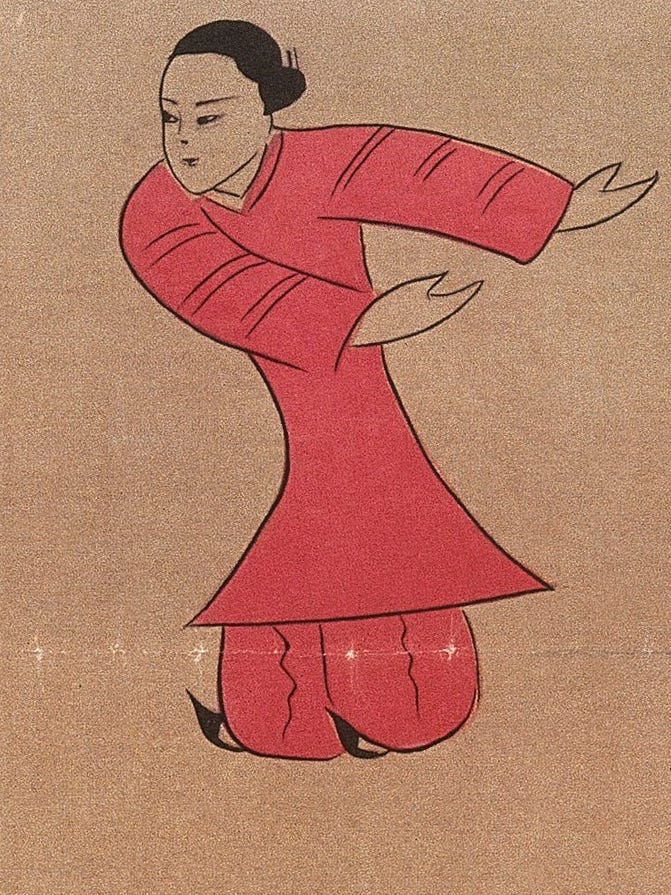
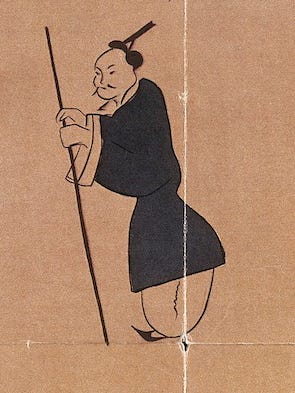
Some figures are barefoot, whilst most are elegantly shod.
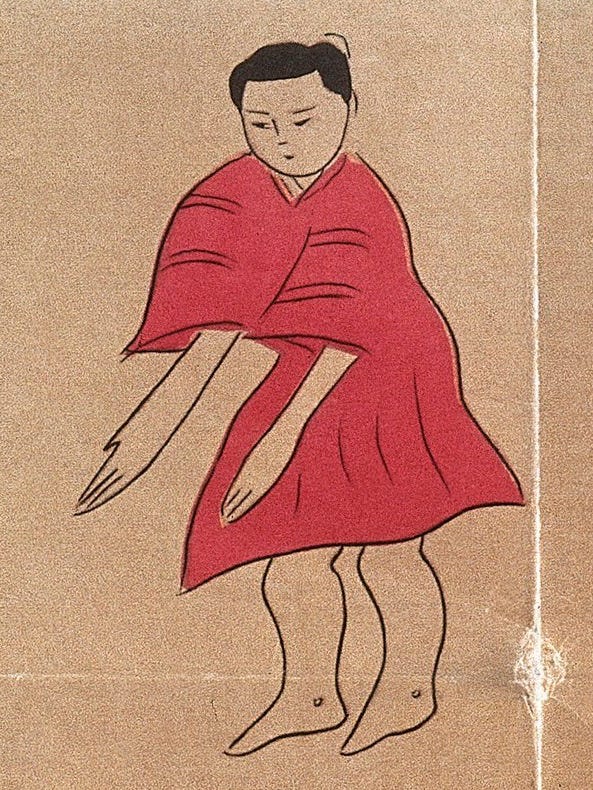
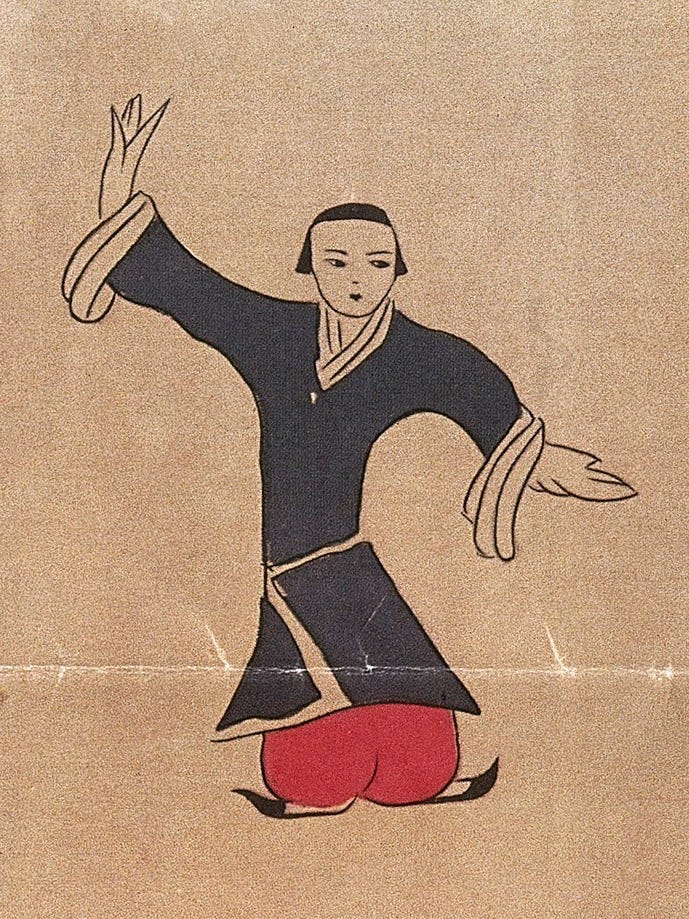
Some wear a tunic –– common amongst the Han Chinese –– whilst others wear trousers –– in vogue amongst the northern horse-riding peoples.
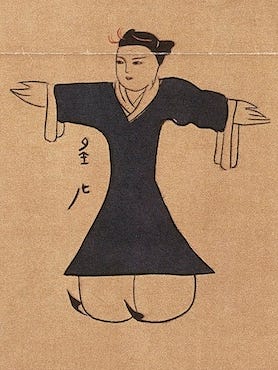
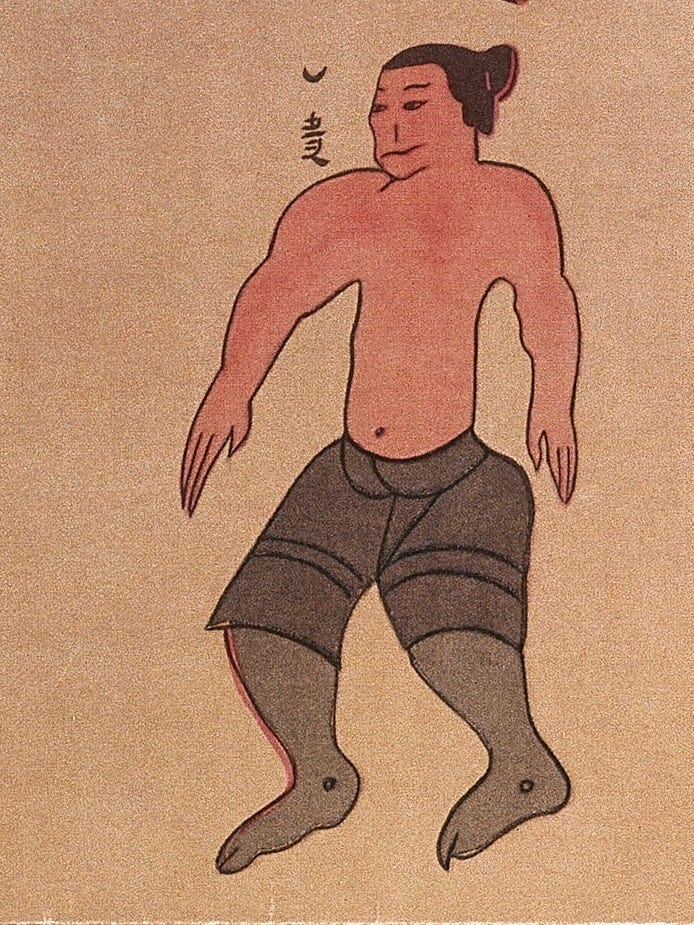
Were the people depicted on the Dao Yin Tu soldiers or acrobats, farmers or civilians?
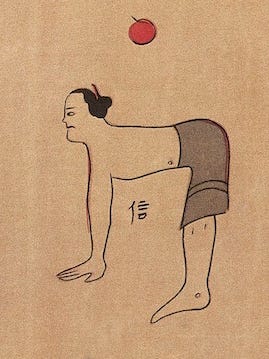
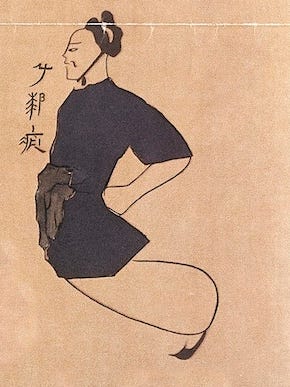
Some of the figures are bare-chested and appear to be doing breathing exercises. A few others are practising with a stick.

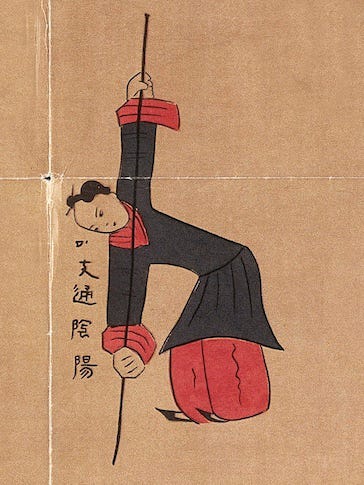
And does the Dao Yin Tu depict moving exercises or standing postures?
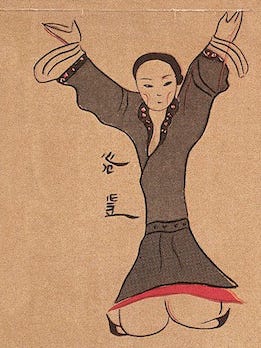
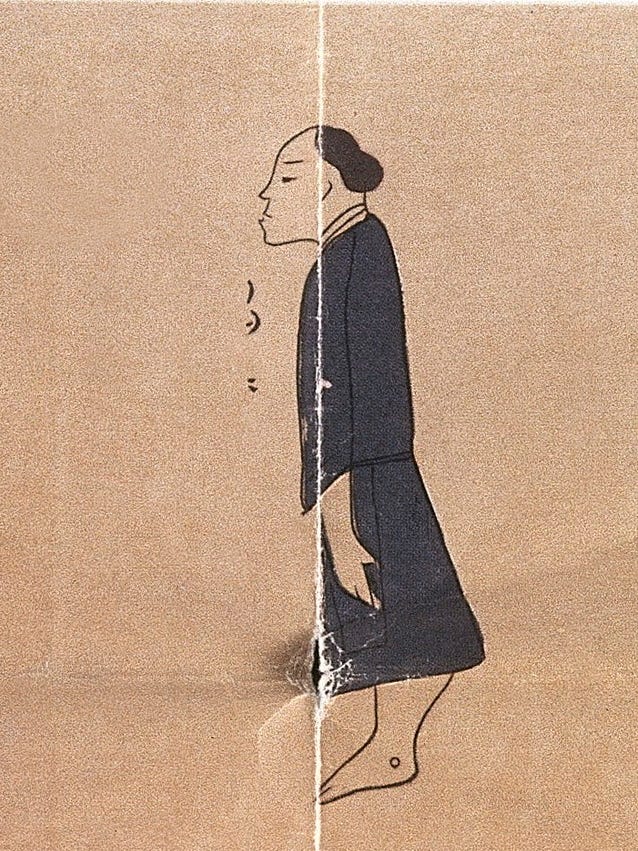
Some of the movements bear a striking resemblance to elements of the Ba Duan Jin. The Dao Yin Tu dates from 200–150 BC, and according to historical records, the Ba Duan Jin is said to have taken its present form only around 1100 AD and to be attributed to General Yu Fei. It is possible that Yu Fei may have had access to writings in which the Ba Duan Jin essentials were described. Another possibility is that the Ba Duan Jin had been a living tradition for over a millennium, passed down from practitioner to practitioner.