

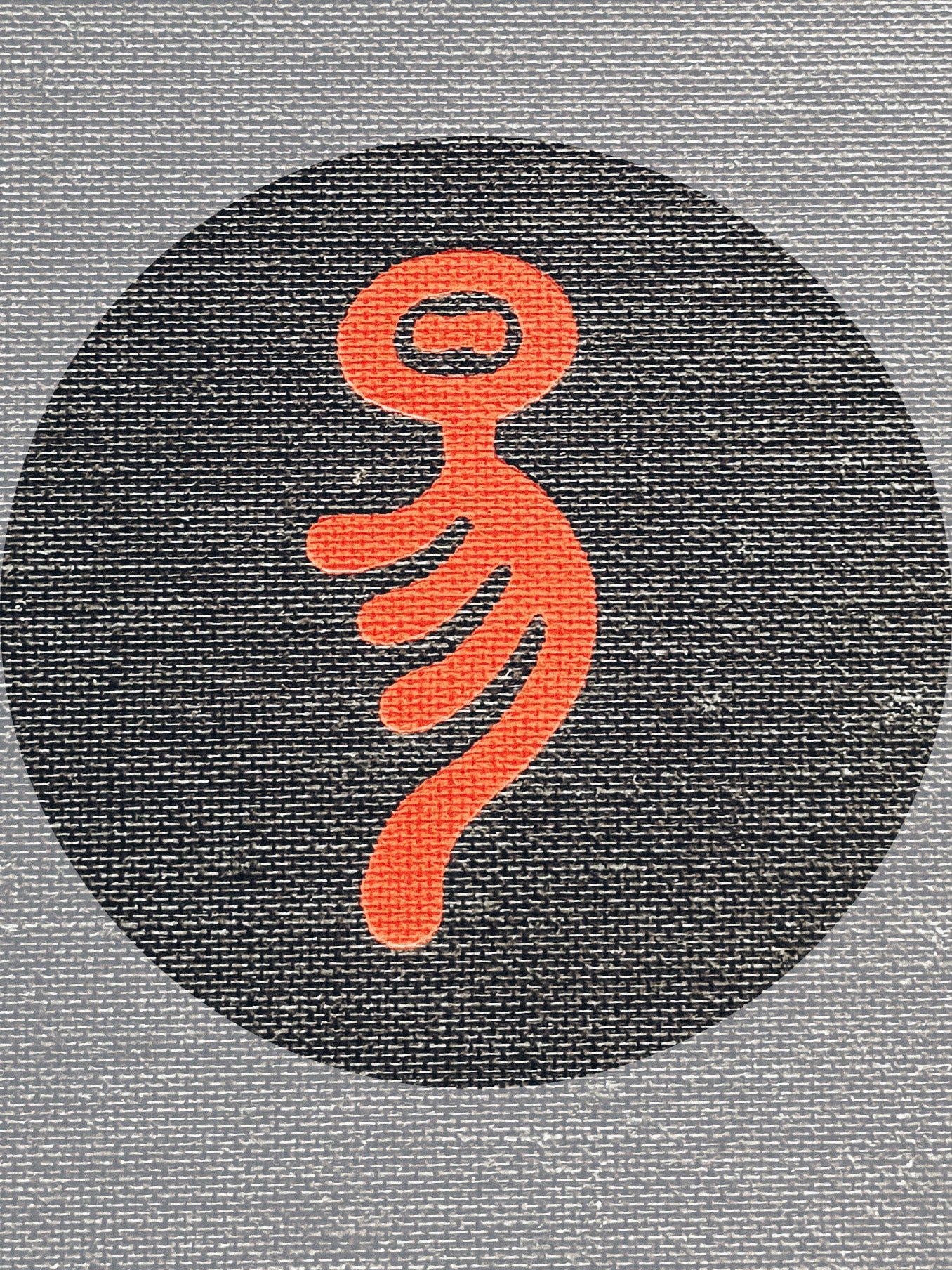
A fascinating red mark. Some say it stands for ‘chameleon’. Maybe they are the sun’s rays? It is printed on the cover of a well-known translation of the I Ching, a text dating from the Bronze Age. The imagery used in it still holds great appeal for both existing and potential readers. And this is despite archaic phrases and cryptic chapter titles such as The Taming Power of the Great or The Preponderance of the Small.
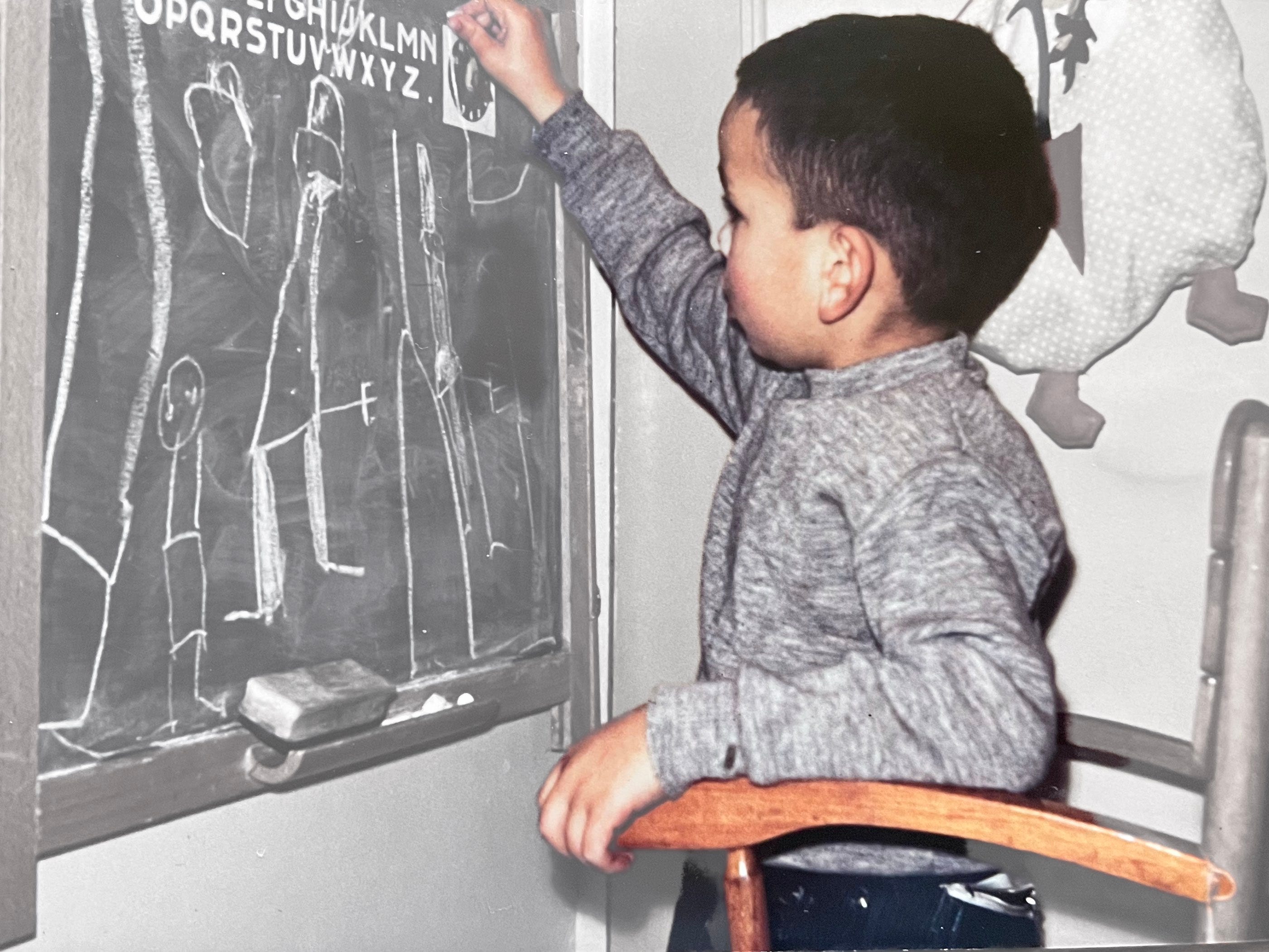
1964 - SCHOOLBOARD
My distinctive style of drawing the human figure was already evident right from the very start. I still had to learn how to draw letters. Those always come after the images.
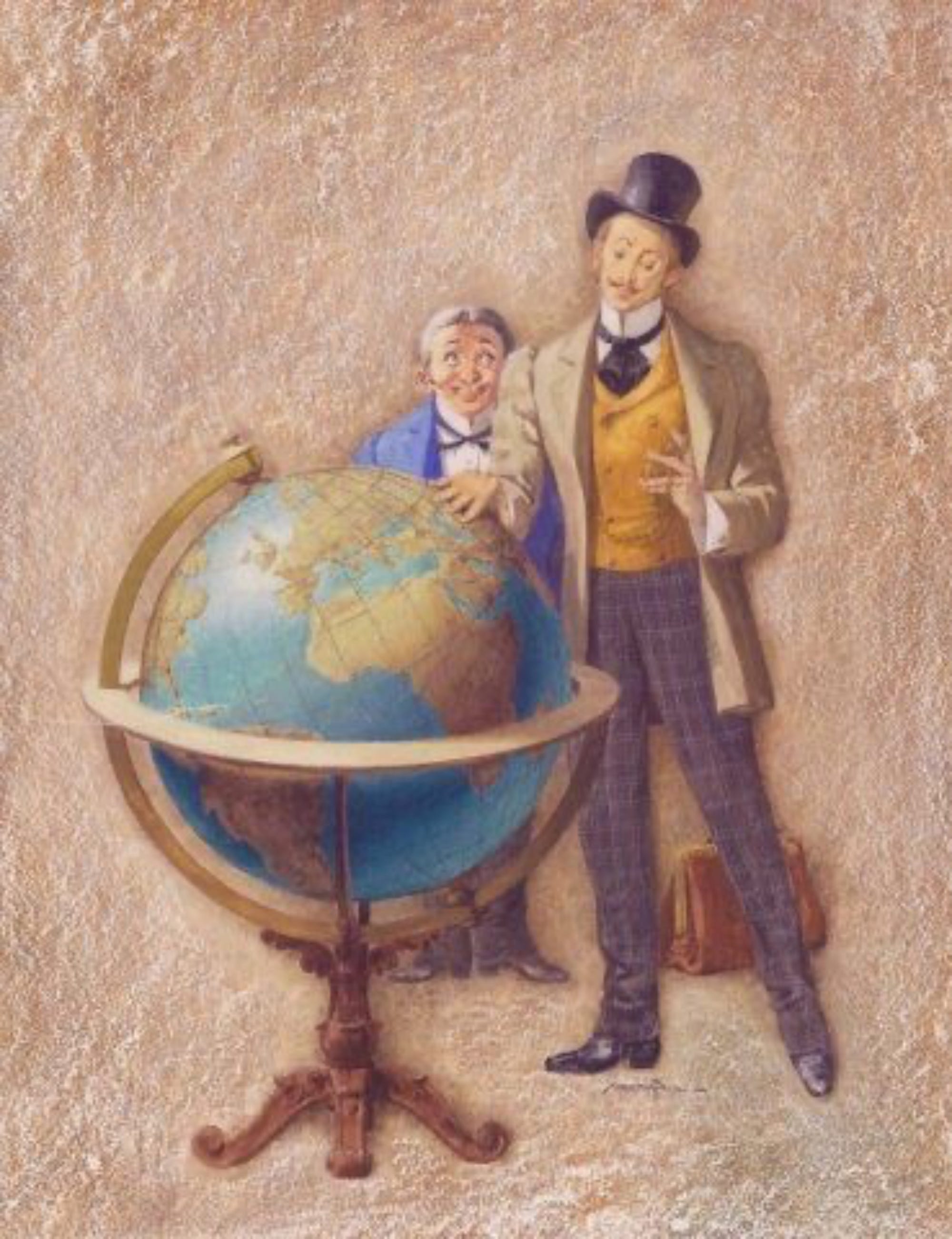
1968 - AROUND THE WORLD IN 80 DAYS
I got it for my birthday or for St Nicholas‘ Day; I can’t remember. Hardback, full of illustrations. I read it and reread it; lived inside the book; and stepped into the shoes of the main character and his butler. The plot of the story was fantastic, but it was the illustrations that really did it for me; they stayed with me till this very day.
Many years later, I read on the first page of Alice in Wonderland:
Alice was beginning to get very tired of sitting by her sister on the bank, and of having nothing to do: once or twice she had peeped into the book her sister was reading, but it had no pictures or conversations in it, ‘and what is the use of a book,’ thought Alice, ‘without pictures and conversations?’
Alice’s Adventures in Wonderland, Lewis Carol
The small group of travellers arrives in Shanghai, and an illustration captures the bustling street life there, shop signs and banners bearing red and black Chinese characters, inscrutable yet full of promise.
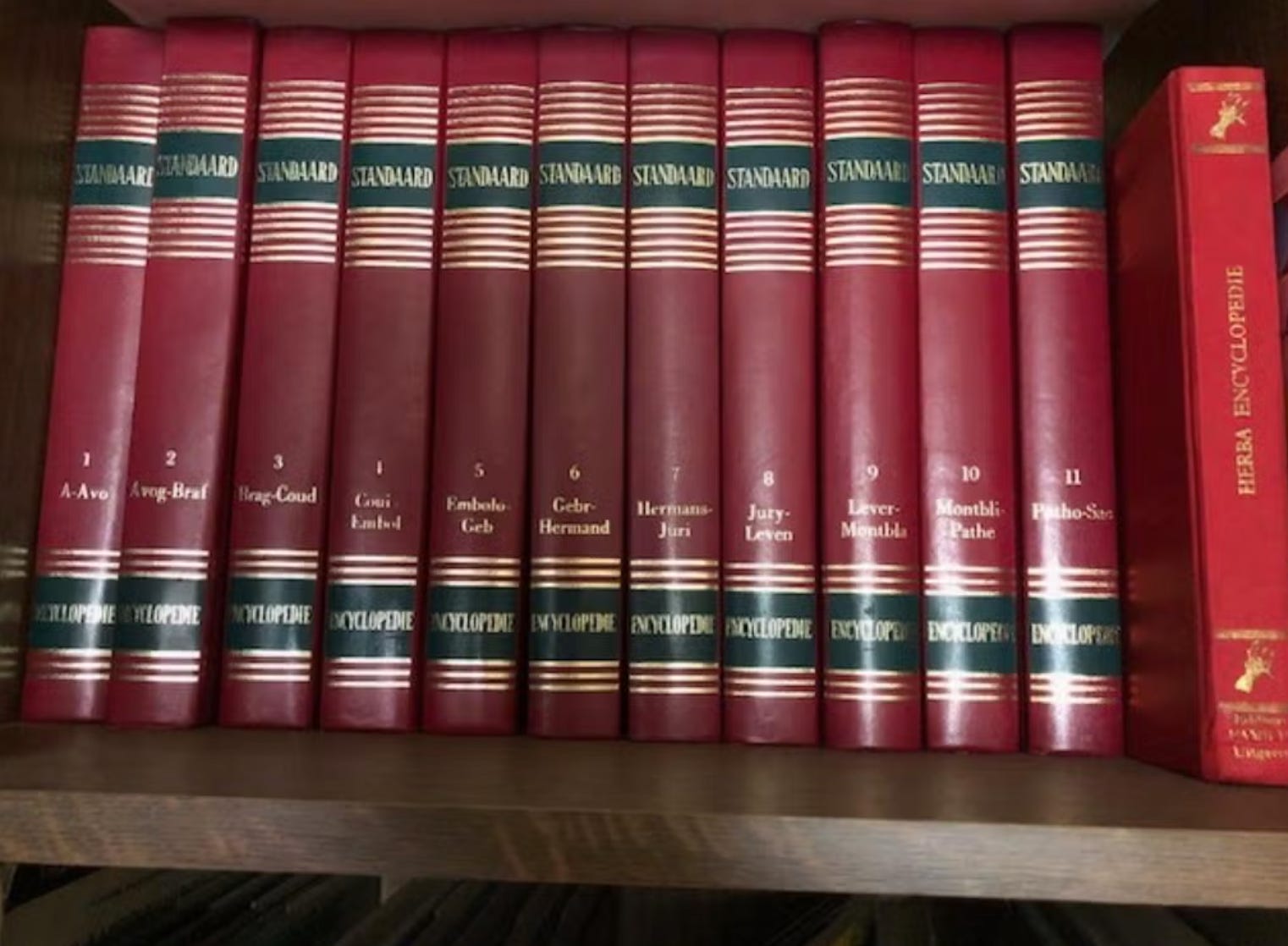
1970 – ENCYCLOPEDIA
In those days, subscribing to an encyclopaedia was very common. Every week, a new instalment, in the form of a magazine, would fall on the doormat. Once there were enough of them, they would fit into a special red binding. In my memory, building up the complete encyclopaedia took up my entire childhood. And the first errata and additions were not long in coming. The encyclopaedia struggled to keep up with the rapidly advancing reality and would never be completed. Which in no way detracted from the pleasure of endlessly leafing through its pages.
Together with a school mate, I’d hatched a plan to put together our own encyclopaedia. We felt there was still a wealth of untold stories and forgotten adventures waiting for us. We divided up the tasks: the research, the writing, the interviews, cutting out the pictures from magazines, drawing the pictures. With great enthusiasm, our wonderful, but overambitious, project got underway. It never made it to publication.
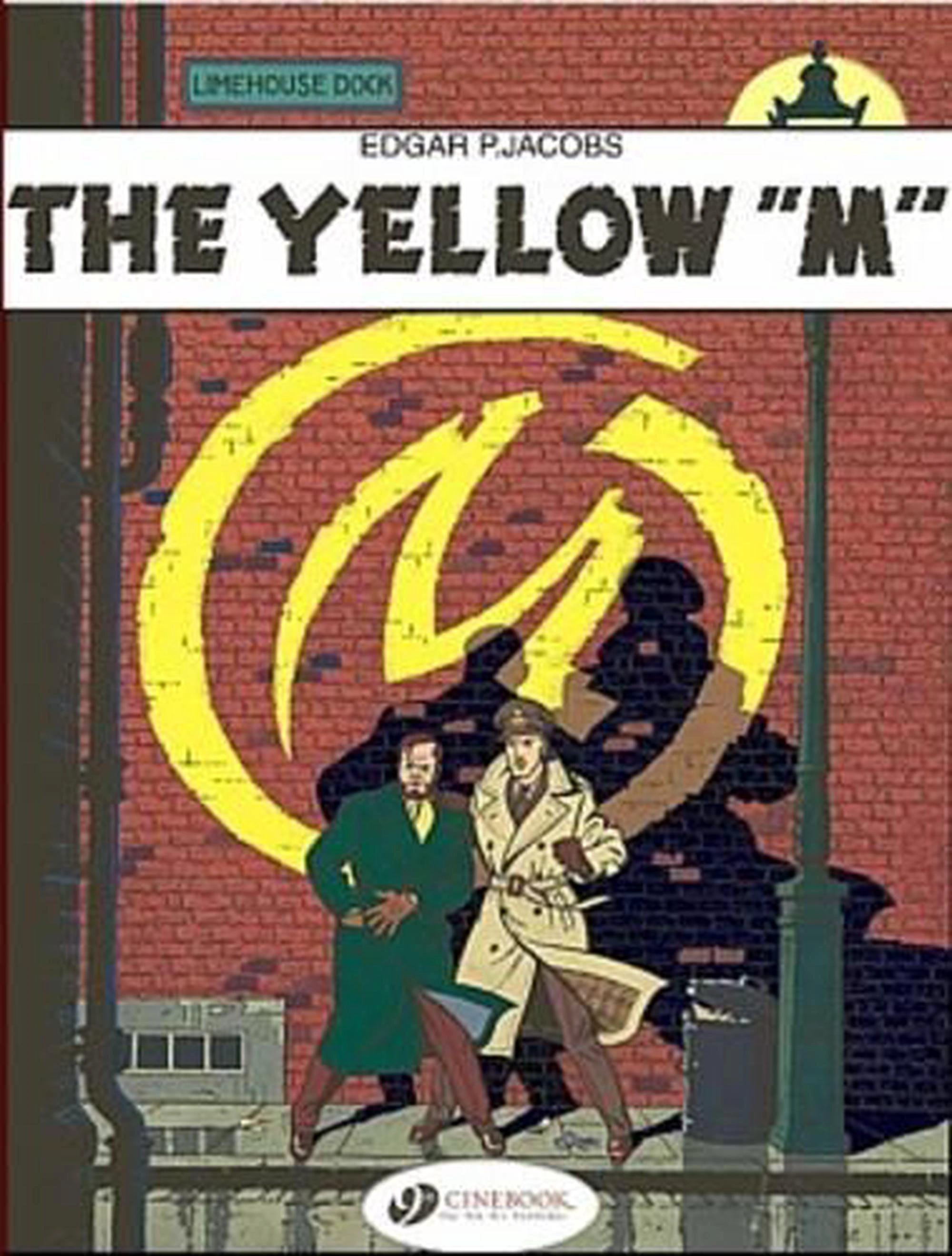
1974 - THE YELLOW ‘M’
A comic strip— could anything ever be better than The Yellow Mark featuring Captain Blake and Professor Mortimer?
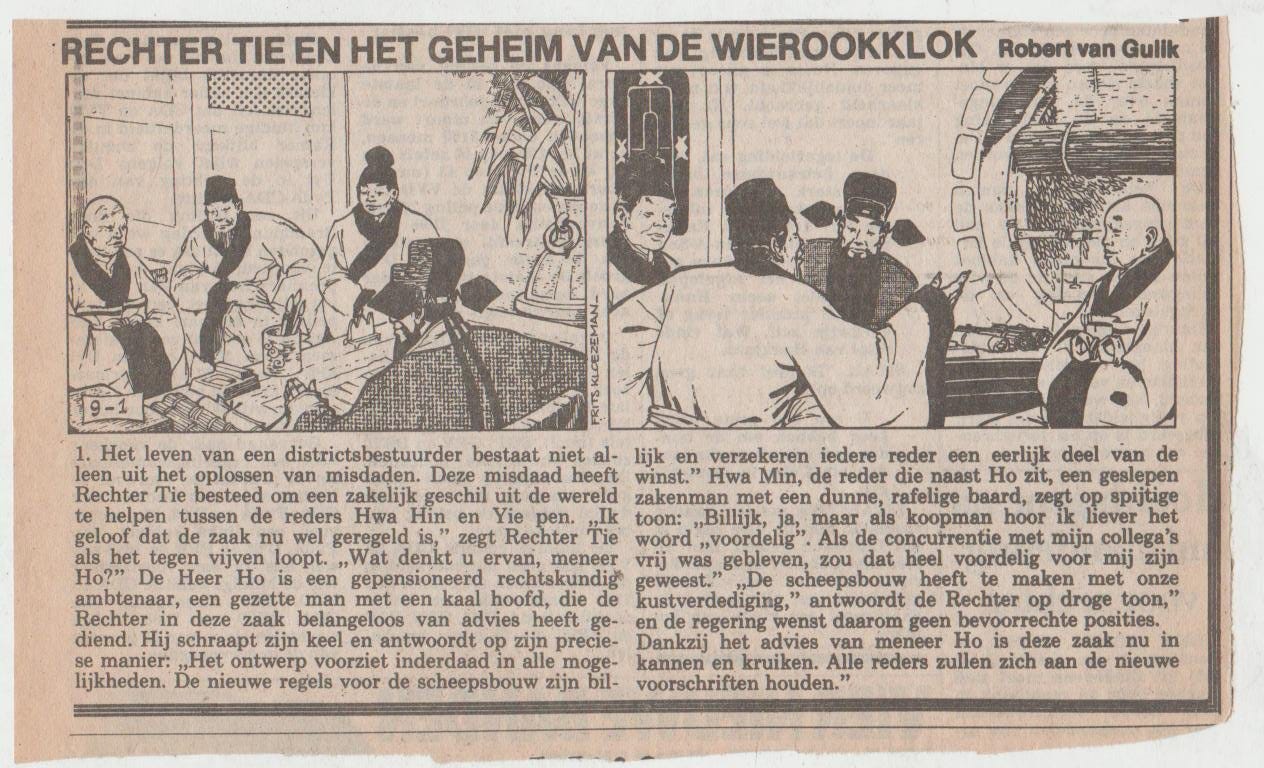
1976 – JUDGE DEE
In the Haagsche Courant I read the serialised novel Judge Dee, the adventures of the famous Chinese magistrate, written by the diplomate Robert van Gullit. I immersed myself in the books of Pearl Buck, such as East Wind, West Wind and The Good Earth. There was Tintin and The Blue Lotus and the stories about Tibet by Alexandra David-Néel. Beyond the orderly Netherlands of my youth, the unknown world of the Far East presented itself.
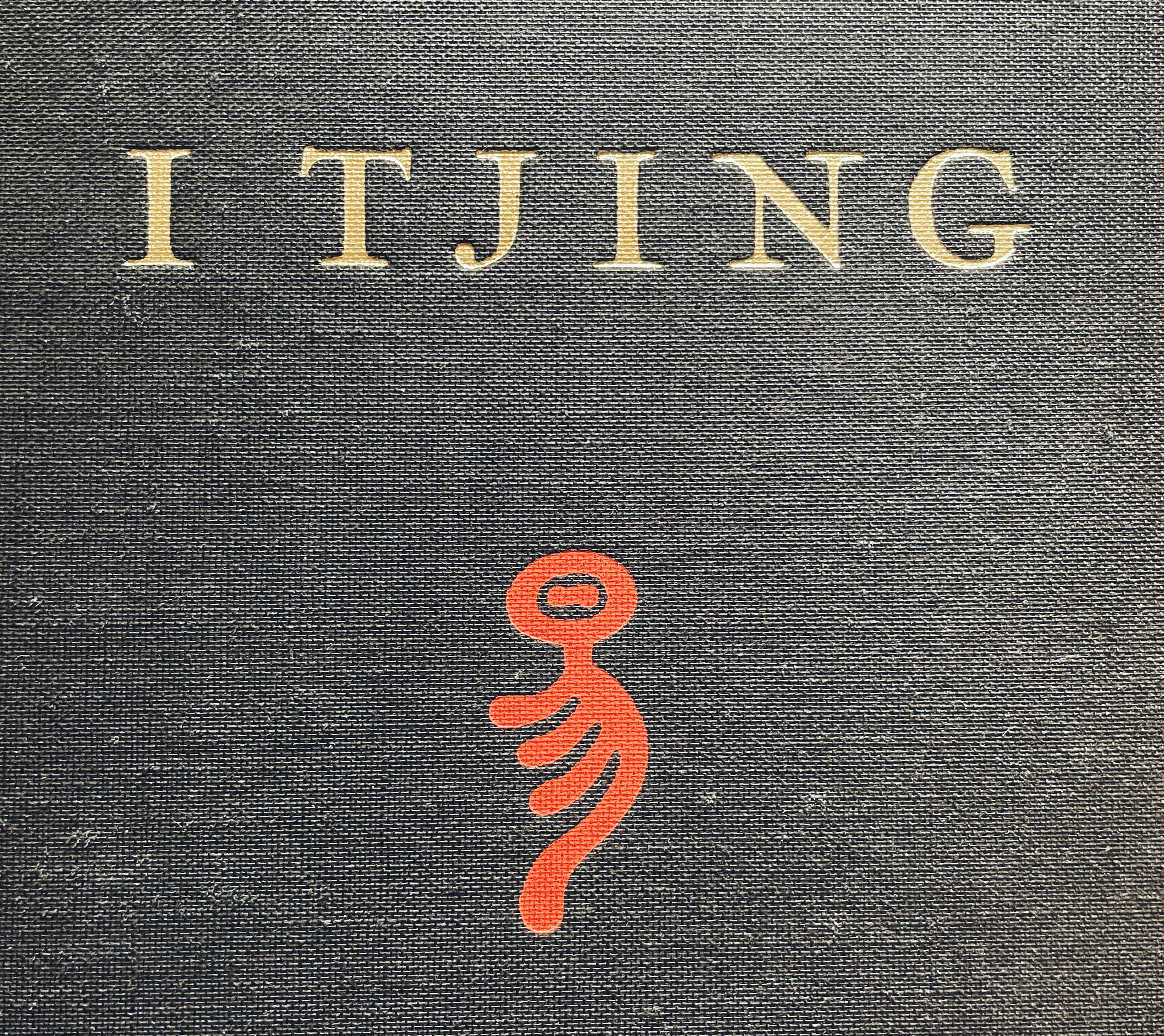
THE RED MARK - 1978
I had ended up in Amsterdam as a geography student. Amsterdam was a completely different city back then. Rough edges, hippies in Afghan coats, and the Noordermarkt was a car park. Many of the shops from back then have disappeared, but Kok Antiquariaat in the Oude Hoogstraat has stood the test of time and is still there.
As a penniless student, I became a regular visitor to that marvellous sort of second-hand bookshop where the books seem to choose you rather than the other way round. It was on that particular afternoon that I came across that oblong book – with a black linen cover and a red Chinese character prominently displayed on the front – which I simply couldn’t leave behind. It swapped the dusty bookshelf for my bag. I would carry it everywhere with me until, years later, it finally fell apart. The content and meaning of the book eluded me for the most part. What was to be made of The Taming Power of the Great or The Preponderance of the Small?
of
