Behind you, you hear hurried footsteps. You turn round and get the fright of your life! There he is, running straight towards you. You’d made up your mind to avoid him at all costs today. So you start running. Faster and faster you go. And then you spread your arms and make some subtle twisting movements with your hands. Off you go!
You lift off the ground; you feel the air carrying you, just as the earth had always supported your body before. You look back one last time, now at an angle downwards, and see your pursuer staring, dumbfounded, with his mouth agape, at the unbelievable scene.
What a brilliant sensation! And how simple. You’d always imagined flying to be something infinitely complex.
Now it’s important to pay close attention. Take everything in, down to the last detail. That way, you can share the flying secret with your friends later. They’ll never believe it. Quick, take a photo, a selfie – where’s my phone?
You nervously rummage through your trouser pockets. And just as you realize that this activity isn’t exactly compatible with flying, you open your eyes and are wide awake.
Why on earth would you wake up just then, during your first lift-off, during that ultimate liberation from gravity? You make one last, futile attempt to return – to that fantastic feeling of flying, to the rest of the adventure. The more you try, the more that path back to the dream closes off.
Just like what happened that other time, a long time ago. There was that girl you were secretly in love with. Out of reach. She’d never shown the slightest interest in you. After a whirlwind of events and twists and turns, she unexpectedly turns. She looks at you with a smile. She leans slowly towards you. To give you a kiss. It can’t be true, can it? And just before it happens – the thing you’d never dared to dream of – a voice calls out: ‘Wake up! You’re going to be late for school!’
Do we not live two lives in one? One by day, in broad daylight. The other by night, in the twilight and the darkness? Two lives that do not seem to sit well together. In the world of dreams, the certainties of prosaic reality lose all significance.
And as soon as you wake up from that other reality – the reality of the night, boundless and intense – you can hardly remember any of it at all. Only a single fragment lingers. And that fades all the more quickly with your clumsy attempts to capture it.
Who can say: what is reality and what is a dream? It’s impossible to tell.


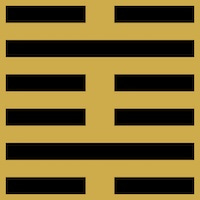
However the Water trigram is turned, between the upper and lower worlds, between the space on the left and that on the right, between dream and reality, there is a barrier, a wall, a partition. No idea what is going on on the other side. The image of The Unfathomablle.
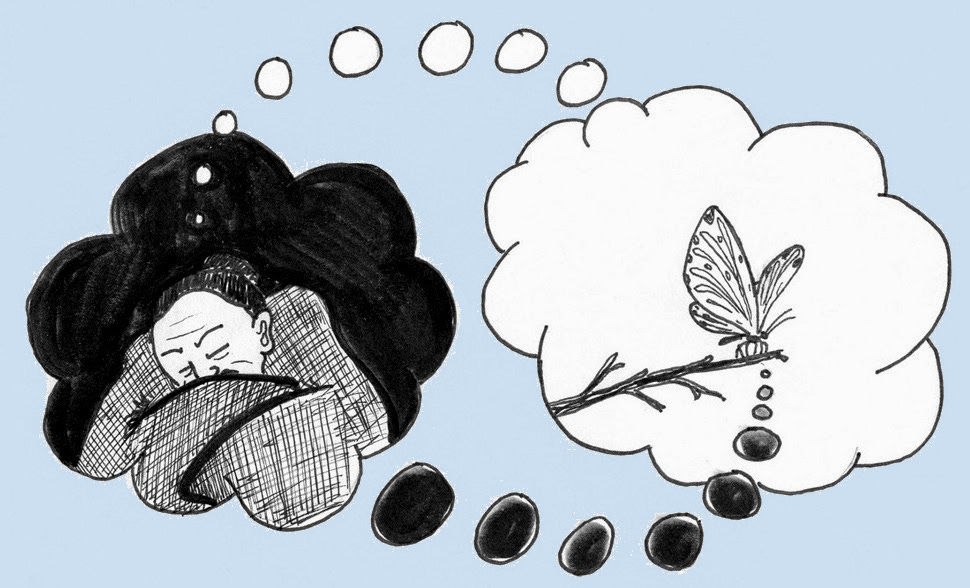
Once Zhuang Zhou dreamt he was a butterfly, a butterfly flitting and fluttering around, happy with himself and doing as he pleased. He didn't know he was Zhuang Zhou. Suddenly, he woke up and there he was, solid and unmistakable Zhuang Zhou. But he didn't know if he was Zhuang Zhou who had dreamt he was a butterfly, or a butterfly dreaming he was Zhuang Zhou. Between Zhuang Zhou and a butterfly there must be some distinction! This is called the Transformation of Things.
Zhuang Zi - in the translation of Burton Watson
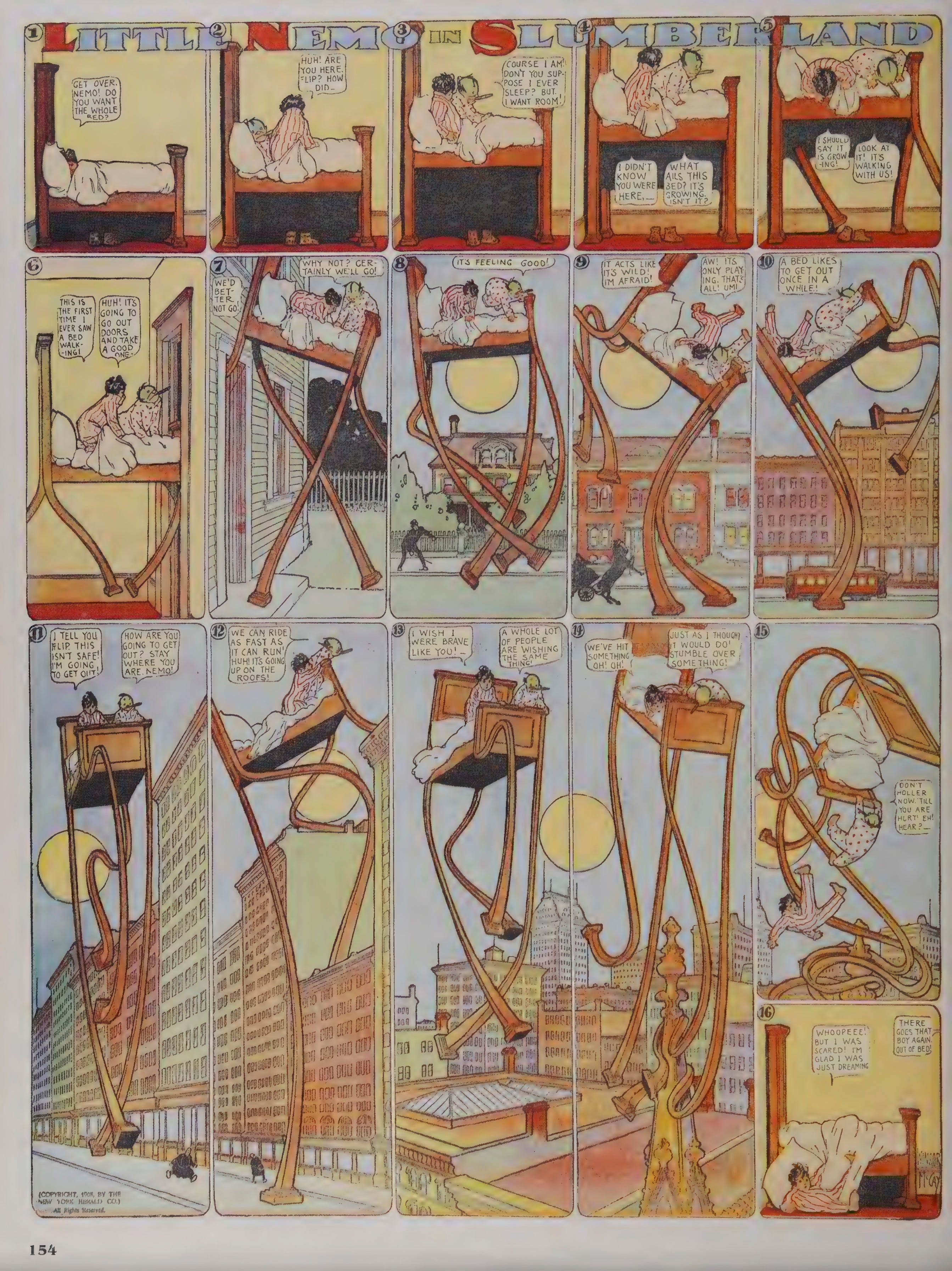
The unrivalled comic strip Little Nemo in Slumberland was the creation of the American cartoonist Winsor McCay. Between 1905 and 1914, and later for a brief period between 1924 and 1926, Nemo’s adventures appeared weekly as full-page strips in the newspaper, initially the New York Herald.
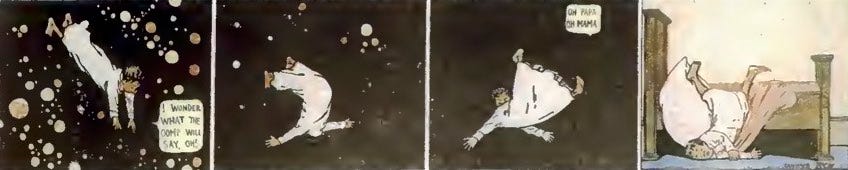
Every episode ended with Nemo waking up from his dream – either by falling out of bed, or because of a stomach ache, or because he’d eaten too much cheesecake at dinner. The next day, however, the story simply picked up where it had been so abruptly interrupted.
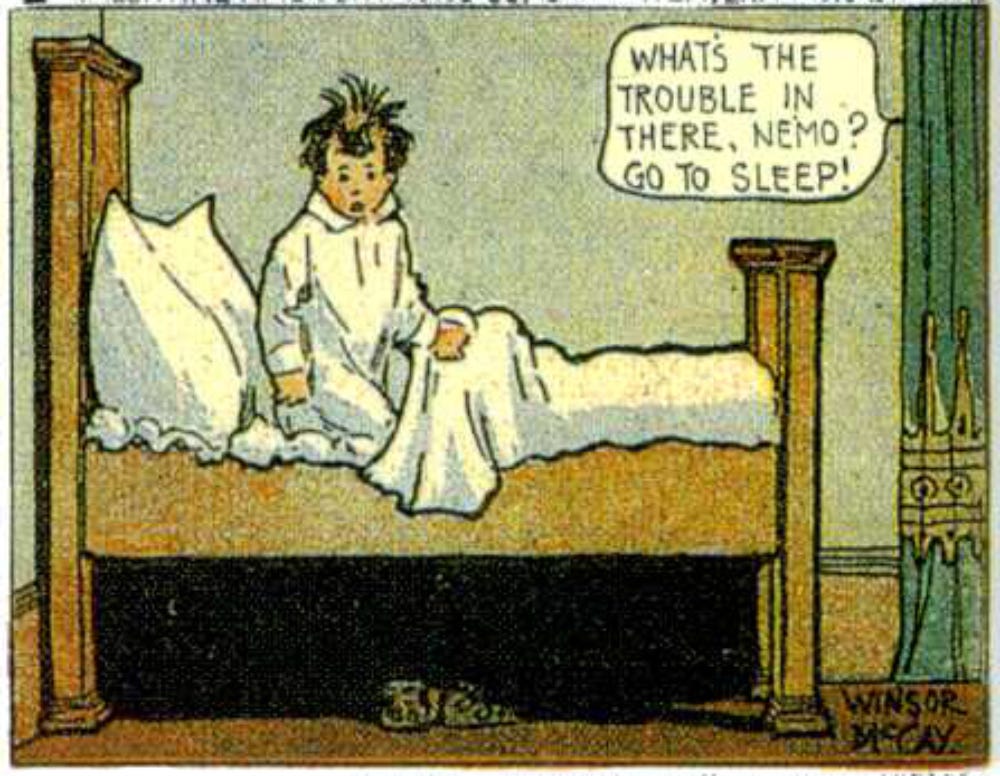
Morpheus, the king of Slumberland, has decreed that every effort must be made to fetch Nemo. He is then to be escorted to Slumberland, to the palace, to become the princess’s new playmate. Nemo, whose name means ‘nobody’, enters the uncharted world of sleep and dreams. Once there, one simply has no need for the constraints of one’s everyday name and that single, restrictive identity. In Slumberland, these fade away; you are ‘nobody’ once more, and anything is possible.

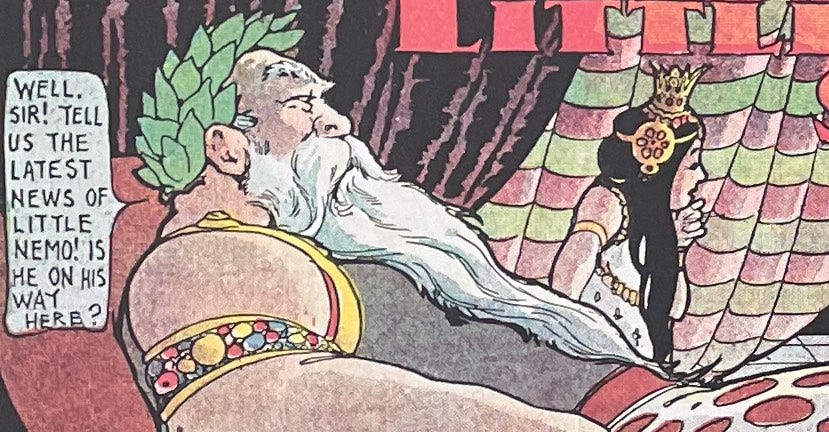
Morpheus (Ancient Greek: Μορφεύς, romanized: Morpheús 'Fashioner', derived from Ancient Greek: μορφή, romanized: morphḗ, meaning 'form, shape') is a god associated with sleep and dreams. In Ovid's Metamorphoses, he is the son of Somnus (Sleep, the Roman counterpart of Hypnos) and appears in dreams in human form. From the Middle Ages, the name began to stand more generally for the god of dreams, or of sleep.
Wikipedia
Everything is going like clockwork. Nemo has been found and, accompanied by one of King Morpheus’s extravagant subjects, has entered Slumberland and is on his way to the princess. Everything seems to have been thought of, with one exception. Nobody has taken Flip into account.
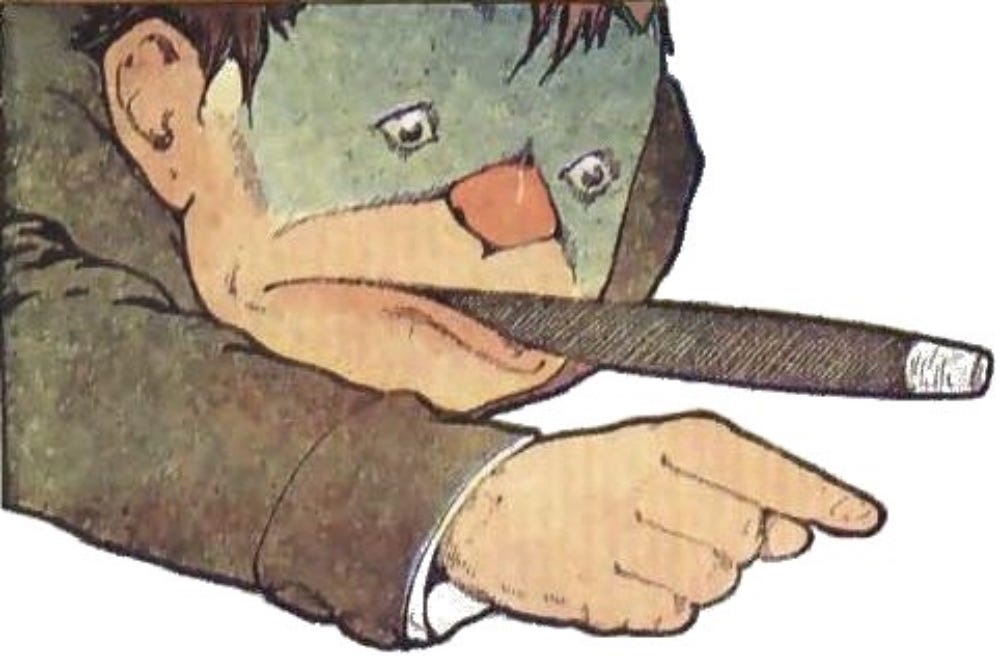
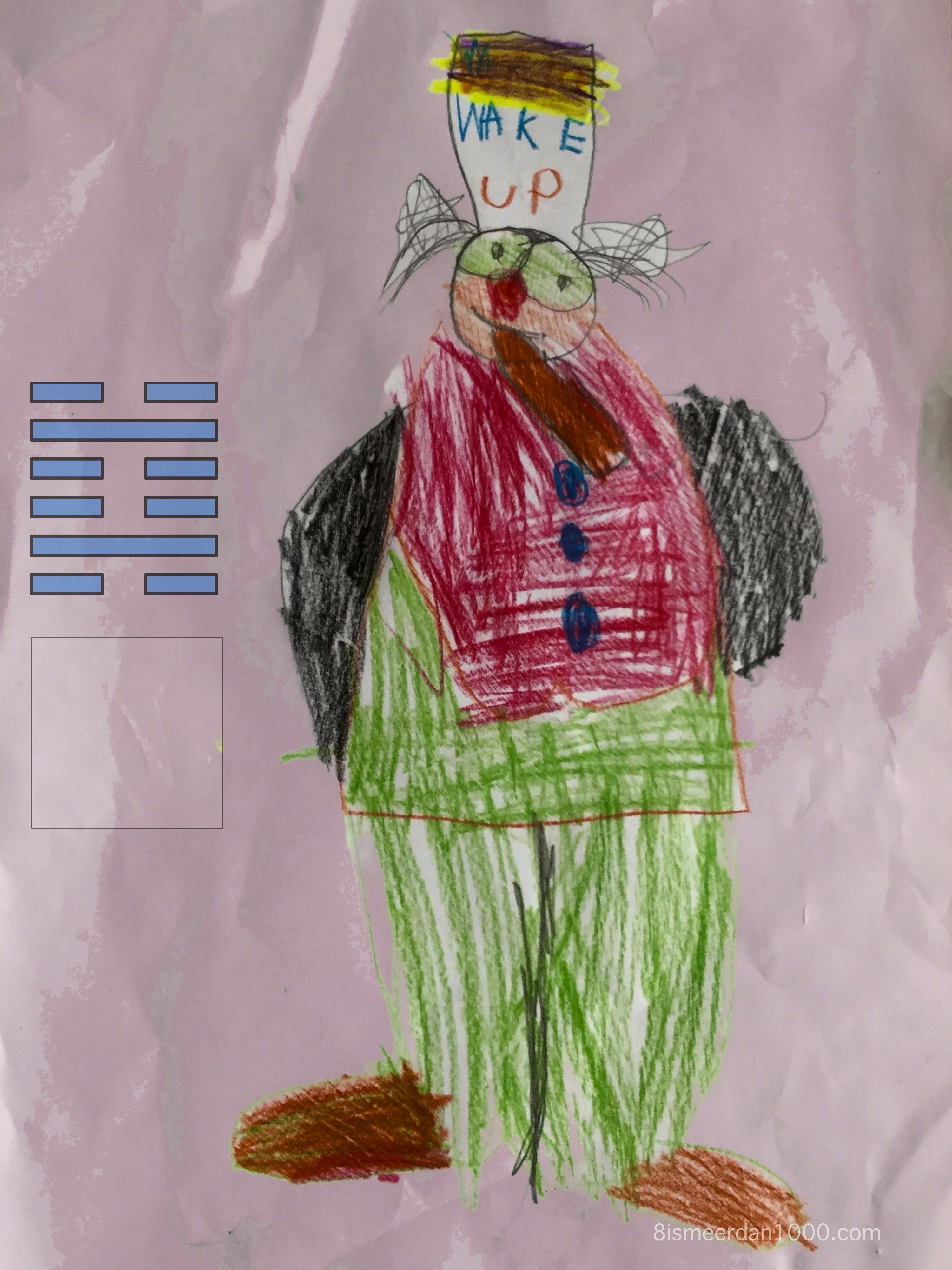
Flip is a likeable braggart. He’s always smoking a large cigar, and his top hat bears the words wake up!. Flip is the nephew of the Dawn Guard, and although Nemo and Flip get on well, it’s inevitable that he’ll keep disrupting Nemo’s dreams time and time again.
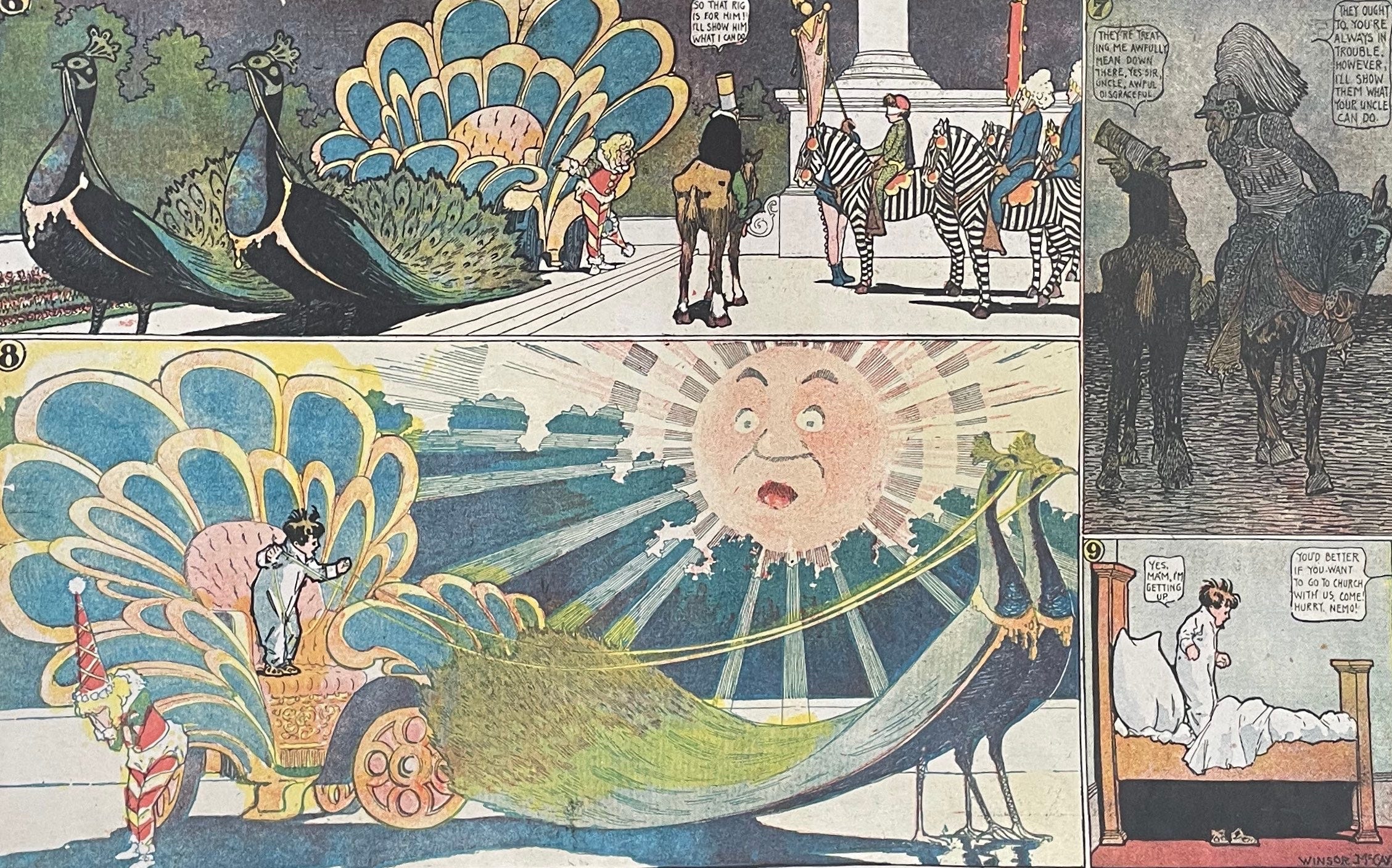
To flip a pancake. To flip a coin. Flip a switch. Flip your opinion. The situation flipped overnight. Flipping out. ‘Flip’ means change, a sudden change. An unexpected plot twist that sends everything in a different direction. ‘Flip’ is that annoying alarm clock that ruins that fantastic dream.

But Flip also represents the clarity that conveys the images and profound insights of the realm of dreams to the prosaic reality of the waking world. Without Flip, without that sudden awakening, the dream would never find its way into the day from the realm of Darkness to that of Light. Even if it is usually just a hint. A wisp of cigar smoke.
Even the doctor at Slumberland, who is, after all, a learned and knowledgeable man, is at a loss as to what to do with Flip.

Little Nemo in Slumberland was one of the first comic strips and is still regarded as one of the very best ever created. The cheerfully clashing characters, the storylines, the dizzying perspective of the drawings, brilliant ideas, boundless imagination, and the blurring of the lines between dream and reality make Little Nemo an inexhaustible source of inspiration.