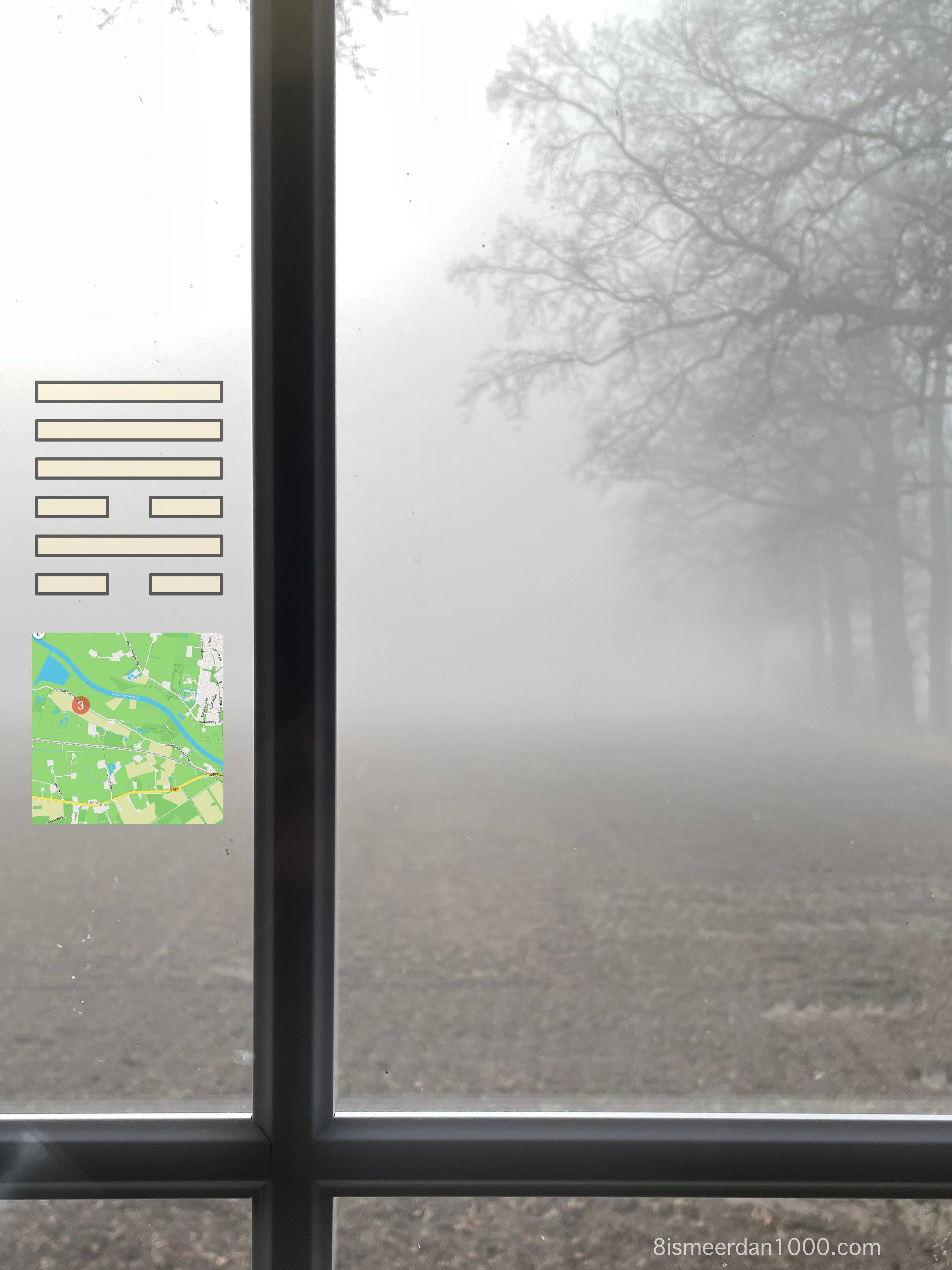
Water below, Heaven above. Water sinks ever deeper, Heaven rises ever higher. As a result, they lose sight of one another. They drift apart and no longer understand each other’s story. The image of dispute and conflict.
The fog obscures the view. Fog in the brain obscures clear thinking.
Cold causes moisture to condense. A band of mist, clinging to the earth. The sun’s heat cannot possibly penetrate it. The mist intensifies. Heaven and Water drift apart.


The origins of the I Ching date back to the Zhou dynasty, which, in terms of duration, was the longest of all Chinese dynasties (1046–256 BC). In its first phase, the Western Zhou, central authority lay with the Zhou kings. Over the centuries, their power gradually waned, and in the subsequent Eastern Zhou, they fulfilled only a ceremonial role.
The Eastern Zhou dynasty is divided in the Spring and Autumn Period (771–481 BC) and the Warring States Period (475–221 BC). The various states fought each other for power; coalitions were formed, were played off against one another, and fell apart just as often. Ultimately, the easternmost of these states achieved hegemony and unified China as the Qin dynasty.
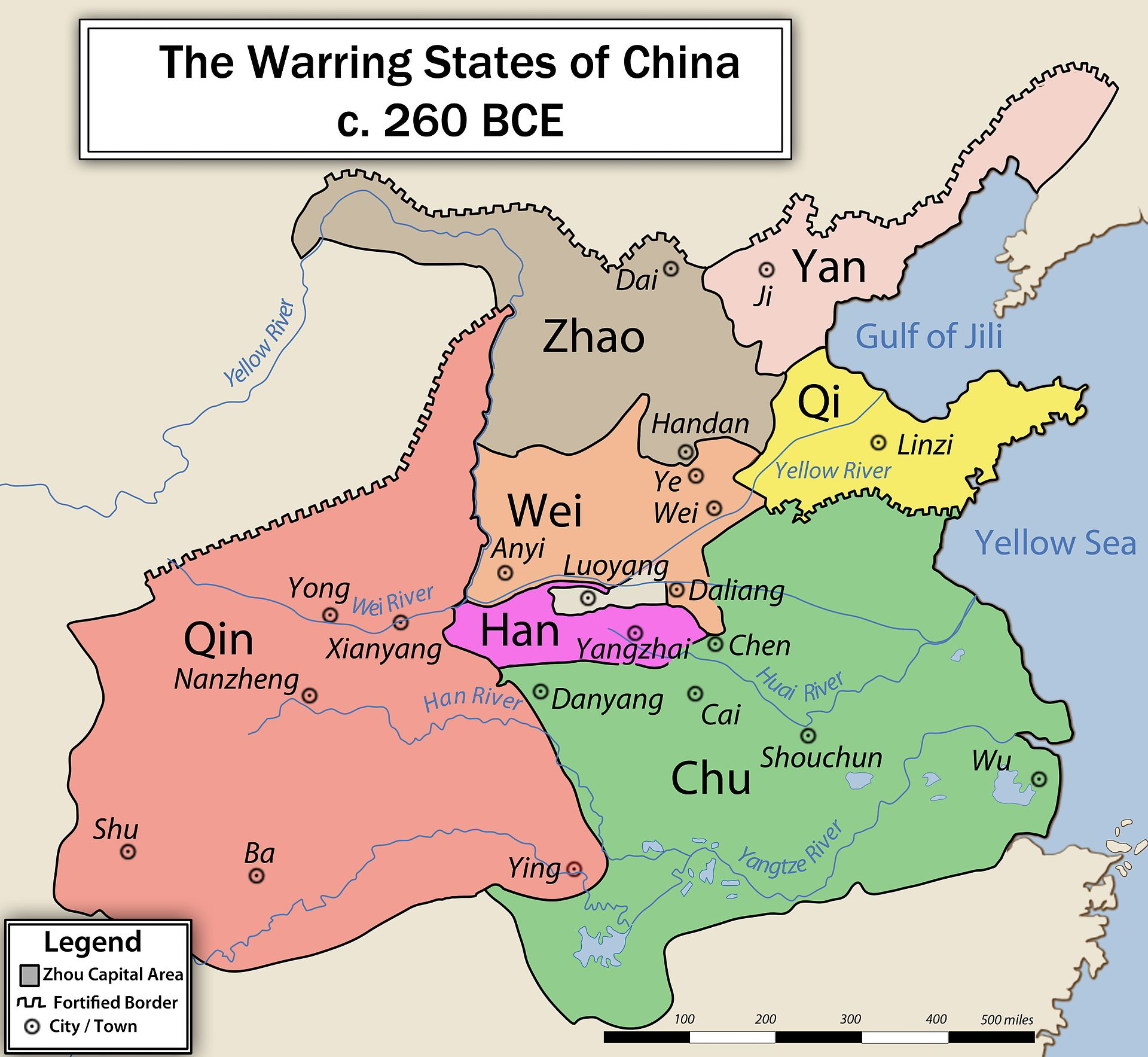
The Warring States period marked a long era of conflict and war. Despite, or perhaps precisely because of, all the turmoil, philosophy flourished as never before: the Hundred Schools of Thought, 諸子百家. It was the time of Confucius, Mencius, Laozi, Zhuangzi, Mozi, the Legalists and the Naturalists. The list of renowned philosophers who lived during this period is long.
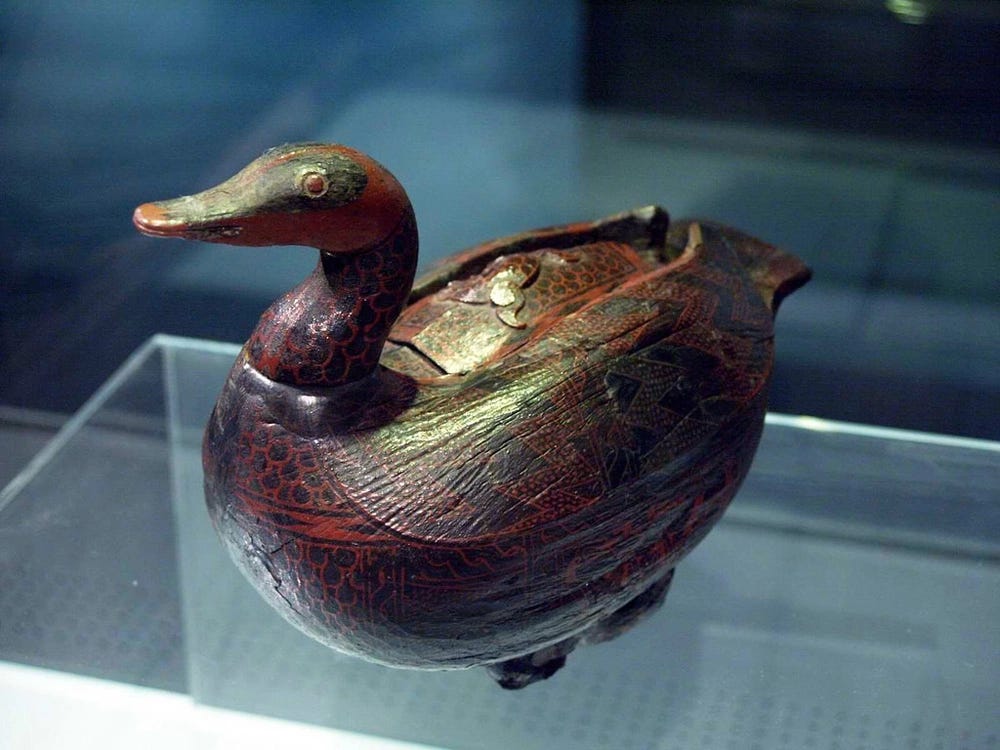
In the introduction to Zhuangzi: The Complete Works, Kristofer Schipper offers a nuanced take on the prevailing historical view that has emerged of the Warring States Period.
The emergence of the aforementioned philosophical schools is therefore consistently attributed to the desperate search by the great minds of that era for a way out of the chaos and a return to a society characterised by order and moral values.
However, the historical accounts that propagated this negative view date from a later period, namely that of the second empire, the Han Dynasty (202 BC to 220 AD). Not only did this dynasty have an interest in portraying the periods preceding it in as negative a light as possible, but by then Confucianism had also become the dominant ideology of the empire. For the Confucians, the period they called the ‘Warring States’ was a time when the classical teachings of Confucius had fallen into decline. Hence, they had nothing good to say about it, neither about the culture nor about society, and least of all about the Taoism that was gaining ground at the time. After all, it is precisely the Confucian moralising about moral and social order that our Zhuang Zi constantly mocks!
Suppose that the traditional Confucian view of the period in which Zhuang Zi lived is inaccurate, or at the very least highly biased and incomplete; how, then, can we gain a better understanding? This is no easy task, for all surviving Chinese historical records are pre-eminently Confucian — a fact that modern researchers all too often overlook. Since the beginning of the twentieth century, however, great progress has been made in Chinese archaeology, and this gives us a very different picture of the period in which Zhuang Zi must have lived.
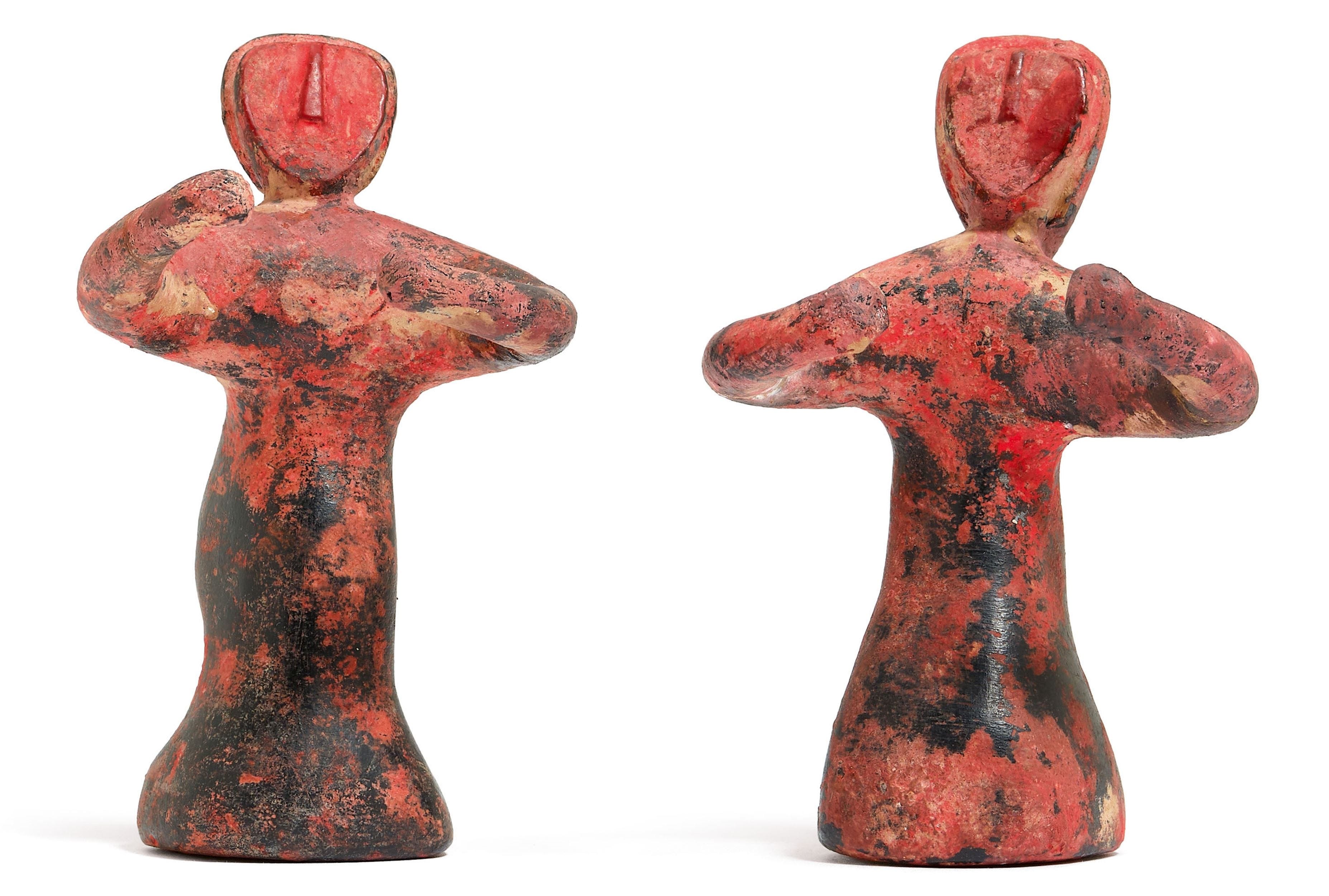
By that time, the ‘states’ of China were no longer the feudal entities of yore but had developed into city-states that were primarily commercial and industrial centres. The Warring States were therefore often little more than rival cities. The situation in China at that time was thus comparable in many respects to that of ancient Greece. The artefacts include not only the precious ritual bronzes that traditionally played a major role in classical Chinese sacrificial religion, but also all manner of lacquerware objects featuring amusing and cheerful depictions. These objects have been found in various locations across China, indicating a thriving trade. The two centuries preceding the start of the empire may have been times of conflict, but they were also marked by great economic and cultural prosperity and social emancipation, during which virtually independent cities developed into centres of art and science. This evolution also brought about a significant integration of the various parts of what was then China during this period, and this ultimately made political unification in 221 BC possible.
Zhuang Zi, de Volledige Geschriften - Kristofer Schipper
In Welcome To The New Warring States, Chinese writer Hui Huang draws an analogy between the Warring States Period and the political situation in 2026.
This is not merely a moment of disruption. It marks a paradigmatic shift in global logic. The world is moving from a system of mediated stability toward one of open rivalry. To understand this moment, China’s own history offers a useful analogy. In the Spring and Autumn period (770 to 476 B.C.E.), warfare was ritualized, legitimacy symbolically upheld by the Zhou king. But as the old order weakened, the Warring States period (approximately 475 to 221 B.C.E.) emerged. It was a time of classic anarchy marked by intense competition, innovation, and systemic transformation. Legalism, meritocracy, military standardization and bureaucratic statecraft all took shape in this crucible. The end of ritual was also the beginning of modern governance.
Hui Huang in Noēma