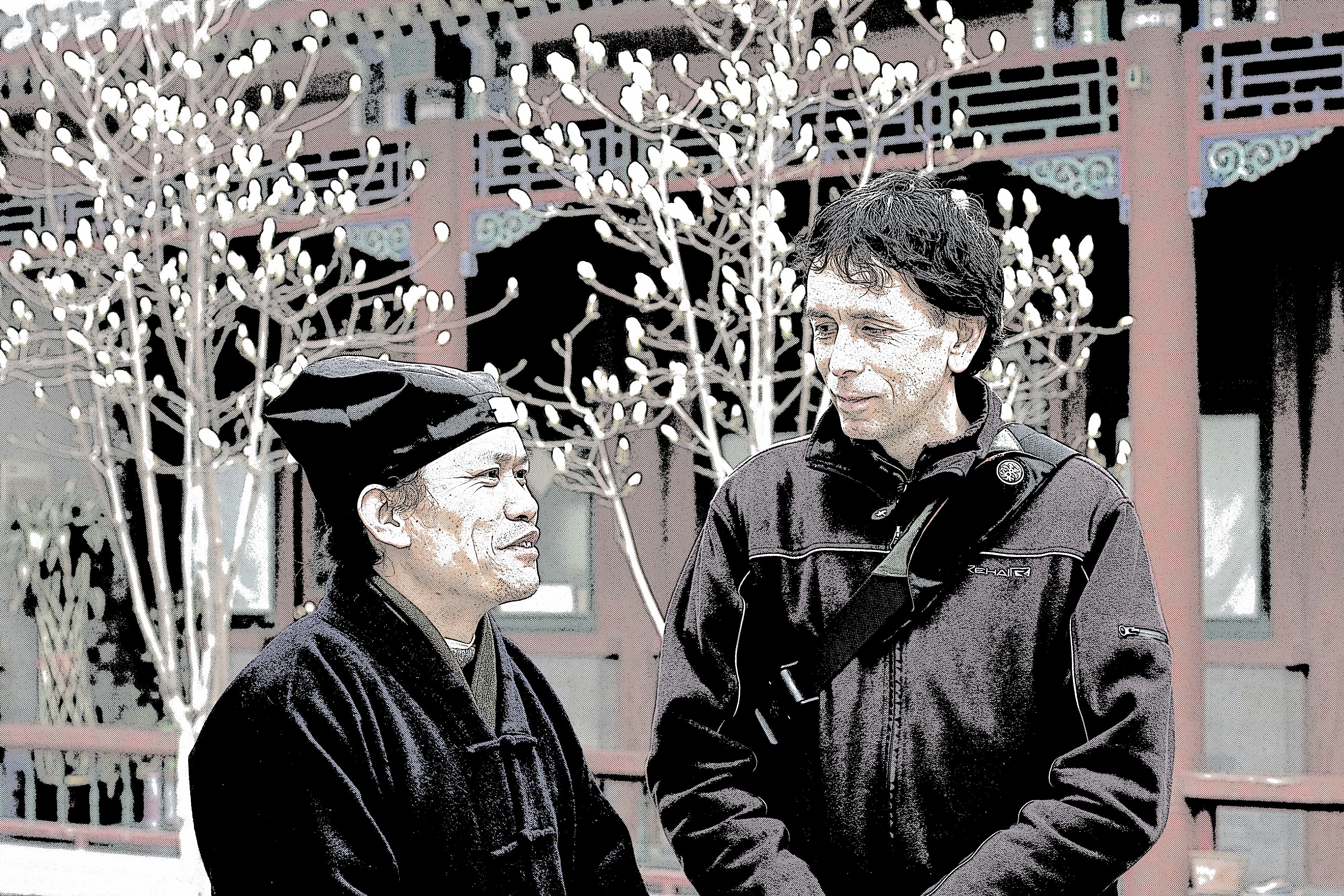
… I still return to China frequently, but as a traveller I remain even more of an outsider than before. On what is likely to be my last trip for the time being, in 2013, I slip away from the obligations of the group I am travelling with and spend a few days at the Taoist Bai Yun Guan, the Temple of the White Cloud, on the outskirts of Beijing. I had been introduced to Heven Qiu, one of the leading monks there, and he turns out to be the best guide I could have wished for at this historic site.
In a garden at the rear of the extensive Bai Yun Guan complex stands a stele, a vertical stone, bearing an engraved drawing and text. It is the Nei Jing Tu, the ‘Image of the Inner Landscape’. I had often seen reproductions of the stele’s engraving, but now, in the quiet enclave of the monastery garden, I see in the marvellous image the essence of an entire culture. Simple in presentation, light-hearted and at times humorous, yet also profound and fundamental in meaning. The mutual reflection of the macrocosm and the microcosm…
fragment from The Inner Landscape
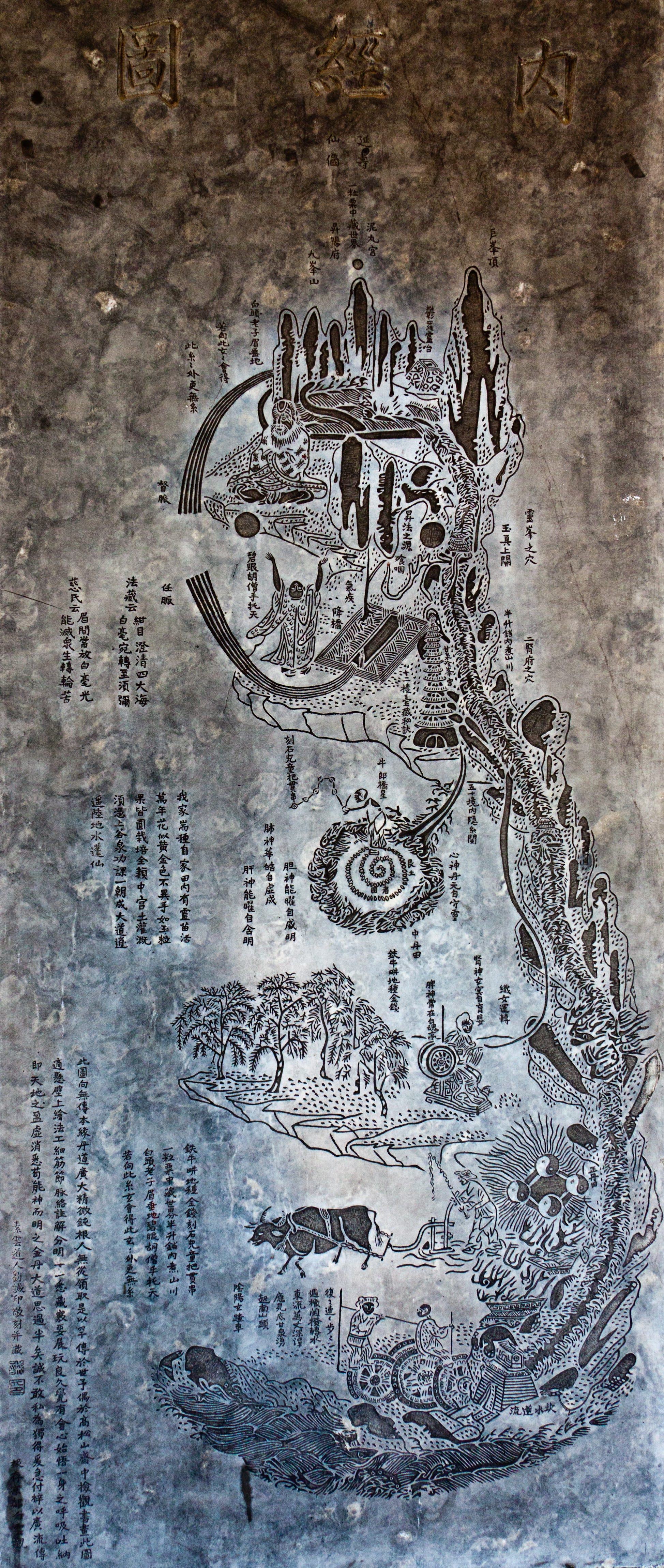
The image shows a human figure, seen in profile. Only the torso and head are depicted. The whole composition bears a resemblance to a foetus. Inside the body, there are no bones, organs or blood vessels, as one might expect. Instead, there is a grove of mulberry trees, the Great Dipper constellation, a mountain range, a ploughing farmer, a raging torrent, a pagoda, a bridge and much more. The entire outside world can be found inside the human body. An unexpected interpretation of anatomical illustration.
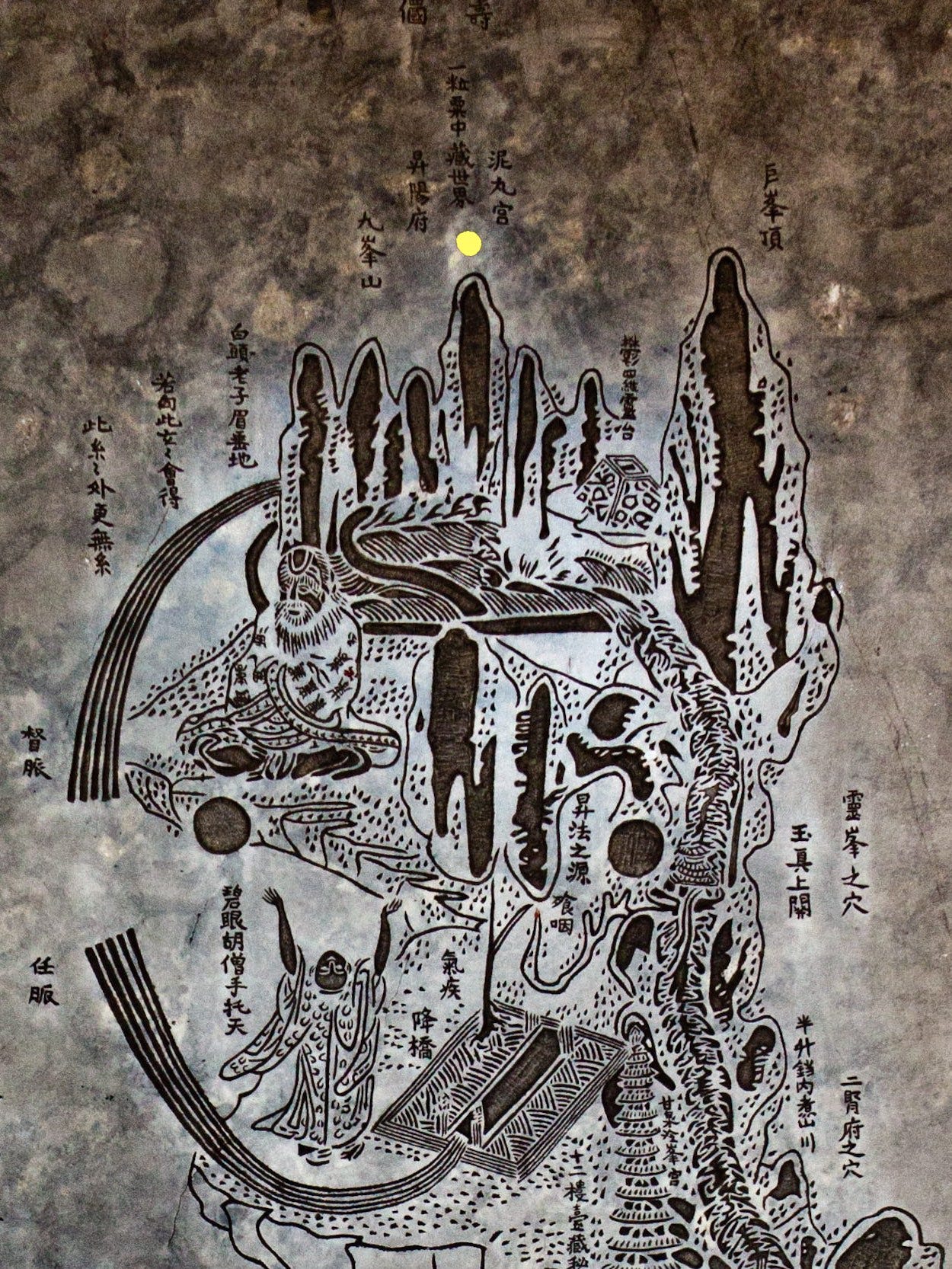
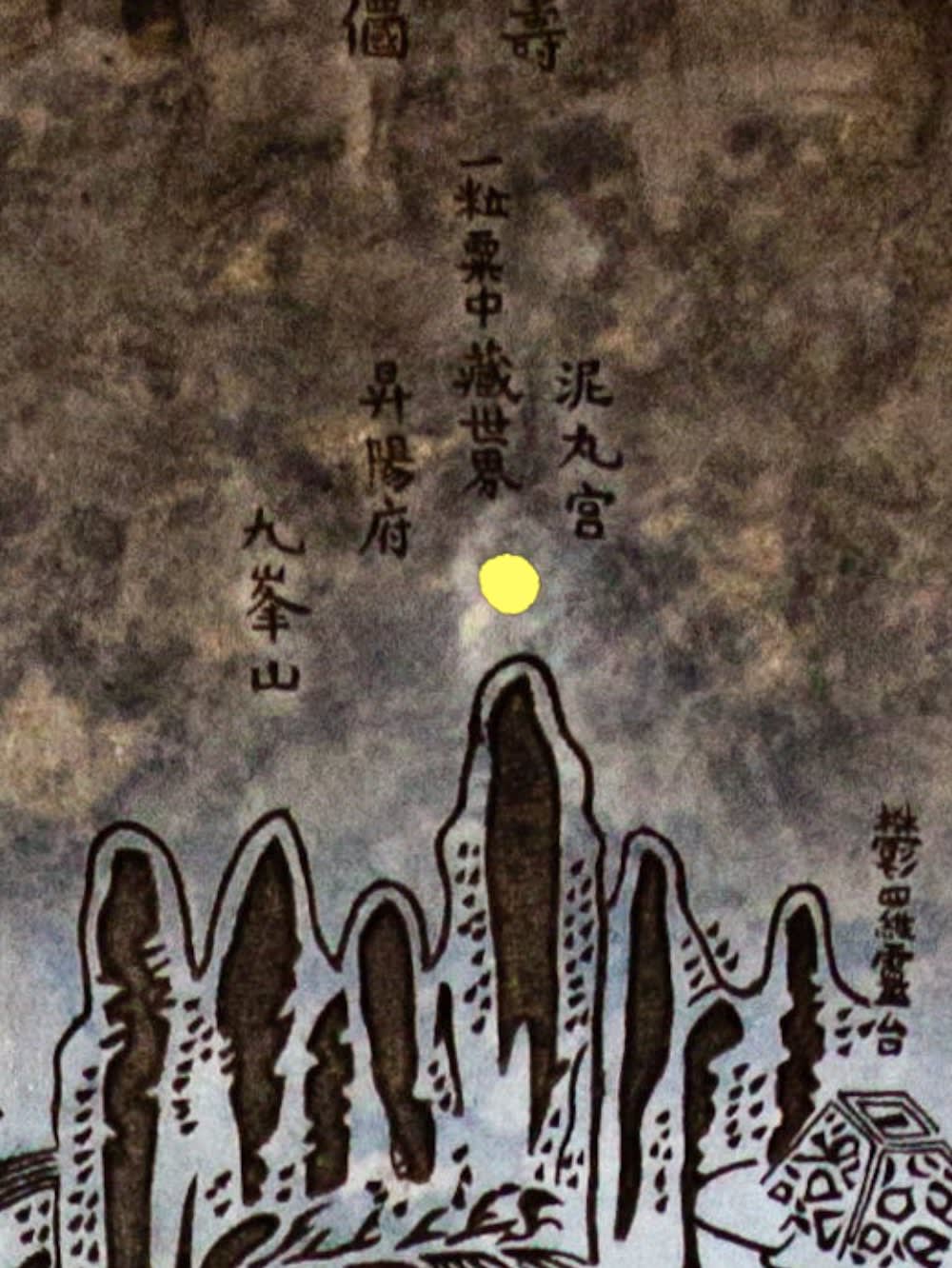
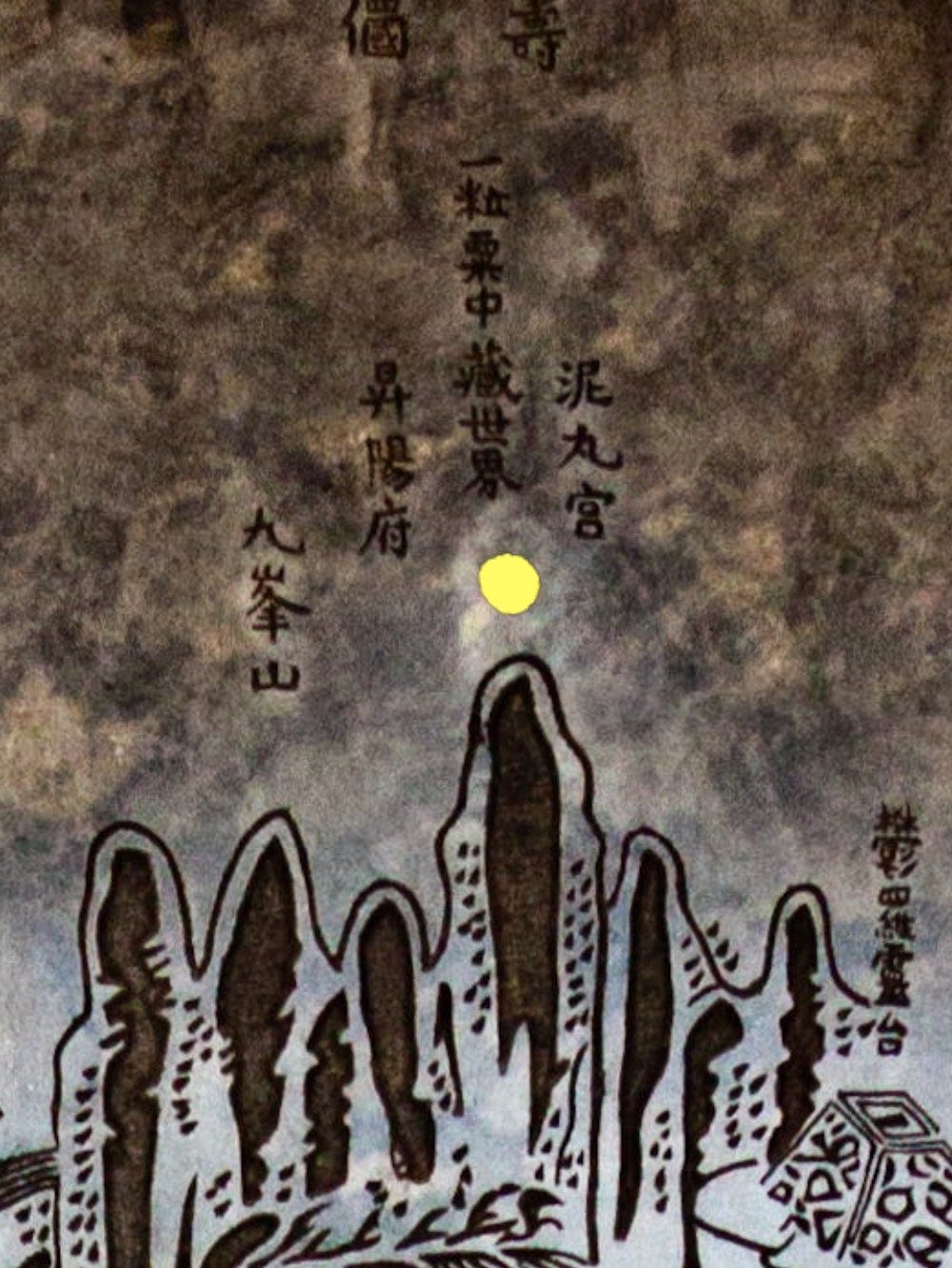
There is one exception. One single object is depicted outside the body. Just above the crown, a tiny grain of millet floats. The accompanying text states: