


Clinging to one of the concrete blocks on the Nazaré breakwater. Among the black mussels. Marvellous little creatures, as if from another planet. Pollicipes pollicipes, the goose barnacle.
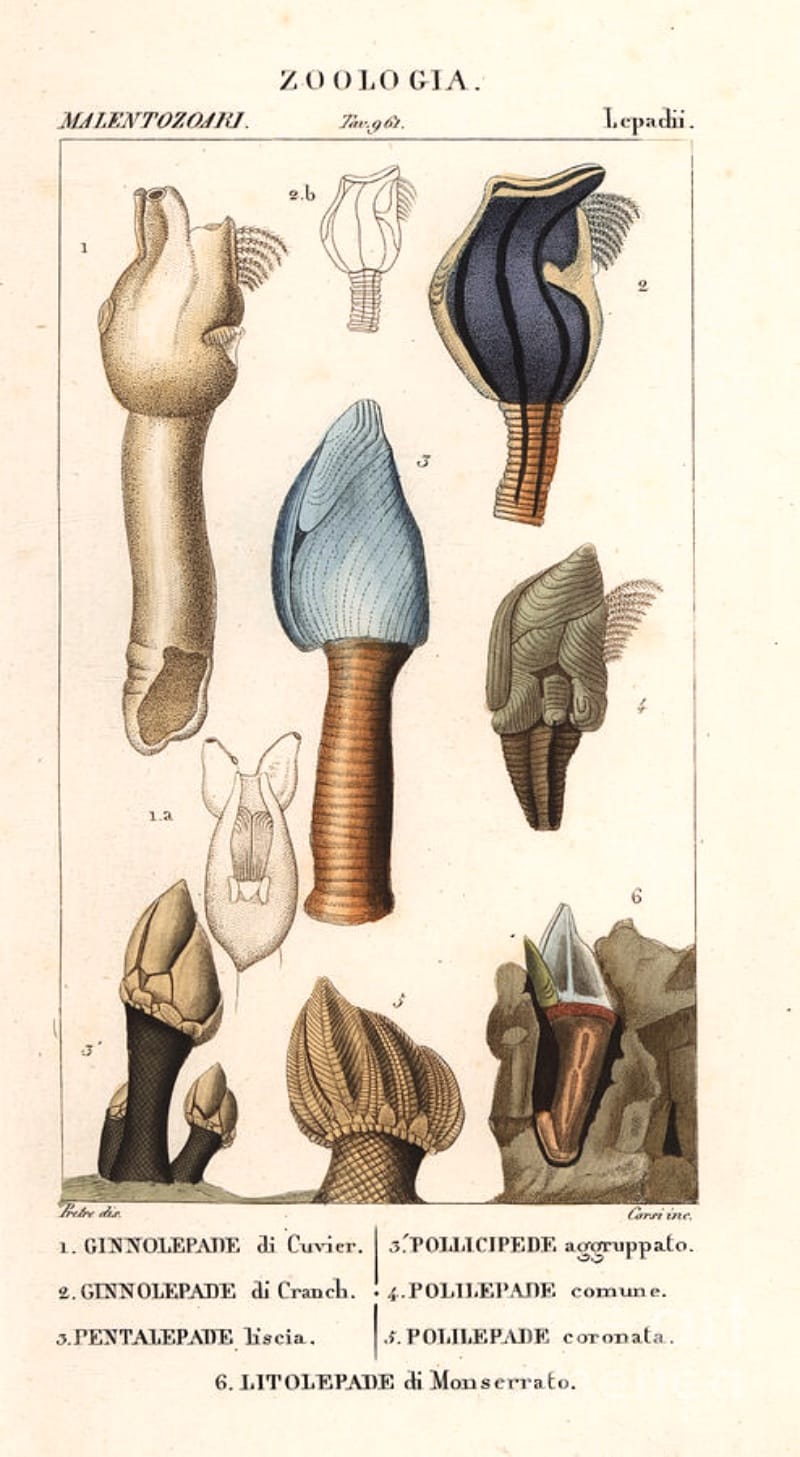
‘Goose barnacle,’ not to be confused with ‘barnacle goose.’ And that was precisely the case for a long time. In the Middle Ages, bird migration was an unknown phenomenon. No one had ever seen geese mating or nesting. And because the Pollicipes pollicipes bears some resemblance to the neck, head, and beak of a goose, a direct link was drawn between the two: the barnacle goose and the goose barnacle. The goose did not hatch from an egg; it grew on the plant. The myth of the goose plant, of the goose tree, was born.
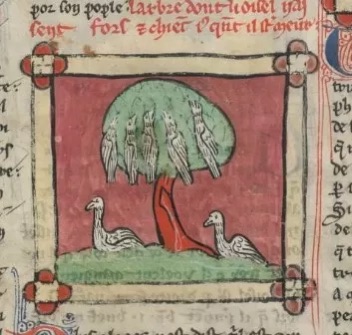
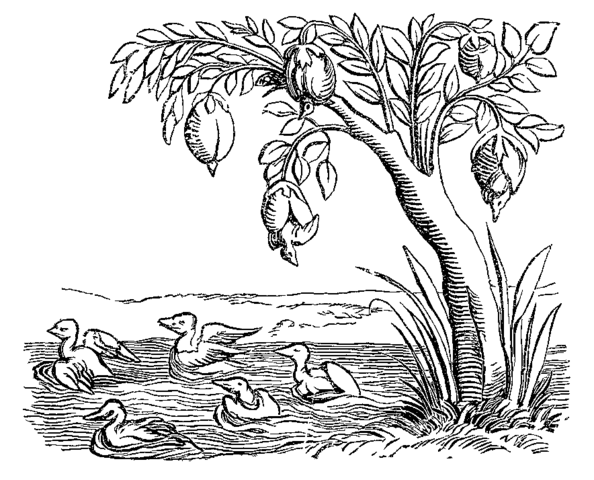
Now, the goose barnacle is by no means a plant. At first glance, the goose barnacle looks more like a mussel or a shellfish. It is, however, a crustacean. Here in Portugal, they’re on the menu as percebes. I’ll leave them be; for now, I’m content with simply observing them and enjoying the juicy medieval tale.

'Eight is More Than a Thousand' is built using Ghost, an open-source writing platform. All contributions go directly to the writer. Some of the articles on 8ismeerdan1000 are freely accessible. Another section is available only to paying subscribers. By taking out a paid subscription – which can be for a month or a year – you help to support the progress of the Eight is More Than a Thousand project! For those who would like to read all the posts but cannot currently afford to do so, a brief message is all it takes to gain access.


