


for Didi
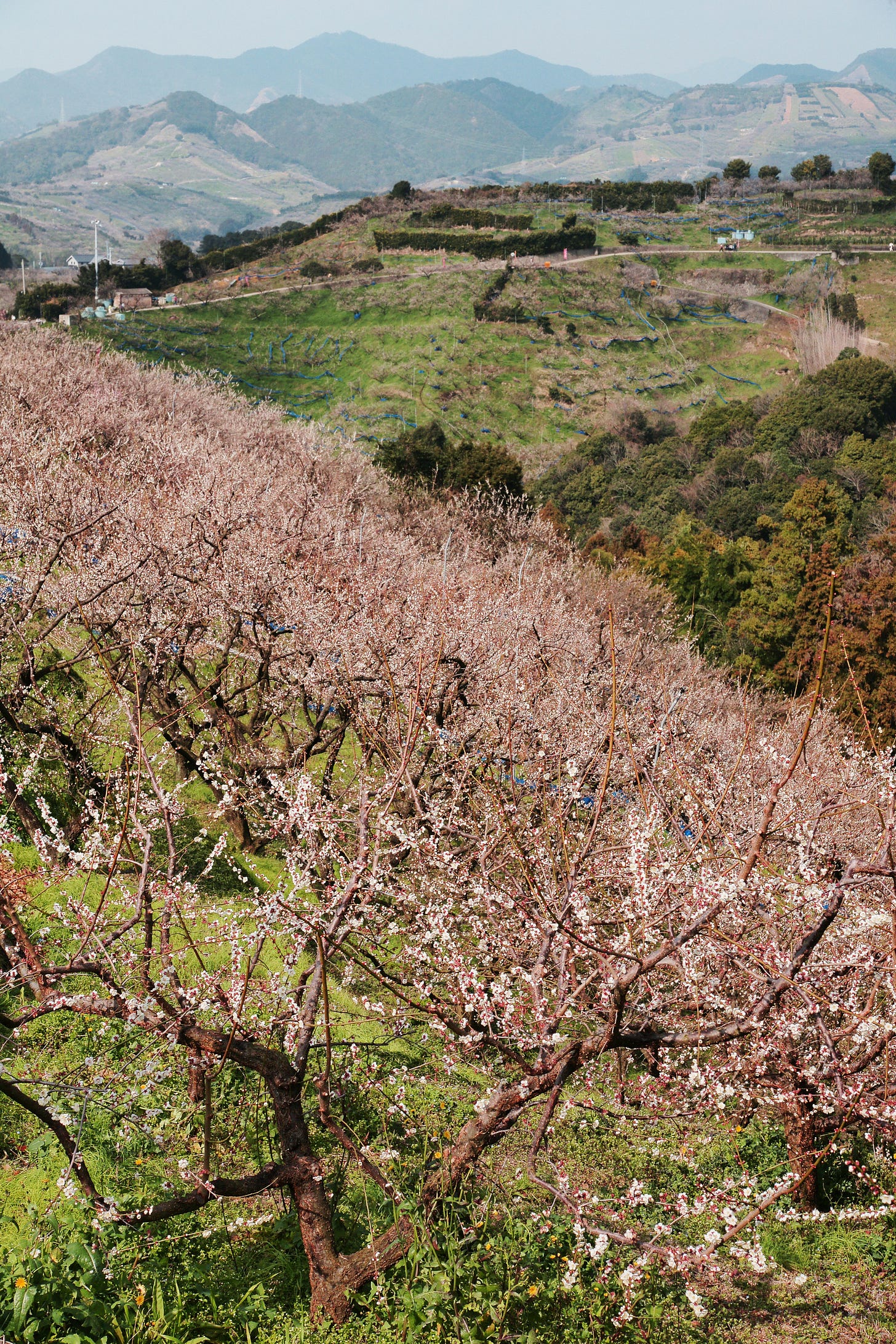
For the Japanese man, who looked as though he’d just stepped off a Kurosawa film set, the offer came as a bolt from the blue. After all, how long had he been away from home? Every day he ate whatever was on offer, and that usually bore no resemblance to the refined culinary traditions of his youth. More than once, his thoughts wandered back to his family home, in the hills around Minabe. He was undoubtedly a born traveller and always prepared for the unexpected. But this gesture—this brief homecoming—even he could not have foreseen.
Imagine: you’re asked to put a slice of lemon in your mouth and let its intense sourness work its magic on you. Before you do that, before your taste buds take control of your facial expressions, you’ve already formed a clear mental picture of the lemon. The thick, bumpy peel. The many shades of yellow, some glossy, some matt. The woody remnant of the twig that once connected it to the tree. The oval shape, with its bulbous ends. The radial division into segments, visible when the lemon is halved. Drops of juice falling one by one into the hot tea and dissolving in it with a graceful swirl. The tiny splashes, sparks of oil from the breaking peel. Lemon with fish. In a cake. Lemon in a water carafe. In countless forgotten memories of taste and scent.
Only then, after this mental preparation, do you put the slice in your mouth. Once again, the acidity is incredibly sharp. All your previous experiences with lemon are reaffirmed. And it is precisely that which means that delightful shock is missing. The shock of experiencing something for the very first time. This is now tempered by the absence of the unexpected. And tamed by the fact that, after that first time, you made a subconscious decision that, for the rest of your life, ‘lemon’ would be familiar territory, where everything has already been discovered.

Nevertheless, beneath the everyday experience of lemons, the memory of that first time still lingers. The ‘cietroen’ of the beginner’s spirit (‘cietroen’ instead of ‘citroen’ or ‘citron’—even slight differences in spellings result in a variation of taste experience). Yes, that unforgettable first time! So special! And wouldn’t it be fantastic the next time you pop one of those yellow slices into your mouth to do so in the spirit of the absolute beginner? Without any expectations, and with the courage to let yourself be overwhelmed once again by the explosion of sourne
Is rediscovering that intensity – the kind you felt as a beginner – the highest level achievable? Is that the end of the line, with nothing more to look forward to? No, the ‘surprise’ dial can certainly be turned a little further to the right. Here’s how it works. You think you’ve just peeled a delicious, sweet orange. However, it turns out to be a treacherous, lemon-like variety of citrus. With a peel that looks exactly like that of an orange. A kumquat whose peel says, ‘I’m ripe and sweet’, whilst the intensely sour interior pays no heed to that superficial pretence. A wolf in sheep’s clothing, in other words. Then you take a bite of the little deceiver and the enormous shock of the contrasting expectations takes its toll.
Lemons are a well-established phenomenon. Nobody bats an eyelid at them. At least not in these parts and in this day and age. Of course, that hasn’t always been the case. Far from it. There have been times and places where the lemon was not part of either the individual or the collective consciousness. Nobody knew what it was. It didn’t even have a proper name.
Suppose the unique situation arose where a lemon appeared in your life. Before you allowed that strange thing to come into contact with the intimacy of your mouth, you’d take your time to examine it with a mixture of curiosity and suspicion. You’d look at it from every angle. You’d have a sniff and give it a squeeze. Finally, you’d bite off a tiny, tiny piece of the peel (mwahh! bittùùrr!) and then let a little lick of the juicy inside into your private parts (aahhh! souourr!)
The thrill of an unsuspecting foreigner being offered a Dutch double-salted liquorice sweet (dubble zout dropje) for the first time—without any explanation or warning—and popping it straight into their mouth. Ha ha, it’s always fun to see their growing bewilderment and confusion!
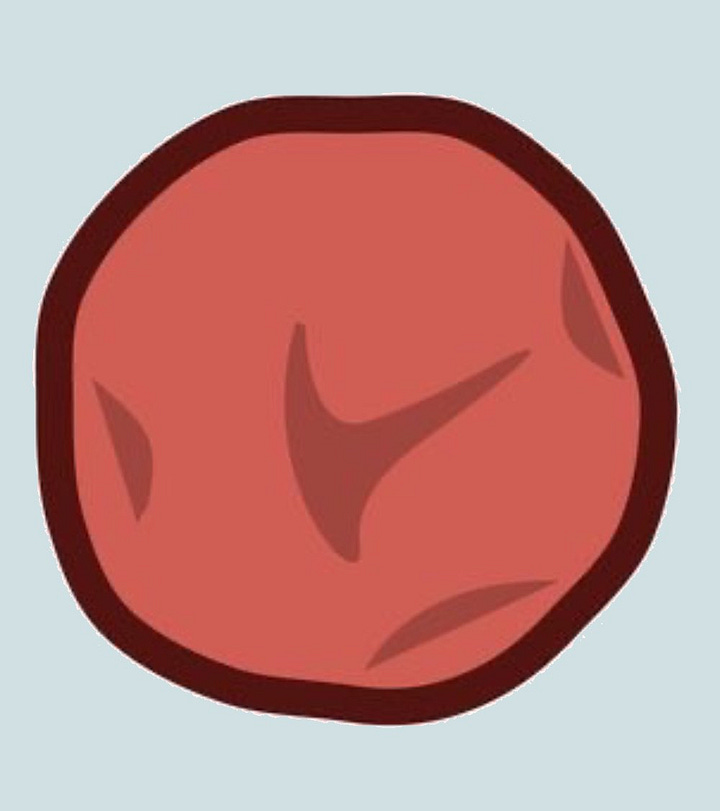
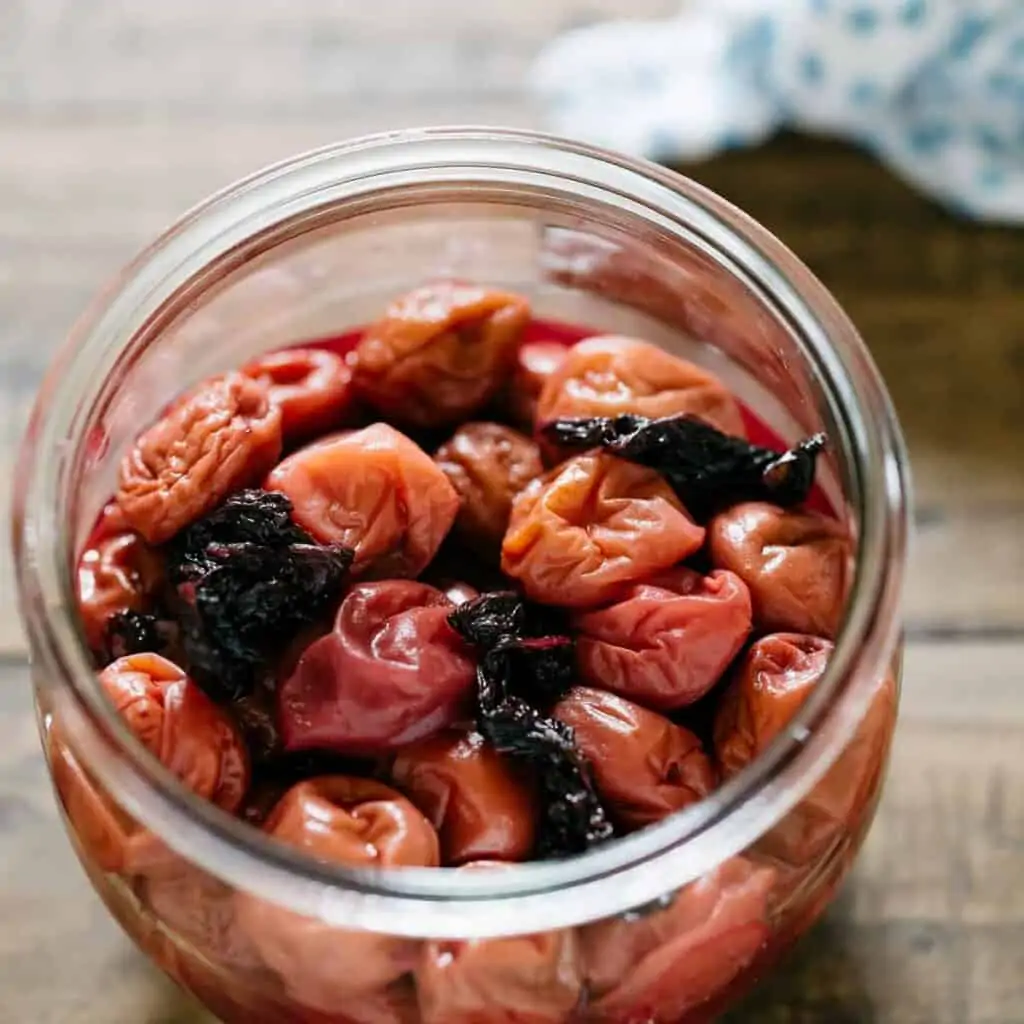
Lemons, kumquats, and liquorice sweets create quite a flavour sensation and a bit of a taste confusion. But all that pales into insignificance compared to the situation where a non-Japanese person is offered an 'umeboshi. 'And—little does he know! —he pops it, whole, into his mouth without a moment’s hesitation.
Let’s go through all three surprise factors again for this specific case.
Lemon is very sour. Umeboshi is ridiculously sour.
An umeboshi looks like a soaked, dried apricot. This is where the phenomenon of contrary expectations comes into play. Think of the ultra-sour kumquat and the extra-salty liquorice sweet. What you see isn’t what you get!
Go back to the opening photo at the top of this text and ask yourself: Which is which? Which is the umeboshi? Which is the apricot? Because we’re discussing all this right now, your mind is sharp and you’ll no doubt spot straight away which is which. But then again, do you always examine your food with such attention and precision? And in a hurry, a sour plum can easily be mistaken for an apricot. With all the consequences that entails.
Back to the story.
We saw the Japanese man approaching from a distance. Sitting on the edge of a rock, we looked out over the path that we ourselves had struggled to walk earlier that day. Thin air, winter, twilight. On our trek through the Nepalese mountains, we had climbed to 4,500 metres. We were due to set off very early tomorrow, at four o’clock, to climb the final 1,000 metres to the Thorong La Pass.
It was the mid-1980s. Kathmandu was a magnet for neo-hippies. At least, that’s what we thought, as impartial observers. But when I look now at the few photos that remain from that trip, it’s clear we’d overlooked two hippies at the time. That’s just how things go.



Before the pass. At the top of Thorong La. After the pass.
Something was moving in the rugged mountain landscape. A tiny figure that seemed to be heading our way. Sometimes it would disappear for a moment, only to reappear a little closer on the other side of a small hill or a large rock. Even from that great distance, it was clear that it was not a Nepalese porter. They usually carry enormous loads on a strap across their foreheads. This traveller, however, was walking briskly and was clearly carrying only light luggage.
It was only when he had come within a hundred metres or so of us that we noticed his Asian features. He was indeed not a rugged Nepali but a tanned Japanese man. Thin, with a sun-tanned face, wrinkles at the outer corners of his eyes, and road dust clinging to his threadbare clothes. He looked as though he’d stepped straight out of a Kurosawa film set, where he’d played the role of an eternally wandering rohin.
And then something occurred to me. We had a small jar of umeboshi in our luggage. Always good to have to hand if your tummy gets upset by unfamiliar food and water that isn’t exactly clean. Shall I offer him one? Or would that be odd? Who on earth offers an umeboshi to a stranger out of politeness? Well, all right, I’ll go ahead and do it. I took the jar out, took the lid off, and, with my arm outstretched as if it were a posh box of chocolates, offered it to him in a friendly manner. ‘You want one?’
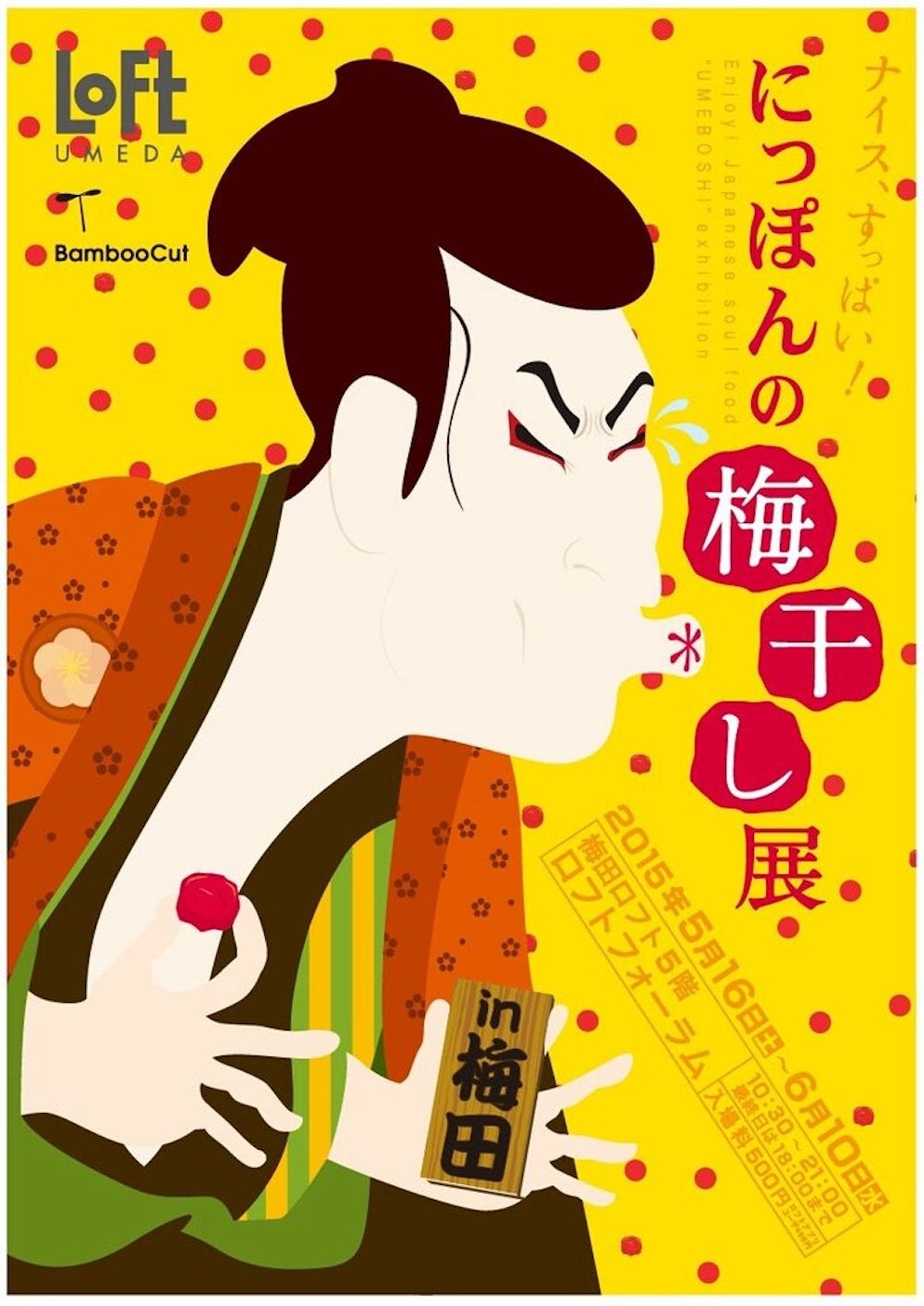
え?! 梅干し!?
(Translated from Japanese as: WHAAAT?! UMEBOSHI!?)
The tone with which he responded to my gesture suggested he was a direct descendant of a samurai lineage. The seasoned Japanese traveller was clearly prepared for anything. Except, that is, for being offered an umeboshi in these parts. He hadn’t seen that one coming.
Of all the Japanese food he had gone without for many years, or of which he had occasionally come across poor imitations. And of all his Japanese comfort food, umeboshi was perhaps at the very top of the list.
Is there a suitable word for this sort of reverse culture shock? I’ll have a look in the Dictionary of Obscure Sorrow soon. Or perhaps one of you knows the right expression for it? I’d love to hear it.
Later, I imagined that he might well have come from Minabe. Minabe, surrounded by ume orchards, the cradle of the umboshi tradition. Where, after long periods of fermentation, the tart fruit, combined with salt and red shiso leaves, transforms into the bright red, sour-salty umeboshi.
And I’ve also recently imagined him, a good forty years on, telling his grandchildren about ‘Grandad’s travel adventures’.
So much for the former traveller from Japan.
And now back to me for a moment.

Chapter 22. The Exciting. The Shock. The Unexpected. Two identical trigrams: Thunder above Thunder. Expecting apricots, getting umeboshi. Preparing for every eventuality is not only extremely difficult to achieve; it is sometimes even undesirable. Not everything unexpected harbours danger. The truth, as always, lies somewhere in between. An insight which, in turn, comes as no real surprise.
And if you’d like to find out more about umeboshi and the revival of Japan’s depopulated countryside, be sure to watch this video.
'Eight is More Than a Thousand' is built using Ghost, an open-source writing platform. All contributions go directly to the writer.
Some of the articles on 8ismeerdan1000 are freely accessible. Another section is available only to paying subscribers. By taking out a paid subscription – which can be for a month or a year – you help to support the progress of the Eight is More Than a Thousand project!
For those who would like to read all the posts but cannot currently afford to do so, a brief message is all it takes to gain access.



